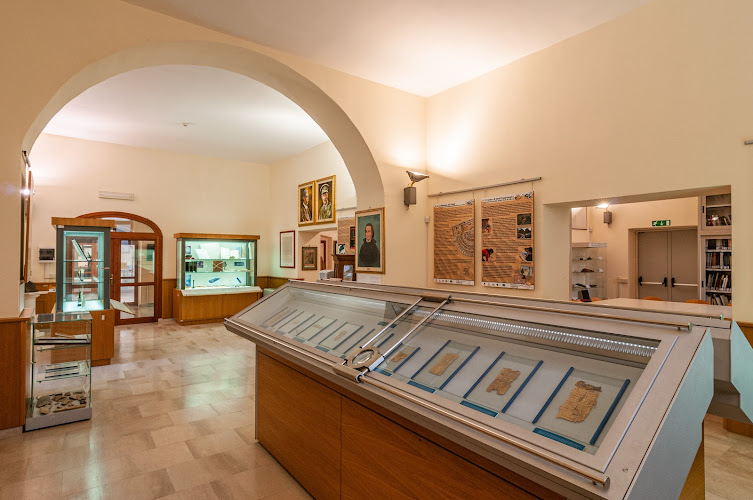
Museo Papirologico – Università del Salento, also known as the Museo Papirologico “Mario Capasso,” is a specialist university museum at Via di Valesio, 73100 Lecce, in the northern university area near Studium 2000. Created to preserve and interpret a collection of nearly 400 papyri from Egypt, it brings travelers close to the written records of the ancient Mediterranean: fragile documents that illuminate language, administration, religion and everyday communication across Greek and Roman Egypt.
What to Expect at Museo Papirologico – Università del Salento
This is a focused, scholarly museum rather than a large archaeological attraction. Its core collection consists of almost 400 Egyptian papyri, assembled within the University of Salento’s long-running papyrological tradition initiated by Professor Mario Capasso. Displays introduce papyrus as both a material and a historical source, making the visit especially rewarding for readers interested in ancient scripts, Egyptology and the survival of texts from antiquity.
The museum belongs to a wider academic ecosystem that includes the Centro di Studi Papirologici, the chairs of Papyrology and Egyptology, and the Soknopaiou Nesos Project. Since 2003, that project has carried out archaeological research at Dime es-Seba, the Hellenistic and Roman settlement of Soknopaiou Nesos in Egypt’s Fayyum. Look for changing scholarly displays as well: a 2025 exhibition explored Il Cantico delle creature on papyrus. The compact scale invites slow looking rather than rushing through rooms.
- Egyptian papyrus collection: Nearly 400 papyri form the museum’s central holding, giving the institution unusual depth for a university museum in southern Italy.
- Mario Capasso legacy: The museum honors the scholar who began the University of Salento’s papyrological tradition more than three decades ago.
- Ancient writing material: Learn how papyrus made written communication possible in Egypt and across the Greek- and Roman-era Mediterranean.
- Soknopaiou Nesos research: Museum interpretation connects with the university’s archaeological work at the Fayyum site of Dime es-Seba.
- Temporary exhibitions: The program periodically uses papyrus to explore themes beyond antiquity, including literary and cultural projects.
Museo Papirologico – Università del Salento at a Glance
| Detail | Information |
|---|---|
| Address | Via di Valesio, 73100 Lecce LE, Italy |
| Neighborhood / Area | Northern university area, near Studium 2000 and MUSA |
| Operating Hours | Monday-Friday, 9am-1pm; closed Saturday and Sunday |
| Admission / Price Range | Free admission; $ |
| Recommended Visit Duration | 45 to 60 minutes |
| Nearest Transit / Parking | Lecce railway station is about 2.5 km south; limited street parking is available around the university area |
| Official Website & Phone | museopapirologico.eu · +39 0832 294257 |
Visiting Tips, Getting There & Nearby Pairings
Arrive near the 9am opening for the quietest experience and allow extra time if you wish to discuss the collection with staff. Weekday morning hours are short, so this works best as a planned stop rather than an afternoon drop-in. Groups, school visits and anyone seeking a guided or research-oriented visit should telephone ahead. Photography, bag storage and access to temporary displays follow staff direction on the day; delicate light-sensitive material may have handling and photography restrictions.
The museum is north of Lecce’s baroque historic center, in the University of Salento precinct. From Lecce station, a taxi is the most direct option; drivers can set down close to Via di Valesio, while drivers should seek legal street spaces around the campus. Pair it with MUSA – Museo Storico-Archeologico dell’Università del Salento, roughly 100 metres away, for a fuller university-museum visit. From there, Parco di Belloluogo and Porta Napoli are within roughly a 15-minute walk. The museum is indoors in a university building; visitors using wheelchairs, strollers or requiring step-free arrangements should call before travelling so staff can organize the most suitable entrance and assistance.
Frequently Asked Questions
What are the Museo Papirologico opening hours, and when is the best time to go?
The museum opens Monday through Friday from 9am to 1pm and is closed on weekends. Go at opening time, particularly during the academic year, for a calmer visit and sufficient time before the short daily closing window.
Is there an admission charge or do I need a reservation?
Admission is free. Individual visitors can plan around the weekday morning schedule, while groups, educational visits and anyone wanting detailed guidance should arrange their visit in advance by telephone.
How long should I budget for the museum?
Budget 45 to 60 minutes for the permanent collection and any current temporary display. Allow up to 90 minutes if you are combining it with MUSA, practically next door in the same university area.
Is Museo Papirologico suitable for families and accessible visitors?
The concise format can suit older children and teenagers interested in ancient Egypt, archaeology or writing, although it is primarily an interpretive academic museum rather than a hands-on attraction. Contact the museum before arrival for step-free entry, wheelchair navigation and any assistance required inside the university facility.
When planning your Lecce travel guide or browsing verified museums in Lecce, pair this stop with standout local spots including Palazzo Giusti, Roman Amphitheater of Lecce, Natural History Museum of Salento, and MUSA – Museo Storico-Archeologico dell'Università del Salento (nearby).