
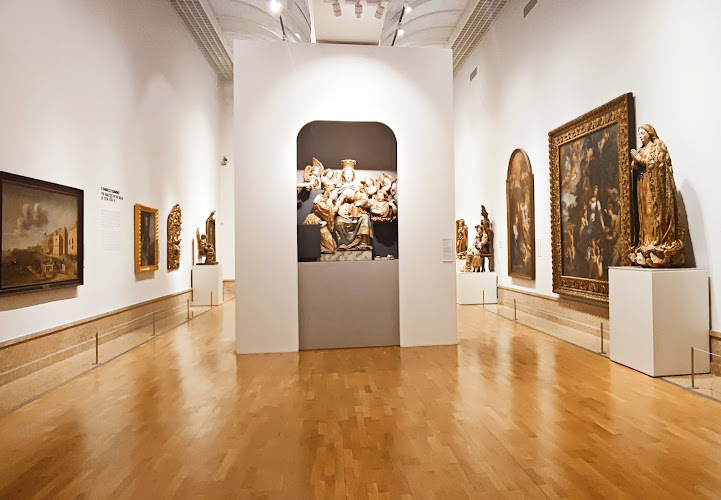
The National Museum of Ancient Art (Museu Nacional de Arte Antiga, or MNAA) is Portugal’s most important art museum. It occupies the 17th-century Palácio Alvor and a later wing built where a Carmelite convent once stood. The address, Rua das Janelas Verdes, means “Street of the Green Windows”. The collection runs from medieval sculpture to the early 19th century, with a strong emphasis on how Portugal’s maritime empire shaped what its painters, goldsmiths and cabinetmakers made.
The museum sits above the Tagus in Lapa and Santos, a quieter and more residential part of Lisbon than the riverfront sights to the east. It draws far fewer crowds than the Belém monuments. The rooms are quiet enough for slow looking, and the back garden and café terrace look out over the river and the docks. Visitors rate it 4.6 across more than 7,000 reviews, and the reviews keep returning to Bosch, the azulejos, the Japanese screens and the view.
Standout Highlights & What Not to Miss
The collection is spread over several floors, so decide your priorities before you start. These are the pieces and spaces that visitors talk about most.
- Bosch’s Triptych of the Temptation of St. Anthony: The best-known work in the building. The panels are dense with small, strange creatures and reward several minutes of close looking. Go to it early, before tour groups arrive.
- The Nanban folding screens: Japanese screens from around 1600 showing Portuguese traders arriving in Japan, with their ships, oversized clothing and attendants. They are among the finest of their kind anywhere, and many visitors walk past them on the way to the paintings.
- The Panels of São Vicente de Fora: Attributed to Nuno Gonçalves, this 15th-century polyptych is regarded as a landmark of Portuguese painting. It shows a crowd of faces from many layers of society.
- Northern European and Iberian paintings: Works by Dürer, Cranach, Raphael and Zurbarán hang alongside Portuguese Renaissance painters. Sorolla also appears in reviews, so look for the 19th-century Iberian rooms.
- Goldsmithing and Age of Discovery objects: Monstrances, silver, Limoges enamel and Indo-Portuguese furniture show how trade with Asia, Africa and Brazil changed Portuguese taste. Reviewers sometimes describe the jewelry and gold rooms as a museum of their own.
- Azulejos and the chapel: The tilework, the convent-era chapel with its gilded carving, and the building’s own architecture show Portuguese decorative art in its original setting.
Visitor Strategy & Planning Snapshot
| Planning Factor | What to Expect | Practical Strategy |
|---|---|---|
| Ideal Arrival Window | Quiet at opening and on weekday mornings. Tour groups and school visits gather later in the morning. | Arrive soon after opening and see Bosch and the Nanban screens first, then work through the other floors. |
| Typical Time Needed | Two hours covers the highlights. Three hours or more suits art lovers who want the decorative arts floors and a café stop. | Allow time for the terrace and garden at the end, because the view over the Tagus is part of the visit. |
| Booking / Queue Reality | Paid admission with concessions. Queues are rarely a problem, but check the official site for current prices and any free-entry periods. | Buy tickets online if you prefer, but there is usually no need to book far ahead. Confirm closing days before you go, as Lisbon museums often close on Mondays. |
| Terrain & Accessibility | A historic palace with a modern wing, spread over several levels. The museum lists wheelchair-accessible parking and restrooms. | Ask staff at the entrance about lifts and the step-free route to each floor. Wear comfortable shoes for the polished floors. |
| Weather / Seasonal Fit | Mostly indoors, so it works in rain and midsummer heat. The garden and terrace are best in dry, mild weather. | Use it as a rainy-day or hot-afternoon option, and save the terrace café for clear weather. |
Honest Trade-Offs: Best For vs. Who Might Skip
The museum suits travelers who want to understand Portugal’s history through objects: religious art, the Age of Discovery, and the cultural exchange with Japan and India. It also suits anyone who likes a museum with room to breathe. A single hour is enough to see the major works, but the wider collection rewards a slower visit.
It is less suited to visitors who want modern or contemporary art, or who tire quickly of religious subjects, since much of the collection is devotional. Families with young children may find the galleries heavy going. The building spreads over several levels, so people with limited stamina should plan rest stops, and the café is a good one.
Neighborhood Context & How to Pair Your Visit
The museum is in Lapa, a residential area of embassies and old townhouses. Tram 25E runs nearby, and the walk along the waterfront from Cais do Sodré takes about 20 minutes. A sensible half-day starts at Cais do Sodré, passes through Santos for a coffee, and reaches the museum shortly after opening. Spend two to three hours inside, finish on the terrace, and then either walk back toward the river or continue west toward Alcântara and Belém. Lunch in Santos or Madragoa, both within a short walk, makes a natural end to the visit.
When planning your Lisbon travel guide or comparing verified attractions and museums in Lisbon, pair this stop with standout local spots including Jardim Mário Soares, Money Museum, Versículo d'O Faia, and Restaurante Come Prima (0.4 km away).


