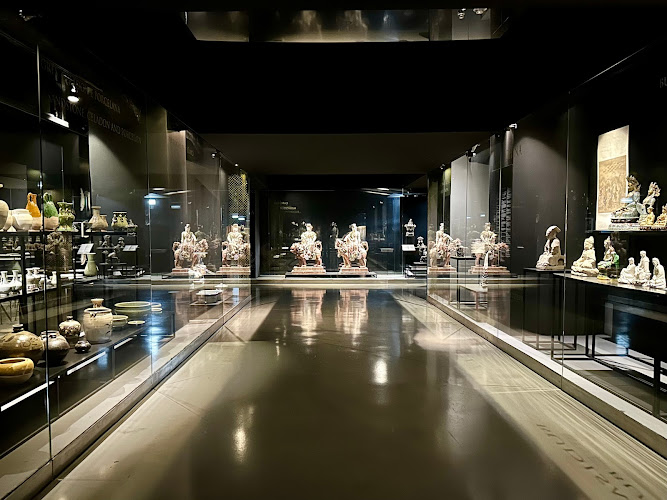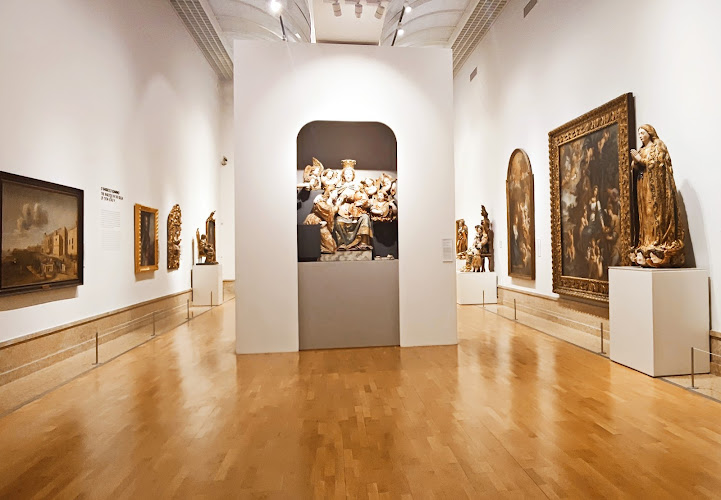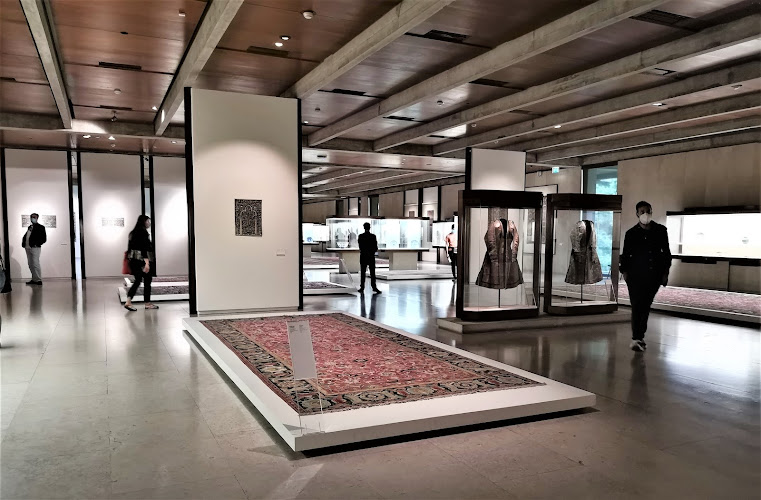
Calouste Gulbenkian Foundation
A philanthropic foundation honoring an oil magnate's legacy, supporting the arts, education, science, and social welfare through a museum, concert hall, and…
Discover top-rated museums, landmarks, and practical traveler recommendations in Lisbon.
A philanthropic foundation honoring an oil magnate's legacy, supporting the arts, education, science, and social welfare through a museum, concert hall, and…
A contemporary science museum with interactive exhibits, experiments, workshops & kids' play areas.
A captivating museum housed in a former mansion, showcasing exquisite historical silverware, European paintings, and Chinese porcelain.
The Calouste Gulbenkian Museum houses a world-class collection spanning from ancient Greek and Roman art to European artistic marvels.
A treasure trove of martial history housed in stunning Baroque surroundings, featuring weaponry, military wagons, and frescoes depicting Portuguese battles.
A cutting-edge art museum showcasing the enigmatic works of renowned graffiti artist Banksy.
A museum housed in a baroque-era church where visitors can experience interactive exhibits about the history and creation of currency.
Quake – Museu do Terramoto de Lisboa is an immersive museum dedicated to exploring the impact of the 1755 Lisbon earthquake through…
A captivating journey through European artistic history housed in a modernized 17th-century palace.
A captivating museum showcasing ornate, 16th–19th century royal carriages housed in an opulent, 18th-century palace riding arena.
A magnificent neoclassical palace, formerly the residence of Portugal's royal family, now a museum showcasing decorative arts.
A national museum showcasing intricate Portuguese azulejo tiles within a historic 16th-century monastery.
A museum dedicated to Portuguese marionettes and the history of puppetry.
A captivating museum showcasing Lisbon's history from prehistory to the early 20th century, housed in the elegant Pimenta Palace.
This modern museum houses an impressive array of Asian and Portuguese art and artifacts.
A modern & contemporary art museum featuring works by Picasso, Bacon, & Warhol plus temporary exhibitions.
A 17th-century baroque church transformed into a mausoleum honoring Portugal's most celebrated figures.
A ruined Gothic church turned museum, hauntingly beautiful and evocative.
Lisbon, Portugal houses extraordinary artistic and historical collections spanning millennia. With 22 curated institutions across 1300-598 Lisboa, 1067-001 Lisboa, 1700-091 Lisboa, 1100-150 Lisboa, 1100-148 Lisboa, each venue provides an unforgettable window into civilization, innovation, and creative genius.
The cultural institutions of Lisbon encompass monumental national repositories, preserved domestic palaces, and specialized foundations. Notable strengths across current exhibits emphasize Baroque Architecture, Interactive Exhibits, Chronological Exhibits. Many flagship museums host evening openings allowing unhurried contemplation away from midday tour groups.
Practical advice on etiquette, timing, and savings for museums in Lisbon.
Premier attractions in Lisbon routinely sell out days in advance. Reserve official timed-entry tickets online to bypass primary admission queues.
Many flagship institutions offer evening hours once or twice weekly. Touring galleries under museum illumination offers dramatic tranquility and fewer tour groups.
Historic marble floors and cobblestones demand supportive walking shoes. Limit yourself to one or two major cultural visits per day in Lisbon to prevent sensory exhaustion.
Essential planning questions answered for exploring museums in Lisbon.
Our curated guide features 22 verified museums across Lisbon with an average visitor rating of 4.5 out of 5 stars. Explore the ranked listings above to compare hours, locations, and traveler highlights.
For high-demand venues and iconic landmarks in Lisbon, booking advance timed tickets online is strongly recommended, especially during peak travel months and weekend periods.
Lisbon boasts comprehensive public transit including metro, bus, and light rail networks connecting all primary points of interest. Walking between clustered venues in historic centers is also highly rewarding.
Major international credit and debit cards, along with contactless mobile wallets (Apple Pay, Google Pay), are accepted almost everywhere. Keeping a modest amount of cash is useful for small tips and street kiosks.