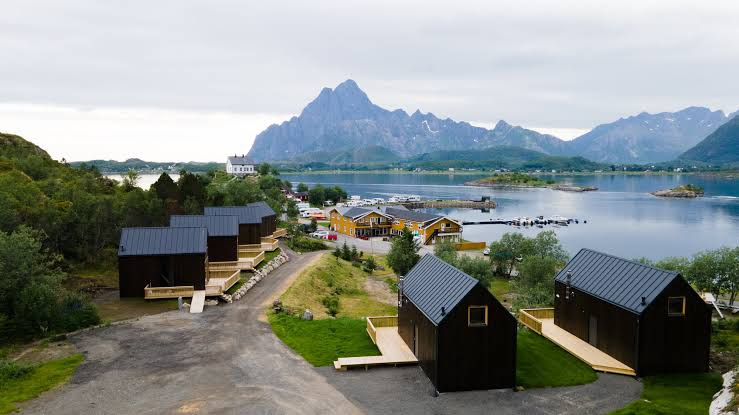
Brygga Restaurant is a waterfront seafood restaurant in Å, the small historic fishing village at the southwestern end of Lofoten’s E10. Its setting is a major part of the appeal: traditional timber buildings, rorbuer-style fishermen’s cabins, harbor edges, and the sharp mountain terrain of Moskenesøya make a meal here feel rooted in the working maritime landscape rather than detached from it.
Å is a destination village rather than a city dining district, and Brygga suits travelers who want to slow down after the drive through the islands. Come for lunch or make dinner the unhurried conclusion to a day of village exploration, coastal weather watching, and fishing-history stops. The restaurant’s seafood focus connects naturally with the cod fisheries and stockfish trade that shaped this far-flung settlement.
Standout Highlights & What Not to Miss
The strongest reason to visit is the combination of local-minded seafood dining and a location that makes sense only here. This is not the place to rush through a standardized meal before moving on; look around, ask what is especially good that day, and treat the surrounding harbor as part of the experience. Current offerings can change with supply and season, so flexibility is more useful than arriving committed to one specific dish.
- The waterfront atmosphere: Sit down amid Å’s traditional fishing-village fabric, where timber structures and harbor activity provide a tangible sense of place.
- Ask about the day’s fish: Enquire about the catch and preparations currently available. Cod, halibut, fish soup, and stockfish-related dishes are meaningful possibilities in this region, but the menu should be your guide.
- Stockfish context: Look for an opportunity to learn how air-dried cod became central to Lofoten’s economy. Even if you do not order it, understanding its role adds depth to the visit.
- Traditional timber surroundings: Take a few minutes before or after eating to notice the practical relationship between cabins, docks, storage buildings, and the water.
- A drink pairing conversation: Ask staff for a wine, beer, or non-alcoholic recommendation that works with your chosen fish rather than defaulting to a generic order.
Visitor Strategy & Planning Snapshot
| Planning Factor | What to Expect | Practical Strategy |
|---|---|---|
| Ideal Arrival Window | Å is most enjoyable when you leave room for the village and waterfront, not just the meal. | Arrive with enough daylight to walk the harbor area, especially if this is your first stop in Å. |
| Typical Time Needed | A meal commonly fits into about 1 to 1.5 hours, with longer stays possible when dining at an unhurried pace. | Allow extra time for a pre- or post-meal stroll and for the drive to or from other Lofoten stops. |
| Booking / Queue Reality | Demand can be concentrated in a small destination village, particularly during busy travel periods and at dinner. | Reserve ahead when your itinerary depends on a particular sitting; confirm directly if walk-ins are essential. |
| Terrain & Accessibility | Waterfront approaches in Å can involve slopes and uneven surfaces, and historic buildings may have thresholds. | Contact the restaurant in advance to confirm step-free entry, seating needs, and accessible toilet arrangements. |
| Weather / Seasonal Fit | Wind, rain, and fast-changing coastal conditions are part of Lofoten travel and can make an indoor meal especially welcome. | Use Brygga as a weather-flexible anchor, but build buffer time around ferry, road, and outdoor plans. |
Honest Trade-Offs: Best For vs. Who Might Skip
Brygga Restaurant is best for seafood enthusiasts, couples, coastal road-trippers, and visitors interested in the history behind Lofoten’s fishing villages. It is particularly rewarding for people who value atmosphere and regional context as much as the plate. Travelers with dietary requirements should ask early about suitable options rather than assuming a seafood-led kitchen can accommodate every need. Those seeking late-night urban energy, a quick grab-and-go stop, broad international variety, or fully predictable availability may find the destination-village format less convenient. It is also worth considering whether a harbor setting and historic surroundings matter to your group; if the priority is simply the fastest meal on a tightly timed transit day, a leisurely waterfront restaurant may not be the best fit.
Neighborhood Context & How to Pair Your Visit
Pair Brygga with a walk through Å’s compact historic core, where fishing cabins, drying-rack landscapes, and waterfront workspaces explain the village’s character better than a drive-by ever could. Nearby fishing museums make a natural companion before a meal, giving context to the cod trade, boats, and seasonal labor that sustained the community. Because Å sits at the road’s southwestern terminus, it works well as a deliberate final stop after exploring Moskenesøya rather than a casual detour. Keep the itinerary walkable: park once where appropriate, explore the harbor and museum area on foot, then settle in for food before continuing to your accommodation or transport connection. In changeable weather, reverse the order and dine first, leaving the village walk for a clearer spell.
When planning your Lofoten Islands travel guide or browsing verified restaurants in Lofoten Islands, pair this stop with standout local spots including Visitor Center Lofoten National Park, Paleo Arctic, Solsiden Lofoten, and Å Rorbuer (nearby).