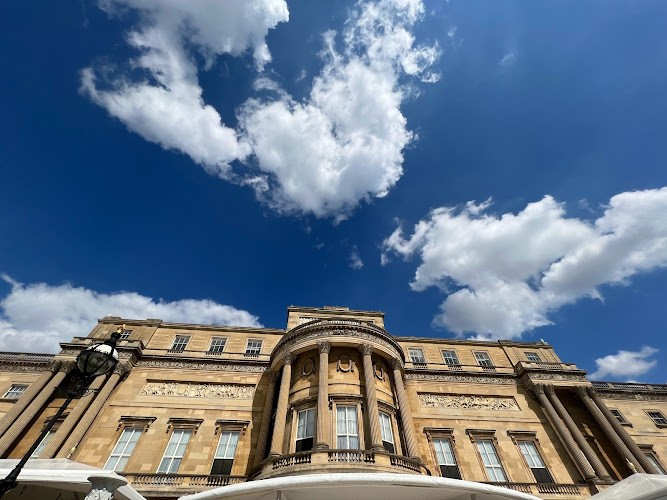
The Courtauld Gallery occupies the north wing of Somerset House on the Strand, a Georgian and neoclassical riverside complex that once housed government offices and naval administration. Inside this severe eighteenth-century shell sits one of the most concentrated collections of Impressionist and Post-Impressionist painting outside Paris, alongside Old Master drawings, medieval altarpieces, and twentieth-century works assembled largely through the private taste of a single textile magnate. It is a gallery built on connoisseurship rather than encyclopedic ambition, and that focus is exactly what makes a visit here rewarding rather than exhausting.
The Courtauld Gallery sits inside Somerset House on the Strand, London, and holds Samuel Courtauld’s collection of Impressionist and Post-Impressionist masterworks, including Manet’s A Bar at the Folies-Bergère and Van Gogh’s Self-Portrait with Bandaged Ear. Standard adult admission runs approximately £12-£18 depending on exhibitions. Allow 1.5-2 hours. Arrive at opening or after 3pm on weekdays to avoid coach-tour crowds moving through Somerset House’s courtyard.
At A Glance
| Category | Details |
|---|---|
| Address | Somerset House, Strand, London WC2R 0RN |
| Operating Hours | Daily 10am–6pm (last entry 5:15pm); check website for late openings |
| Price Range / Admission | Adult approx. £12–£18; concessions available; under-18s and students often free or discounted |
| Highlights | Manet’s A Bar at the Folies-Bergère, Van Gogh’s Self-Portrait with Bandaged Ear, Cézanne’s Card Players, Botticelli’s Trinity, Rubens sketches |
| Transport/Transit Access | Temple (District/Circle), Covent Garden or Charing Cross (Northern/Bakerloo/rail), multiple bus routes along Strand and Aldwych |
Deep Origins, Architectural Evolution & Cultural Significance
Somerset House itself dates to 1776, designed by Sir William Chambers to replace a Tudor palace on the same riverside plot. For nearly two centuries the building functioned as a hub of British administration, housing the Navy Board, tax offices, and later the Registrar General’s records. The Courtauld Institute of Art, founded in 1932 by industrialist Samuel Courtauld, art historian Lord Lee of Fareham, and collector Sir Robert Witt, initially operated from a townhouse in Portman Square. Samuel Courtauld’s fortune came from the family’s textile and viscose rayon business, and his personal collecting instinct in the 1920s ran directly counter to conventional British taste of the period, which still viewed Impressionism with suspicion. He bought aggressively and specifically, acquiring works that had been dismissed or undervalued by contemporary critics, and the resulting collection reflects a coherent, personal vision rather than an institutional acquisitions committee’s compromise choices.
The Institute moved into Somerset House’s north wing in 1989, after decades split across other London addresses, giving the collection a permanent home appropriate to its stature. The move required careful adaptation of Chambers’ original interiors, many of which retained their eighteenth-century proportions, cornicing, and window placement. Architects preserved the historic room sequence rather than gutting it for a white-cube treatment, so visitors move through galleries that still feel like domestic-scaled rooms rather than warehouse spaces. This matters enormously for how the paintings read: works are hung at a scale and intimacy that suits their original private-collection context, a marked contrast to the vast halls of the National Gallery a few minutes’ walk away. A major renovation completed in 2021 restored historic finishes, improved lighting rigs, and reorganized the collection chronologically across three floors, running from medieval and Renaissance works on the ground floor up through Impressionism and into twentieth-century British art on the top floor.
Signature Highlights & Detailed Offerings
Édouard Manet’s A Bar at the Folies-Bergère (1882), the artist’s final major work, anchors the collection and draws sustained scholarly attention for its ambiguous mirror perspective, which places the viewer in an impossible spatial relationship to the barmaid and her reflected customer. Vincent van Gogh’s Self-Portrait with Bandaged Ear (1889), painted shortly after the Arles incident, sits nearby and remains one of only a handful of the artist’s self-portraits in UK public collections. Paul Cézanne’s The Card Players is represented here in one of the artist’s five versions of the subject, offering direct comparison points for visitors who have seen the Musée d’Orsay or Metropolitan Museum versions. Beyond these headline works, the gallery holds Georges Seurat’s pointillist studies, Edgar Degas’ bronze dancers, Paul Gauguin’s Tahitian-period canvases, and a strong run of Toulouse-Lautrec prints and posters documenting Montmartre nightlife.
The medieval and Renaissance holdings, often overlooked by visitors racing toward the Impressionists, include Sandro Botticelli’s Trinity with Saints, Lucas Cranach the Elder’s Adam and Eve, and a rich collection of Rubens oil sketches that show the working process behind his larger commissioned altarpieces. The Print Room and drawings collection, accessible by appointment for researchers, contains material from Michelangelo, Rembrandt, and Tiepolo. The autumn 2026 programming brings a site-specific commission from painter Ella Walker responding to the historic interiors, a full rehang of the modern paintings galleries reorganizing works by thematic rather than strict chronological grouping, and Salman Toor’s first European solo exhibition, marking a deliberate curatorial push toward contemporary figuration alongside the historic core collection.
Sensory & Spatial Walkthrough
Entry from the Somerset House courtyard takes visitors up a stone staircase with worn treads polished by two centuries of use, immediately setting a tactile, historic register before any painting comes into view. Gallery walls run in muted tones — deep teal in the Impressionist rooms, warmer ochre in the Renaissance galleries — chosen specifically to complement period frames and canvas tonalities rather than compete with them. Natural light filters through restored sash windows on the Strand-facing rooms during morning hours, though conservation-grade blinds moderate direct sun exposure on the most light-sensitive works; artificial gallery lighting compensates evenly by early afternoon. Floors are original wide-board timber in several rooms, producing a soft creak underfoot that adds to the domestic-scaled acoustic environment — conversations stay hushed by the architecture itself rather than by posted signage. Seating is sparse but well-placed: a single bench facing the Manet allows extended viewing, and the top-floor café spills onto a small terrace overlooking the Thames-facing courtyard, offering a genuinely different light quality and mood from the enclosed galleries below. By late afternoon, low sun through the west-facing windows throws long shadows across the ground-floor sculpture displays, a detail photographers should note.
Insider Visitor Strategy & Pro Tips
- Book timed tickets online in advance during summer weekends and school holidays; walk-up queues form quickly when Somerset House hosts its outdoor courtyard fountains and events.
- Arrive at 10am opening or after 3pm on weekdays for the quietest galleries; midday sees the heaviest footfall from tour groups combining the gallery with a Somerset House courtyard visit.
- Photography without flash is permitted in most permanent collection galleries; special exhibitions frequently prohibit photography entirely, so check signage at each entrance.
- Bags larger than a small daypack must go to the cloakroom; this is enforced more strictly during major temporary exhibitions.
- The best photography angle on A Bar at the Folies-Bergère is from a slight left angle, which reveals the mirror ambiguity more clearly than a straight-on shot.
- Combine a visit with the free Somerset House courtyard, which requires no ticket and offers excellent photography of the building’s façade without gallery admission.
Curated Half-Day Neighborhood Pairing Itinerary
Begin at the Courtauld Gallery for opening hour, spending roughly ninety minutes moving chronologically from the ground-floor Renaissance rooms up to the top-floor Impressionist galleries. Exit into the Somerset House courtyard and walk five minutes east along the Strand to St Mary le Strand church, a compact Baroque building by James Gibbs worth a ten-minute pause for its ceiling plasterwork. From there, continue eight minutes on foot toward Covent Garden Piazza, stopping at Monmouth Coffee on Monmouth Street or Neal’s Yard for a coffee break amid the market’s restored Victorian ironwork. Finish the loop with a ten-minute walk to the London Transport Museum in Covent Garden Piazza, an efficient counterpoint to the morning’s fine art with its transport history and design-focused collection, closing out a half-day circuit that stays entirely within a fifteen-minute walking radius.
Practical Logistics & Universal Accessibility
Temple station on the District and Circle lines sits directly across the Strand from Somerset House, roughly a three-minute walk via exit onto Temple Place. Covent Garden (Piccadilly line) and Charing Cross (Northern, Bakerloo, and National Rail) both sit within a ten-minute walk and offer step-free alternatives when Temple’s limited step-free access is inconvenient. Multiple bus routes, including the 6, 9, 11, 15, 23, and 176, stop along the Strand and Aldwych directly outside Somerset House. The gallery itself is fully wheelchair accessible via a lift connecting all floors, with accessible toilets on the ground and first floors; visitors should request the accessible entrance route via the East Wing if the main courtyard staircase is under maintenance. There is no on-site parking; the nearest public car parks are at NCP Drury Lane and NCP Chinatown, both roughly a ten-minute walk away, with hourly rates typically starting around £6-£8 and rising steeply for all-day stays. There is no formal dress code. Payment throughout the gallery, café, and gift shop is card-only in most instances, with contactless widely accepted; cash is not guaranteed to be accepted at all tills.
Frequently Asked Questions
Is the Courtauld Gallery free to enter? No, standard admission is charged, though the gallery periodically offers free entry evenings; check the official website for current promotional dates.
How long should I budget for a visit? Most visitors spend 1.5 to 2 hours covering the permanent collection; add 30-45 minutes for a temporary exhibition.
Can I take photographs inside? Non-flash photography is generally permitted in the permanent collection galleries but frequently restricted in temporary exhibitions.
Is the gallery suitable for young children? Yes, family trails and activity sheets are available at the front desk, though the intimate room scale means prams may need to be left in the cloakroom.
What is the nearest tube station? Temple station on the District and Circle lines is a three-minute walk directly across the Strand.
Does the gallery have a café or restaurant? Yes, a café operates on the top floor with courtyard-facing views, serving light lunches, pastries, and coffee.