
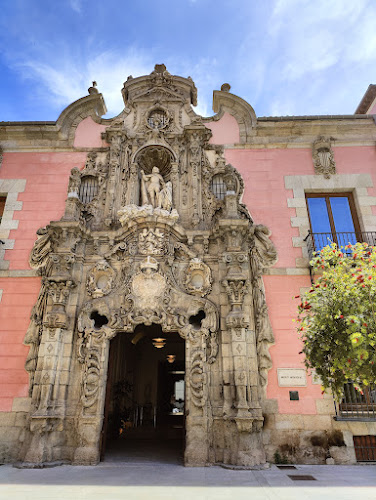
The History Museum of Madrid (Museo de Historia de Madrid) occupies the former Hospicio de San Fernando at Calle de Fuencarral, 78, in the Malasaña and Chueca quarter of Madrid’s Centro district. The building was designed by Pedro de Ribera and completed in 1726 as a charity hospice for the poor and orphaned, and its extravagant Churrigueresque portal is among the most photographed Baroque facades in the city. Since the museum opened here in 1929, visitors have come to trace Madrid’s growth from a modest Habsburg-era town into a modern capital through paintings, maps, ceramics, documents and large-scale models.
What to Expect at History Museum of Madrid
The collection is arranged chronologically around the old hospice courtyard, starting with the city’s 1561 designation as the royal capital under Philip II and running through the 20th century. Rooms hold royal portraits, engravings of the Plaza Mayor, decorative arts and city plans that show how the streets of today’s Centro took shape. The pairing of civic history and fine art makes the museum an easy introduction to Madrid before heading out to the neighborhoods it describes.
Even the building itself is an exhibit. Ribera’s carved stone entrance, crowded with saints, scrolls and a statue of San Fernando, sets the tone for a visit, and the interior retains the hospice’s airy patio layout. The museum is run by the Ayuntamiento de Madrid and shows the city’s own record of itself, which gives the displays a local, well-documented depth that larger national museums rarely match on Madrid specifically.
- Pedro de Ribera portal: The Churrigueresque main doorway of 1726 is one of Madrid’s finest examples of exuberant Baroque stone carving.
- Goya’s Allegory of the City of Madrid: The painting is a highlight among the museum’s fine-art holdings and ties Madrid’s civic identity to one of Spain’s greatest painters.
- Scale models of historic Madrid: Detailed reconstructions show how the city appeared in earlier centuries, helping visitors picture streets that have long since changed.
- Maps, plans and documents: Historic city plans and archival papers chart the capital’s urban growth from the 16th century onward.
- Decorative arts and ceramics: Furniture, porcelain and everyday objects bring period interiors and daily life into focus.
History Museum of Madrid at a Glance
| Detail | Information |
|---|---|
| Address | Calle de Fuencarral, 78, 28004 Madrid, Spain |
| Neighborhood / Area | Centro, on the Malasaña and Chueca border |
| Operating Hours | Tuesday to Sunday 10:00 to 19:00; closed Mondays |
| Admission / Price Range | Admission has traditionally been free for general visitors; confirm current policy on the official site |
| Recommended Visit Duration | 1 to 1.5 hours |
| Nearest Transit / Parking | Metro Tribunal (Lines 1 and 10) and Bilbao (Lines 1 and 4); nearby public car parks in Malasaña |
| Official Website & Phone | madrid.es museum page, +34 917 01 18 63 |
Visiting Tips, Getting There & Nearby Pairings
Arrive close to the 10:00 opening for the quietest galleries, as weekday mornings tend to be calmer than weekend afternoons. Metro Tribunal, where Lines 1 and 10 meet, is the closest station, roughly a two-minute walk, and Bilbao is also close at hand. Street parking in the area is limited and restricted, so public transport is the more practical choice. The museum is operated by the city, so check the official website for current free-entry days, temporary exhibitions and any scheduled closures before you go.
The museum is housed in a historic building, so confirm step-free routes and lift access with staff or via the official site if you use a wheelchair or push a stroller. Combine your visit with the surrounding streets: Plaza del Dos de Mayo and the Malasaña cafe scene are within a ten-minute walk, the Mercado de San Ildefonso food hall sits along Calle de Fuencarral, and the Gran Via is a short stroll south.
Frequently Asked Questions
What are the opening hours and best time to visit?
The museum is open Tuesday through Sunday from 10:00 to 19:00 and closed on Mondays. Weekday mornings shortly after opening are typically the calmest.
How much does it cost to enter?
The museum has traditionally offered free admission to the permanent collection, with some temporary exhibitions or activities possibly carrying a charge. Confirm the latest policy on the official madrid.es museum page.
How long should I plan to spend?
Allow one to one and a half hours to see the main galleries and the Baroque entrance. History enthusiasts who read the documents and examine the models closely may want closer to two hours.
Is the museum suitable for families and accessible visitors?
Yes, the models and paintings engage older children and teens, and there is no dress code. As a historic building it can have uneven access in places, so contact the museum on +34 917 01 18 63 to confirm accessibility arrangements.
When planning your Madrid travel guide or browsing verified attractions in Madrid, pair this stop with standout local spots including Berlin Park, Museo Geominero, Hotel Wellington & Spa, and Museo del Romanticismo (0.2 km away).


