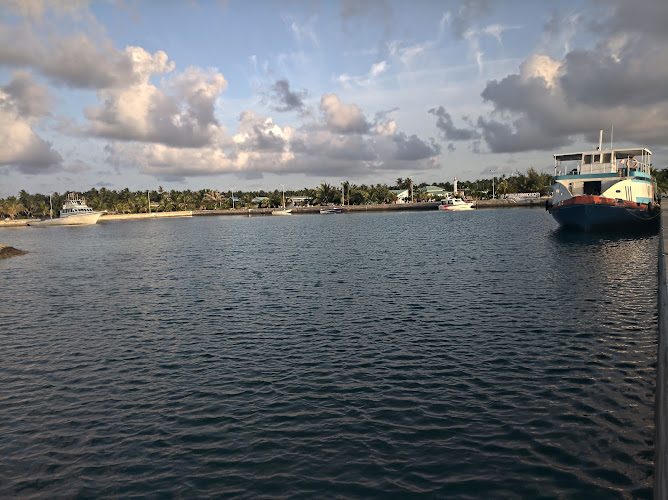
Fuvahmulah Nature Park is a wetland eco-tourism park at Dhadimagu Kilhi, Dhadimagu, Fuvahmulah, Maldives, created in 2018 to protect one of the country’s rare freshwater marsh landscapes. Developed through the European Union-funded Climate Change Adaptation Project, it gives travelers a land-based counterpoint to the island’s famous diving: reed beds, freshwater, native vegetation, birdlife, and quiet paddling rather than reef excursions.
What to Expect at Fuvahmulah Nature Park
The park occupies the marshy margins of Dhadimagu Kilhi, one of Fuvahmulah’s distinctive freshwater wetlands. This environment is exceptional in the Maldives, whose low coral islands are generally defined by saltwater lagoons rather than inland lakes. Look closely at the dense vegetation around the water: hao reeds grow here and have long been used locally for traditional mat weaving. The combination of open water, muddy wetland edges, palms, and reeds makes the park a useful introduction to Fuvahmulah’s ecology and its relationship with freshwater.
The central experience is unhurried time on and beside the lake. Canoes and pedal boats can be hired for a close view of the reed-fringed shoreline, while bicycle rentals make it easier to explore the park’s perimeter and connect with the surrounding Dhadimagu area. Swimming is also an established activity at the park. Come for a slower visit than a beach stop: watch for movement in the vegetation, photograph the layered greens of the wetland, and ask staff about the lake’s formation, conservation work, and the cultural uses of hao.
- Dhadimagu Kilhi: The freshwater lake and marsh system at the heart of the park, a rare inland habitat in the Maldives.
- Hao reed beds: Locally significant reeds used in traditional mat weaving, growing among the wetland vegetation.
- Canoe rides: Rental canoes offer the most intimate way to observe the lake’s vegetated edges from the water.
- Pedal boats: A relaxed, family-friendly option for getting onto the freshwater lake without paddling experience.
- Bicycle rentals: Bikes provide a practical way to cover more of the park and nearby Dhadimagu landscapes.
Fuvahmulah Nature Park at a Glance
| Detail | Information |
|---|---|
| Address | Dhadimagu Kilhi, Fuvahmulah, Maldives |
| Neighborhood / Area | Dhadimagu, beside Dhadimagu Kilhi wetland |
| Operating Hours | Mon, Wed, Thu, Sat & Sun 8 AM–12 AM; Tue 2–5:30 PM; Fri 7–10 AM and 2–5:30 PM |
| Admission / Price Range | No published admission figure; confirm entry and canoe, pedal-boat, or bicycle rental charges directly. $ |
| Recommended Visit Duration | 1 to 2 hours; allow longer for boating and cycling |
| Nearest Transit / Parking | Fuvahmulah has no fixed-route public transit; reach it by bicycle, scooter, or local taxi from island accommodation. Ask staff about vehicle parking on arrival. |
| Official Website & Phone | Fuvahmulah City Council; +960 759-0059 |
Visiting Tips, Getting There & Nearby Pairings
Plan a morning visit on days the park opens at 8 AM, when the heat is more manageable for walking and cycling and the water is at its calmest. Tuesday operates only in the afternoon, while Friday has split morning and afternoon hours. Call ahead if boating is central to your visit, particularly in changeable weather, and bring drinking water, insect repellent, sun protection, and a dry bag for phones and cameras. There is no need for formal resortwear; lightweight clothing and shoes that can cope with damp ground are the sensible choice.
Use a local taxi, rented bicycle, or scooter rather than looking for bus stops; Fuvahmulah’s compact street network is best navigated independently. The park is an outdoor wetland, so surfaces around the water can be uneven, muddy, and affected by rain. Visitors using wheelchairs or strollers should telephone before arrival to discuss the current route condition and whether staff can assist with access; watercraft require a transfer and are not a substitute for a step-free promenade. Pair the visit with nearby Hoadhadi Nature Park, about 0.6 kilometres away, and continue through the Dhadimagu Kilhi landscape. The historic Vasho Veu, the large communal well in Dhoondigan, is another worthwhile island stop by bicycle or taxi.
Frequently Asked Questions
When is Fuvahmulah Nature Park open, and when should I go?
The park opens from 8 AM to midnight on Monday, Wednesday, Thursday, Saturday, and Sunday; Tuesday is 2–5:30 PM, and Friday is 7–10 AM and 2–5:30 PM. Early morning is the best time for a cooler walk, cycling, and quieter wetland observation.
Is there an admission fee or do I need to reserve a boat?
A current public admission price is not published. Contact the park on +960 759-0059 before visiting to confirm entry arrangements and the day’s fees and availability for canoes, pedal boats, and bicycles.
How long should I spend at the park?
Budget one hour for a look around the lake and reed beds, or up to two hours if you hire a canoe, pedal boat, or bicycle. Travelers interested in photography and wetland ecology will appreciate allowing extra time during the cooler part of the day.
Is Fuvahmulah Nature Park suitable for families and wheelchair users?
Families can enjoy the open-air setting and pedal boats, with close supervision around water essential. The natural wetland terrain may be uneven or soft after rain; wheelchair users and guests with limited mobility should call ahead about current path conditions and assistance.
When planning your Maldives travel guide or browsing verified parks in Maldives, pair this stop with standout local spots including Machan Maldives, Orientale, Department of Heritage, and Hoadhadi Nature Park (0.6 km away).