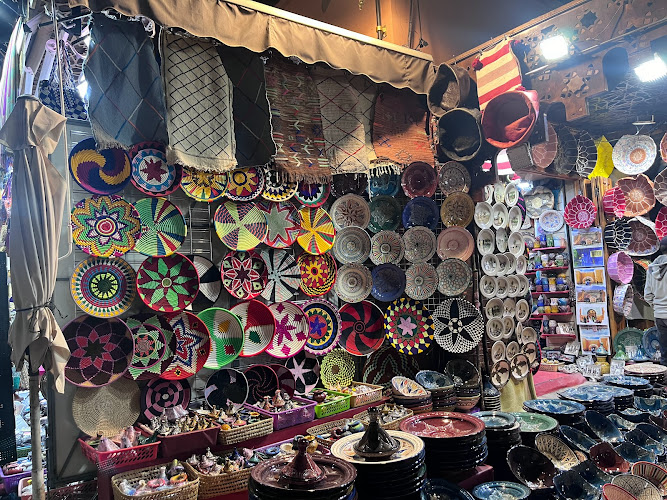
The Medina of Marrakesh is the walled historic core of Morocco’s Red City. The Almoravids founded it in 1070–72, and UNESCO inscribed it as a World Heritage Site in 1985. Inside roughly 19 km of ochre ramparts, its 700-hectare maze of souks, mosques and riads still runs on trade, craft and street performance from morning until well past midnight.
Most visits start at Jemaa el-Fna, the great square below the 77-metre minaret of the Koutoubia Mosque. By day, juice vendors press oranges and henna artists work under parasols. At dusk, smoking food stalls set up rows of grilled merguez, snail broth and harira, while Gnawa musicians and storytellers draw crowds. North of the square, Souk Semmarine branches into specialist lanes for leather babouches, hammered brass lanterns, Berber rugs and the dye-stained skeins of the dyers’ souk. The carved cedar and zellige tilework of the Ben Youssef Madrasa and Bahia Palace reward slower exploration.
Visitor Highlights & Practical Info
Arrive between 9 and 11 a.m. to browse the souks before the tour groups. Return to Jemaa el-Fna around sunset for the food stalls. Spring (March–May) and autumn (October–November) bring the mildest weather, while summer afternoons often top 40°C.
When shopping, haggle with good humour, and expect a final price well below the opening ask. Politely decline unofficial guides who offer directions. Some monuments are still under restoration after the 2023 earthquake, so confirm opening hours locally. Taxis drop visitors at Bab Agnaou or near the Koutoubia, since cars cannot enter most of the Medina.