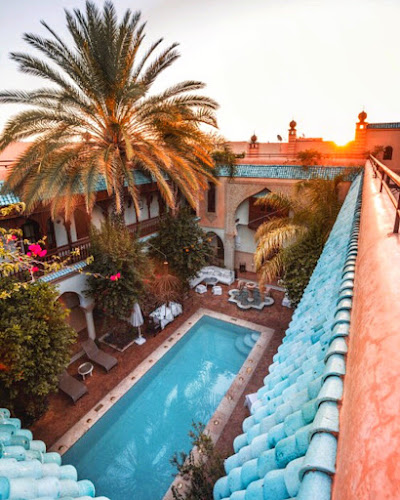
Musée de la Palmeraie is a small contemporary art museum set inside restored rammed-earth farm buildings on the Route de Fès side of Marrakesh’s palm grove. The galleries sit within a roughly two-hectare park, so the grounds are as much the attraction as the walls. If you picture a white-cube museum, adjust that: this is a farmstead where rooms of paintings and sculpture open onto gardens, shaded benches and water channels.
The setting in Annakhil, the palm-grove district northeast of the medina, is the main reason to come. Most Marrakesh attractions are compressed into tight walled spaces with a constant stream of people. Here, reviewers repeatedly describe having the place almost to themselves, with the quiet broken mainly by birdsong, frogs and the occasional school group. It is a modest, personal institution rather than a blockbuster, and it works best if you treat it as a garden visit with serious art attached.
Standout Highlights & What Not to Miss
Plan to alternate between indoors and outdoors rather than doing all the galleries first. The mix is what makes the visit feel unhurried.
- The cactus garden: The most consistently praised feature. Spring visitors in particular report many species in bloom, and the sculptural shapes make it a strong spot for photography.
- The contemporary art rooms: Several galleries show Moroccan painting and sculpture, from abstract work to naive styles and pieces drawing on Arabic calligraphy. Temporary exhibitions rotate, and some visitors have caught artist talks, so the experience can differ noticeably from one trip to the next.
- Water garden and pond: A shaded pond with frogs and turtles, plus a narrow channel with goldfish, gives the grounds a cooler, greener corner that is welcome in warm months.
- Rose and dry gardens: The rose beds add colour and scent in season, though upkeep varies, and the dry garden shows how much structure plants can give with very little water.
- Courtyard wildlife and seating: Tortoises have been seen roaming near the entrance quadrangle. Tables and benches scattered through the park make it easy to sit with a book.
- The small perfume display: Some recent visitors mention a compact perfume museum on site. Treat it as a short bonus rather than a reason to travel.
Visitor Strategy & Planning Snapshot
| Planning Factor | What to Expect | Practical Strategy |
|---|---|---|
| Ideal Arrival Window | Mornings are cooler and the gardens are at their freshest; school groups occasionally pass through on weekdays. | Arrive in the first half of the day, especially from late spring onward, and use the afternoon for a second slower loop of the gardens. |
| Typical Time Needed | Most visitors report roughly 1.5 to 2 hours; garden lovers and readers stretch it to a half-day. | Allow 2 hours for galleries plus gardens. Add more if you bring a picnic or want to sketch or photograph. |
| Booking / Queue Reality | Paid admission at a modest level; no queues are reported and crowds are rare. Opening days and hours have been described as inconsistent. | Contact the museum before you go to confirm it is open and to ask about the current entry rate and workshop pricing. Arrange a taxi that can wait or collect you. |
| Terrain & Accessibility | Flat garden paths and courtyards. The listing notes a wheelchair-accessible entrance, parking lot and restroom. | Wear closed shoes near the cactus beds. Bring water and snacks, as visitors note there is no dependable café on site. |
| Weather / Seasonal Fit | Spring brings cactus blooms; summer midday heat is intense, while winter days are mild and bright. | Aim for March to May or autumn for the best balance. In summer, go early and use the shaded pond area. |
Honest Trade-Offs: Best For vs. Who Might Skip
This is best for travelers who need a pause from the medina’s intensity: garden enthusiasts, cactus and succulent fans, photographers, people travelling with children who enjoy frogs and tortoises, and anyone curious about Moroccan contemporary art beyond the big-name institutions. The quiet atmosphere, well-kept paths and step-free access also suit slower-paced or mobility-conscious visitors.
You might skip it if you want a deep, large-scale museum collection, since the art holdings are small and some reviewers rate the garden above the galleries. The location is another consideration: it is a taxi ride from central Marrakesh, signage on approach is limited, parking nearby is informal, and there is no cafe to count on. Because opening days have been reported as unreliable, anyone on a tight schedule should confirm before travelling out.
Neighborhood Context & How to Pair Your Visit
Annakhil and the wider Palmeraie are residential and spread out, so this is not a place for a walking tour of dense sights. Instead, build a half-day around it: go in the morning, picnic in the grounds, then head back toward the city for the afternoon. Some visitors pair it with a visit to the Majorelle Garden on the same day, which makes for a good contrast between a famous, busy botanical garden and this calm, local one. If you have time before leaving, a short stroll along the nearby streets gives a glimpse of everyday life in the palm grove, which visitors describe as friendly and low-pressure. Ask your driver to return at an agreed time, because spotting a taxi on the road outside can take patience.
When planning your Marrakech travel guide or browsing verified attractions in Marrakech, pair this stop with standout local spots including Moulay Hassan Park, Boutique Majorelle, Pepe Nero, and Centre Commercial Dar Al Baroud (3.7 km away).