Quick answer: Nara is Japan’s ancient 8th-century capital, renowned for hundreds of freely roaming sika deer in Nara Park, Tōdai-ji’s towering Great Bronze Buddha, and atmospheric stone-lantern forest trails at Kasuga Taisha.
Editorial disclosure: This destinations.ai guide was prepared with AI assistance and checked against the official sources linked below. Accommodation and activity placeholders may use affiliate links; that does not change the planning advice.
Overview: Why Visit Nara
Nara, established in 710 AD as Japan’s first permanent imperial capital (then known as Heijō-kyō) in the northern Kansai region just 35 to 45 minutes south of Kyoto and Osaka, is the cultural cradle of Japanese civilization, Buddhist art, and classical architecture. Inscribed as a UNESCO World Heritage site under the “Historic Monuments of Ancient Nara,” the city preserves some of the world’s oldest and largest wooden structures amidst tranquil forested hills.
Key highlights include entering the monumental Tōdai-ji Temple to stand before the 15-meter (49-foot) bronze Great Buddha (Daibutsu), interacting with over 1,200 sacred free-roaming, bowing sika deer in Nara Park, walking among the 3,000 moss-covered stone and bronze lanterns of Kasuga Taisha Shrine, climbing to the panoramic wooden veranda of Nigatsu-dō Hall, strolling through traditional wooden machiya merchant houses in historic Naramachi, and tasting Kakinoha-zushi (persimmon-leaf-wrapped sushi).
Best Time to Visit Nara
Quick answer: Spring Cherry Blossom Season (Late March to Mid-April): Thousands of pale pink *somei yoshino* and weeping cherry trees bloom throughout Nara Park, Mt. Wakakusa, and the precincts of Tōdai-ji and Kōfuku-ji. Temperatures average 15°C to 20°C (59°F to 68°F).
- Spring Cherry Blossom Season (Late March to Mid-April): Thousands of pale pink *somei yoshino* and weeping cherry trees bloom throughout Nara Park, Mt. Wakakusa, and the precincts of Tōdai-ji and Kōfuku-ji. Temperatures average 15°C to 20°C (59°F to 68°F).
- Autumn Foliage (Late October to Early December): Spectacular fiery red Japanese maples and golden ginkgo trees frame stone lanterns and temple ponds at Isuien Garden and Kasuga Taisha. Crisp, dry weather averages 14°C to 19°C (57°F to 66°F).
- Winter & Lantern Festivals (January to February): Cool, crisp winter weather (2°C to 9°C / 36°F to 48°F). On the fourth Saturday of January, Nara celebrates the dramatic Wakakusa Yamayaki, where the grassy slopes of Mount Wakakusa are set ablaze with fireworks. In early February, Kasuga Taisha illuminates all 3,000 bronze and stone lanterns for the Setsubun Mantoro festival.
- Summer (June to August): Hot and humid (30°C to 34°C / 86°F to 93°F). Early mornings and late afternoons are best for visiting temple grounds before crowds arrive.
Key Historic Temples, Shrines & Sika Deer
Quick answer: Tōdai-ji Temple & The Great Buddha (Daibutsuden): Founded in 752 AD by Emperor Shōmu as the head temple of all provincial Buddhist temples in Japan. The massive wooden Great Buddha Hall ( Daibutsuden ) ranks among the world’s largest wooden buildings. Inside sits the colossal Daibutsu (Rushana Buddha), cast from 500 metric tons of bronze and gold. Behind the statue stands a famous wooden pillar with a hole through its base—legend holds that anyone who squeezes through will attain enlightenment in their next life.
- Tōdai-ji Temple & The Great Buddha (Daibutsuden): Founded in 752 AD by Emperor Shōmu as the head temple of all provincial Buddhist temples in Japan. The massive wooden Great Buddha Hall (Daibutsuden) ranks among the world’s largest wooden buildings. Inside sits the colossal Daibutsu (Rushana Buddha), cast from 500 metric tons of bronze and gold. Behind the statue stands a famous wooden pillar with a hole through its base—legend holds that anyone who squeezes through will attain enlightenment in their next life.
- Nara Park Sika Deer (Shika): Over 1,200 wild sika deer roam freely across the 1,600-acre park. In Shinto belief, deer are revered as sacred divine messengers of the gods (associated with Takemikazuchi-no-mikoto of Kasuga Taisha). Purchase stacks of approved wheat-bran deer crackers (shika senbei, ¥200 JPY) from licensed park carts. Many deer have learned to politely bow their heads to tourists to request a cracker.
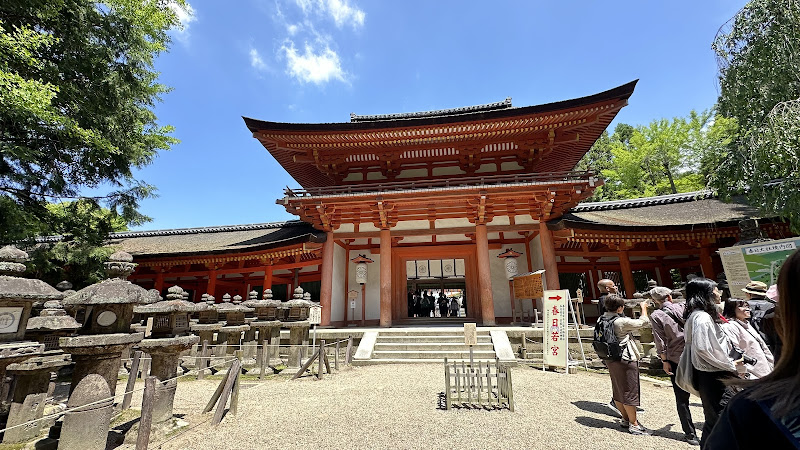
- Kasuga Taisha Shrine: Founded in 768 AD as the tutelary shrine of the powerful Fujiwara clan, set deep inside primeval forest. Renowned for its vermilion-lacquered timber pavilions, 2,000 ancient mossy stone lanterns lining the forest approaches, and 1,000 hanging bronze lanterns inside the inner cloister.
- Nigatsu-dō Hall & Mount Wakakusa: A hillside sub-complex of Tōdai-ji. Climb the stone lanterns and wooden stairs to the elevated open-air veranda of Nigatsu-dō for sweeping sunset panoramas across the Nara Basin. Walk up the grassy slopes of Mount Wakakusa for elevated viewpoints overlooking the entire ancient capital.
- Naramachi Historic Merchant Quarter: The preserved 18th- and 19th-century residential and trading district south of Sanjo-dori. Wander narrow alleys lined with traditional latticed wooden merchant houses (machiya), boutique sake breweries (such as Harushika Sake Brewery), artisan handicraft studios, and tea salons.
- Isuien & Yoshikien Japanese Gardens: Beautiful traditional strolling gardens featuring classical *shakkei* (“borrowed scenery”) incorporating the roof of Tōdai-ji and Mount Wakakusa into pristine pond reflections and moss gardens.
Suggested 1-to-2 Day Nara Itinerary
Quick answer: Day 1: Imperial Temples, Sika Deer & Naramachi. Take a 35-minute morning Kintetsu Express train from Kyoto Station or Osaka-Namba to Kintetsu-Nara Station . Walk through Kōfuku-ji into Nara Park, feeding bowed deer with shika senbei. Enter Tōdai-ji to marvel at the Great Buddha. Climb to Nigatsu-dō Hall for midday basin views. In the afternoon, walk along lantern-lined trails to Kasuga Taisha. Explore Naramachi for persimmon sushi and sake tasting before departing.
- Day 1: Imperial Temples, Sika Deer & Naramachi. Take a 35-minute morning Kintetsu Express train from Kyoto Station or Osaka-Namba to Kintetsu-Nara Station. Walk through Kōfuku-ji into Nara Park, feeding bowed deer with shika senbei. Enter Tōdai-ji to marvel at the Great Buddha. Climb to Nigatsu-dō Hall for midday basin views. In the afternoon, walk along lantern-lined trails to Kasuga Taisha. Explore Naramachi for persimmon sushi and sake tasting before departing.
- Day 2: Early Morning Solitude, Mount Wakakusa & Hōryū-ji. Stay overnight at a traditional ryokan to enjoy Nara Park in peaceful early-morning silence before day-tripper crowds arrive. Hike to the summit of Mount Wakakusa. In the afternoon, take a 20-minute train to Hōryū-ji Temple in Ikaruga, home to the world’s oldest surviving wooden buildings dating to 607 AD.
Yamato Heritage Gastronomy
Quick answer: Kakinoha-zushi (Persimmon Leaf Sushi): Nara’s ancient regional delicacy developed centuries ago to preserve fish transported from the coast: bite-sized blocks of seasoned sushi rice topped with salt-cured mackerel (*saba*), salmon (*sake*), or sea bream (*tai*), tightly wrapped in natural green persimmon leaves rich in antibacterial tannins.
- Kakinoha-zushi (Persimmon Leaf Sushi): Nara’s ancient regional delicacy developed centuries ago to preserve fish transported from the coast: bite-sized blocks of seasoned sushi rice topped with salt-cured mackerel (*saba*), salmon (*sake*), or sea bream (*tai*), tightly wrapped in natural green persimmon leaves rich in antibacterial tannins.
- Miwa Sōmen: Superfine, delicate hand-stretched wheat noodles originating from Sakurai in Nara Prefecture over 1,200 years ago, served ice-cold with dipping dashi broth in summer or warm (*nyumen*) in winter.
- Chagayu (Tea Rice Porridge): A traditional temple breakfast staple: tender rice simmered gently in fragrant roasted green tea (hōjicha), served with pickled Nara vegetables (Narazuke) fermented in sake lees.
- High-Speed Pounded Yomogi Mochi at Nakatanidou: Watch master mochi artisans perform lightning-fast wooden mallet pounding on Sanjo-dori to create warm, pillowy wild mugwort rice cakes stuffed with sweet red azuki bean paste and dusted with roasted soybean flour (*kinako*).
Practical Travel Tips, Transit & Budget
Quick answer: Getting There: Kintetsu-Nara Station is the most convenient rail terminal, located a flat 10-minute walk from Nara Park (35 mins from Kyoto on Kintetsu Kyoto Line; 38 mins from Osaka-Namba on Kintetsu Nara Line). JR Nara Station is also available via the JR Kansai Main Line (covered by the Japan Rail Pass).
- Getting There: Kintetsu-Nara Station is the most convenient rail terminal, located a flat 10-minute walk from Nara Park (35 mins from Kyoto on Kintetsu Kyoto Line; 38 mins from Osaka-Namba on Kintetsu Nara Line). JR Nara Station is also available via the JR Kansai Main Line (covered by the Japan Rail Pass).
- Deer Interaction Etiquette: While accustomed to humans, the deer are wild animals. Do not tease them with food, feed only official *shika senbei* crackers (never human snacks or plastics), and show empty open palms to signal when you have no more crackers.
- Daily Budget Breakdown:
- Budget traveler: $25–$45 USD (¥3,500–¥6,500 JPY)/day (day-trip train fare from Kyoto/Osaka, casual soba/udon meals, deer crackers, temple entry fees).
- Mid-range traveler: $80–$160 USD (¥11,500–¥23,000 JPY)/day (3-star boutique hotel or guesthouse in Naramachi, Tōdai-ji and Kasuga Taisha entry, sit-down Yamato kaiseki lunch and sake tasting).
- Luxury traveler: $350–$900+ USD (¥50,000–¥130,000+ JPY)/day (luxury heritage ryokan stay like Tsukihitei deep in the Kasuga primeval forest, private multi-course seasonal tea-ceremony kaiseki dinner).
Frequently Asked Questions
How big is the Great Buddha at Tōdai-ji?
Tōdai-ji’s Great Buddha is a monumental Vairocana Buddha inside one of Nara’s defining temple complexes. The exact measurements and visitor route are best confirmed through current temple information; allow time for queues, shoes-off areas, and the surrounding Nara Park walk.
Why are there free-roaming deer in Nara Park?
Nara’s deer are closely tied to the area’s religious and cultural history and live freely around Nara Park. Buy deer crackers only from approved sellers, feed them carefully, avoid chasing or touching them, and follow current park guidance because animals can nip or become stressed.
Which train station is closer to Nara Park?
Kintetsu-Nara is usually the more convenient station for the park and central temple route, while JR Nara offers different rail connections. Compare the current train, bus, luggage, and walking options against your hotel rather than choosing by station name alone.
Affiliate placeholder: Compare accommodation options after checking the official property details, location, and cancellation terms.
Affiliate placeholder: Check current activity availability, meeting points, accessibility, and cancellation terms before reserving.
Sources and current planning links
Explore more destinations.ai travel guides when building a longer route.
How should you plan Nara Park?
Start near Kintetsu-Nara or the route that best fits your hotel, visit the main temple area early, and leave time for deer, lanterns, gardens, and an unhurried walk. Nara Park is not one attraction with one entrance.
Tōdai-ji, Kasuga Taisha, Nigatsu-dō, Naramachi, and the park paths each create a different pace. Set a meeting point before the group spreads out, carry water, and expect weather to change how far you want to walk. The official Nara guide describes the city as close to Kyoto and Osaka and well served by rail and bus, but the final route from a station to a temple still includes crowds, crossings, and uneven surfaces.
What is the right way to interact with Nara’s deer?
Buy approved deer crackers only when you are ready to feed them, show empty hands afterward, and give the animals space when they become impatient. The deer are part of Nara’s cultural landscape, not a petting zoo.
Feed one small piece at a time, keep paper and food out of reach, and do not chase, corner, ride, or tease an animal. Children should have an adult beside them, especially when deer gather. Treat temple grounds and sacred spaces with the same respect as the animals. If the deer are aggressive or the weather is hot, step away and continue to a shaded path, garden, or indoor attraction.
Which Nara temples and shrines are essential?
Choose Tōdai-ji for the Great Buddha, Kasuga Taisha for shrine lanterns and forest, Nigatsu-dō for a quieter elevated view, and Naramachi for historic streets and local life. A first visit is better with three well-chosen stops than a rushed list of every temple.
Check each site’s current hours, admission, photography rules, and route before leaving the station area. The park’s paths can make a short map distance feel longer after a temple visit. Travelers who want deeper context can book a guide or audio experience, while families may prefer to alternate a large temple with a snack, open space, or shorter shrine stop.
Can Nara be a day trip from Kyoto or Osaka?
Yes, Nara works as a day trip from Kyoto or Osaka, but an early start and a clear temple route make the day much more comfortable. Add an overnight when you want gardens, Naramachi evenings, or a slower approach to the heritage sites.
Compare the current JR and Kintetsu services against your hotel and the exact attraction order. Save the last return before leaving, especially during festivals or seasonal illuminations. If you are carrying luggage, use storage or send bags ahead rather than dragging them through deer traffic and temple approaches. An overnight stay can also make dawn photography and quiet walking possible without treating the park as an amusement-park opening rush.
What should you eat in Nara?
Look for Yamato vegetables, persimmon-leaf sushi, mochi, tea, pickles, and other regional dishes around Naramachi and the central shopping streets. Food makes a useful pause between temples and gives the day a local shape.
Ask about queue systems, cash or card payment, allergens, and the final kitchen order. A small café can be a better reset than another landmark when the park is crowded. Do not feed deer human food, and keep market snacks packed until you are away from animals. Families should plan one predictable meal and one flexible snack stop rather than expecting every small restaurant to accommodate a large group immediately.
What is a practical one-day Nara itinerary?
A one-day Nara itinerary should use an early Tōdai-ji visit, a deer-and-park walk, one shrine or viewpoint, and Naramachi or a central meal before the return train. Stop before the group is too tired for the station.
- Morning: Arrive, walk through Nara Park, and visit Tōdai-ji before the busiest part of the day.
- Midday: Choose a shaded park route and lunch, then continue to Kasuga Taisha or Nigatsu-dō if the group has energy.
- Afternoon: Explore Naramachi, buy a food souvenir, and return to the correct station with a generous departure buffer.
When is the best time to visit Nara?
Spring and autumn offer famous blossoms and foliage, summer brings festivals and heat, and winter rewards visitors who prefer quieter temples and shorter daylight. Every season changes the balance between park walking and indoor heritage.
Carry sun or rain protection, wear shoes that are easy to remove, and check temple notices before setting out. The Official Nara Travel Guide includes seasonal, transport, family, and visitor-center planning information; use it with each temple’s current page for the final itinerary.
For a longer regional route, compare Kyoto, Japan, Tokyo, Japan, Taipei, Taiwan with this destination before finalizing your itinerary.
Explore Nara by Category: Discover top curated spots across Nara Attractions & Sightseeing, Best Places to Stay in Nara, Nara Restaurants & Dining.