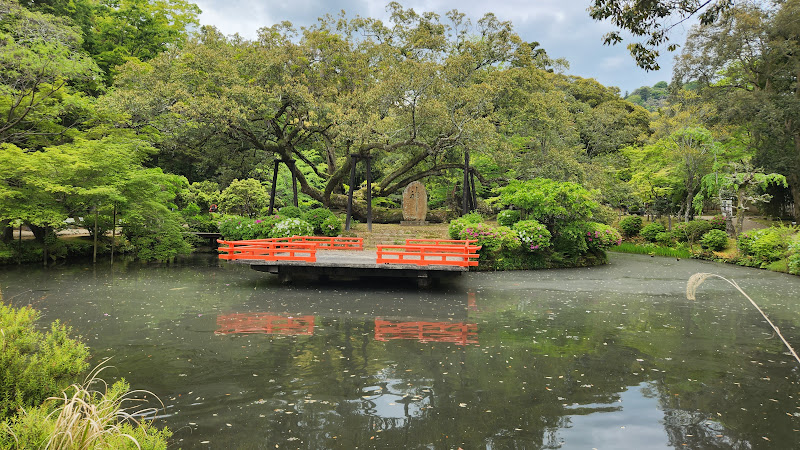
Ukimido Pavilion (浮見堂, “Floating Pavilion”) is a hexagonal, cypress-bark-roofed hall standing in Sagi-ike Pond inside Nara Park, in the Takabatakecho district of Nara, Japan (postal code 630-8301). Built as a water-edge rest pavilion and fully reconstructed between 1991 and 1994 after the earlier structure deteriorated, it is one of the most photographed spots in Nara Park. Travelers come for its mirror-like reflections, its short wooden approach bridge, and the quiet, wooded pond setting a few minutes from the busier temple precincts.
What to Expect at Ukimido Pavilion
The pavilion sits on the water of Sagi-ike (“Heron Pond”), connected to the shore by a narrow wooden bridge. Its roof is layered hiwadabuki, a traditional thatch of Japanese cypress bark, and the hexagonal plan gives the building a compact, balanced silhouette from every bank of the pond. The Nara City Tourism Association describes it as a place of rest by the water, and that is precisely how it is used: visitors cross the bridge, sit inside the open hall, and watch light shift across the pond surface.
The setting changes with the seasons. Spring brings fresh green around the pond edge, summer shade from the surrounding trees, and autumn turns the maples and ginkgos along the shoreline red and gold, which is why Nara’s official tourism site lists the area among its foliage spots. Because the pavilion is an outdoor structure without gates, it is open around the clock; early morning, when the water is still and the park is quiet, is the favored hour for photographers. The route from Kasuga Taisha runs through the Asaji-ga-hara woodland, where free-roaming sika deer are a constant presence.
- Hexagonal hiwadabuki roof: The cypress-bark thatch and six-sided plan are the pavilion’s defining architectural features, best appreciated from the pond’s far bank.
- Reflection photography: On windless mornings and at dusk the pavilion mirrors almost perfectly in Sagi-ike, the classic composition for photographers.
- The wooden approach bridge: A short bridge leads out over the water to the open hall, where benches invite a pause.
- Autumn foliage frame: Maples and other broadleaf trees around the pond make the pavilion a seasonal highlight in November.
- Deer encounters on the path: The woodland walk from Kasuga Taisha passes sika deer; follow the posted etiquette and avoid feeding them anything other than official shika senbei crackers.
Ukimido Pavilion at a Glance
| Detail | Information |
|---|---|
| Address | Takabatakecho, Nara, 630-8301, Japan (Sagi-ike Pond, Nara Park) |
| Neighborhood / Area | Nara Park, Todai-ji and Nara Park area, central Nara |
| Operating Hours | Open 24 hours, every day |
| Admission / Price Range | Free; the tourism association lists no entrance fee |
| Recommended Visit Duration | 20 to 40 minutes |
| Nearest Transit / Parking | City loop bus to Daibutsuden Kasuga Taisha-mae, then about 5 minutes on foot; parking in Nara Park lots |
| Official Website & Phone | narashikanko.or.jp | +81 742-22-0375 |
Visiting Tips, Getting There & Nearby Pairings
From JR Nara Station or Kintetsu Nara Station, take the Nara Kotsu city loop bus to the Daibutsuden Kasuga Taisha-mae stop and walk about five minutes; the route from Kasuga Taisha through the Asaji-ga-hara trees also ends at the pond. Walking from Kintetsu Nara Station through the park takes roughly 20 to 25 minutes. Paths are gravel and packed earth with some uneven stretches and slopes, and the narrow wooden bridge may be tricky for wheelchairs and strollers, so check the footing before committing. Arrive early for calm water and fewer tour groups, and keep food tucked away since deer are persistent. Without lighting along the woodland paths, dusk visits call for a small flashlight.
Pair the pavilion with other spots within a 5 to 15 minute walk: Kasuga Taisha, the famous lantern-lined Shinto shrine; Tobihino, an open grassy plain where deer gather; and Yoga-yama Garden, the former Yamaguchi villa garden. Todai-ji, home of the Great Buddha, and Nara National Museum are a short walk west. The tourism association’s Nara Park guide suggests routes and nearby dining.
Frequently Asked Questions
What are the opening hours and best time to visit Ukimido Pavilion?
The pavilion is open 24 hours a day, seven days a week, as it sits in public parkland. Early morning offers the stillest water for reflections, and late November is the peak for autumn colors around Sagi-ike.
Is there an admission fee?
No. Visiting Ukimido Pavilion and walking around Sagi-ike Pond is free, placing it in the budget price tier. Details are on the Nara City Tourism Association page.
How much time should I allow?
Plan 20 to 40 minutes to cross the bridge, sit in the hall, and photograph the pond. Combined with Kasuga Taisha and Tobihino, a half-day Nara Park walk is realistic.
Is it accessible and suitable for families?
The setting is family-friendly, and children enjoy the nearby deer, but supervise them around the water and the animals. Park paths are uneven in places and the pavilion bridge is narrow, so wheelchair and stroller users should expect some difficulty. There is no dress code.
When planning your Nara travel guide or comparing verified attractions and parks in Nara, pair this stop with standout local spots including Hotel Nikko Nara, Kofuku-ji Kokuhokan (National Treasure Hall), Iroha Grand Hotel Kintetsu Nara Ekimae, and Asajigahara Enchi (0.2 km away).