
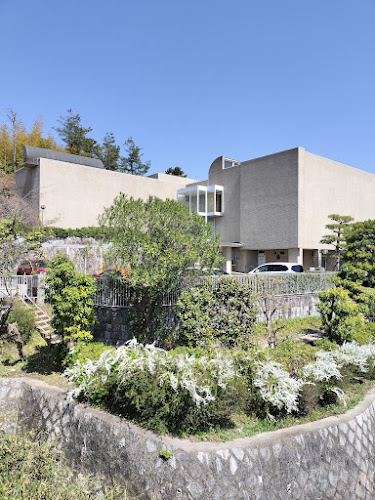
Shohaku Art Museum (松伯美術館, Shōhaku Bijutsukan) is a Japanese-painting museum at 2-1-4 Tomigaoka, Nara 631-0004, in the quiet residential hillside district of Tomigaoka on the western edge of Nara city. It is dedicated to three generations of the Uemura family: Uemura Shoen, who created refined portraits of beautiful women (bijin-ga) and became the first woman awarded the Order of Culture; her son Uemura Shoko, a master of bird-and-flower painting; and her grandson Uemura Atsushi. Travelers come for a focused, contemplative look at modern nihonga (Japanese-style painting) far from the crowds of Nara Park. The museum’s official website is in Japanese.
What to Expect at Shohaku Art Museum
The museum opened through the donation of works by Uemura Shoko and Uemura Atsushi, together with a fund contributed by Kintetsu Corporation, the private railway operator. Its mission is to collect and preserve finished paintings, preparatory drafts and life sketches, then present the three generations’ careers through rotating exhibitions. The building sits in a calm suburban setting, which suits the delicate, mineral-pigment-on-silk character of the work. The bird-and-flower paintings, in particular, reward slow looking: Atsushi was known for his birds, which he kept at the family’s Nara studio, and Shoko for the elegant stillness of his compositions.
Because holdings rotate, what hangs on the wall depends on the season. The 2026 calendar includes a special exhibition on the Uemura family and Kyoto City University of Arts (March 7 to May 24), a new-acquisitions show featuring works donated from the collection of the late director Uemura Atsushi (June 13 to July 26), and a 25th-anniversary memorial retrospective of Uemura Shoko (August 29 to December 20). Rooms may be closed between shows for changeovers, so check the schedule before you go.
- Uemura Shoen’s bijin-ga: Portraits of women by the first female recipient of the Order of Culture, including the folding-screen piece Tō Bijin (唐美人), which appears in the new-acquisitions exhibition.
- Uemura Shoko’s bird-and-flower paintings: Works such as Sōkyū (双鳩, 1985), Keshi (芥子, 1987) and Manazuru (真鶴, 1980), shown in the 2026 retrospective.
- Uemura Atsushi’s Shiki Kachō-zu: A screen of seasonal flowers and birds from 2004 by the grandson, who also served as museum director until his death in 2024.
- Related artists from the Uemura household: Pieces by Suzuki Shonen, Tomioka Tessai and Tsuchida Bakusen, collected within the family.
- Art lectures: Talks by Director Mizuno Osamu (September 13, 2pm) and Prof. Emeritus Sakakibara Yoshiro (November 22, 2pm), each seating 35 on a first-come basis; listening is free with museum admission, no reservation needed.
Shohaku Art Museum at a Glance
| Detail | Information |
|---|---|
| Address | 2-1-4 Tomigaoka, Nara 631-0004, Japan |
| Neighborhood / Area | Tomigaoka, western Nara, a residential hillside district |
| Operating Hours | Tuesday to Sunday 10:00 to 17:00 (last entry 16:00); closed Mondays (the following weekday when Monday is a holiday), the year-end and New Year period, and exhibition changeover periods |
| Admission / Price Range | Adults (including high school and university students) 820 yen; elementary and junior-high students 410 yen; special and planned exhibitions are priced separately. Discounts: 10% for groups of 20 or more, 20% for disability-card holders plus one companion, 50% with the Nara City Nanamaru Card |
| Recommended Visit Duration | 1 to 1.5 hours |
| Nearest Transit / Parking | Tomigaoka district, reached via the Kintetsu Nara Line (Gakuenmae and Tomigaoka area); verify access details on the museum’s access page |
| Official Website & Phone | kintetsu-g-hd.co.jp/culture/shohaku | +81 742-41-6666 |
Visiting Tips, Getting There & Nearby Pairings
Plan your visit around the exhibition calendar: the museum closes for roughly a month between major shows (July 27 to August 28, 2026 is a closure for changeover), and has one-day closures on October 6 and November 17 in 2026. Arrive close to the 10:00 opening for the quietest galleries, and remember that the last entry is at 16:00. Discount admission tickets are sold at Kintetsu station offices (including Osaka Namba, Kyoto and Kintetsu Nagoya), through JTB electronic tickets, and at convenience stores via JTB Leisure Tickets, saving about 90 yen for adults. Because Tomigaoka is a hillside suburb, allow extra time for the walk from the station and confirm the current route and any parking arrangements on the official access page. The official site does not detail step-free facilities, so contact the museum on +81 742-41-6666 about wheelchair or stroller access before visiting.
Tomigaoka is a residential area, so cafes and sights are limited nearby; most visitors combine the museum with a half-day in central Nara, where Nara Park, Todai-ji and Kofuku-ji are a short rail ride away. Pairing the quiet Uemura collection with Nara’s temples makes a good contrast between modern nihonga and ancient Buddhist art.
Frequently Asked Questions
What are the opening hours and best time to visit?
The museum is open Tuesday to Sunday from 10:00 to 17:00, with last entry at 16:00, and is closed on Mondays, over New Year, and during exhibition changeovers. Arriving shortly after opening gives the calmest viewing.
How much does admission cost?
General admission is 820 yen for adults (high school and university students included) and 410 yen for elementary and junior-high students. Advance discount tickets cost 730 yen for adults and 360 yen for children. Special and planned exhibitions are priced separately.
How long should I spend at the museum?
Allow about an hour to an hour and a half to view the current exhibition, longer if you attend one of the 35-seat art lectures, which run about an hour.
Is the museum suitable for families and is there a discount for visitors with disabilities?
Children are welcome at a reduced rate, though the quiet, delicate nature of the artwork suits older children best. Visitors with a disability certificate and one companion receive a 20% discount. Contact the museum directly for specific mobility information.
When planning your Nara travel guide or comparing verified attractions and museums in Nara, pair this stop with standout local spots including Wa Yamamura, Ando Hotel Nara Wakakusayama, The Garden of the Former Daijyo-in Temple, and The Museum Yamato Bunkakan (1.8 km away).


