Oslo’s Natural History Museum is the country’s largest collection of natural objects, split across two early twentieth-century stone buildings on Sars’ gate in Grünerløkka. The Zoological Museum building dates to 1911 and the Geological Museum to 1917. Both sit inside the Botanical Garden, so you cross lawns, glasshouse paths and old trees to reach the dinosaurs. Few big-city museums have an approach like it.
It is smaller and calmer than the famous natural history museums of London or New York, and that is much of the appeal. Reviewers regularly say they had galleries almost to themselves, and the scale suits a morning rather than a full day. Fossils, meteorites, minerals and taxidermy dioramas dominate the tags, and the rating of 4.6 across more than 3,400 reviews reflects how well it works for families and curious adults alike.
Standout Highlights & What Not to Miss
The two buildings have different personalities, so treat them as two short visits rather than one long one. These are the stops that visitors mention most.
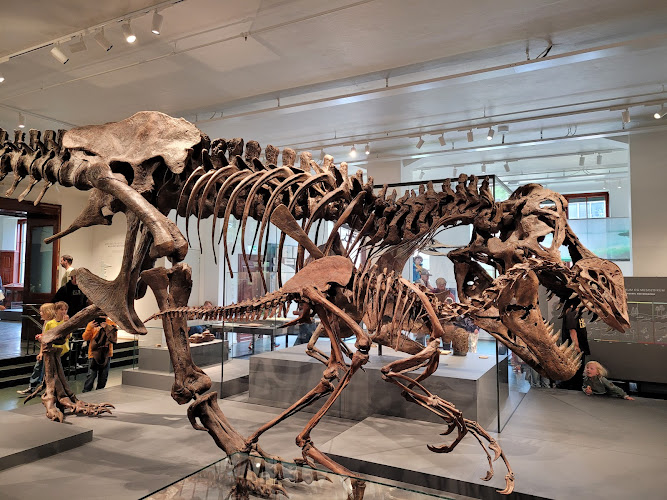
- The dinosaur and fossil hall (Geological building): mounted skeletons, including a Tyrannosaurus rex that children head straight for, plus marine reptiles and the teeth of the giant prehistoric shark Megalodon.
- The crystal room in the basement: minerals and gems under normal light, then fluorescent glows when the lights drop. It is brief but memorable, and easy to miss if you skip the lower level.
- Meteorites and the solar system displays: a strong meteorite collection and a space section with some hands-on elements. Good for a ten-minute pause between the heavier fossil rooms.
- Mineral and rock collections: deep, well-lit cases of Norwegian geology and specimens from abroad. Geology fans should allow extra time here.
- Zoological dioramas: an elephant skeleton near the start, then walk-through scenes of Norwegian wildlife, and finally animals from around the world. The old-school taxidermy is the museum’s signature.
- The Botanical Garden outside: thousands of plant species, glasshouses and open lawns. The grounds are free to wander, which makes the garden a good add-on before or after the exhibitions.
Visitor Strategy & Planning Snapshot
| Planning Factor | What to Expect | Practical Strategy |
|---|---|---|
| Ideal Arrival Window | Quietest on weekday mornings outside school holidays; school groups and families fill weekend middays. | Arrive near opening, start in the Geological building for the dinosaurs, then do zoology as it gets busier. |
| Typical Time Needed | Roughly 2 to 3 hours for both buildings; 90 minutes if you pick one. | Add 45 to 60 minutes if you want a proper walk through the garden and glasshouses. |
| Booking / Queue Reality | Paid exhibition entry, with garden grounds open to all. Queues are rarely a problem. | Check nhm.uio.no for current prices and hours. The Oslo Pass may cover entry, so compare before buying. |
| Terrain & Accessibility | Wheelchair accessible entrance, parking and restroom. Exhibits spread over several floors in older buildings. | Confirm lift access to specific floors on arrival. Garden paths are mostly gravel and can be soft after rain. |
| Weather / Seasonal Fit | Indoor exhibits suit rain and winter darkness; the garden peaks late spring to early autumn. | Visit in bad weather for the museum, and in dry summer weather to pair it with the garden. |
Honest Trade-Offs: Best For vs. Who Might Skip
This is best for families with children, rainy-day planners, and anyone who likes classic museum displays of rocks, bones and dioramas without the crowds. Geology and mineral enthusiasts get the most from it, and the fluorescent crystal room and meteorites are the kind of detail they enjoy. Combined with the garden, it makes an easy, low-stress outing.
You might skip it if you want the scale, interactive technology or blockbuster specimens of the largest international natural history museums. Some of the taxidermy looks dated, and the zoology building in particular reads more like a traditional collection than a modern experience. If your Oslo days are short and you are already museum-heavy, the free garden alone may be enough.
Neighborhood Context & How to Pair Your Visit
The museum sits at the edge of Grünerløkka, Oslo’s most relaxed café and vintage-shop district, and a short walk from Tøyen. A sensible half-day starts with the museum in the morning, followed by a loop through the Botanical Garden. Then walk down towards Grünerløkka’s streets for lunch at a café or bakery, and continue along the Akerselva river for a green, easy stroll towards the centre. The Munch Museum is also reachable from this area if you want a second cultural stop. Check opening times before you go, as the museum buildings and garden keep separate schedules.
When planning your Oslo travel guide or comparing verified attractions and museums in Oslo, pair this stop with standout local spots including Clarion Hotel The Hub, Grand Hotel Oslo, Amerikalinjen, and Nomade Restaurant (1.0 km away).