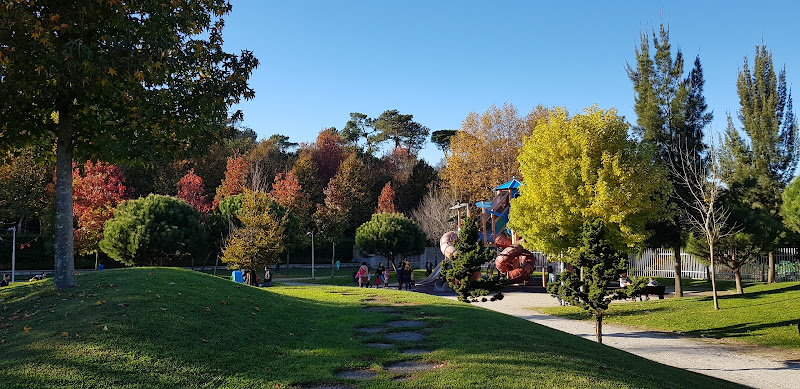
Jardim da Cordoaria, officially Jardim de João Chagas, is a compact historic public garden in central Porto where mature trees, gravel paths and an unexpected group of bronze figures create a welcome pause from the city’s granite streets. Once associated with rope-making workshops, the grounds now draw students, readers, families and visitors looking for a shaded place to slow down.
The garden sits at Campo dos Mártires da Pátria, close to the University of Porto’s historic core and a short walk from Clérigos Tower and Livraria Lello. Its setting is urban rather than secluded: the former Cadeia da Relação, home to the Centro Português de Fotografia, stands alongside it, while Hospital de Santo António adds another imposing architectural edge. That mix makes Cordoaria less a destination that demands a whole afternoon than a characterful, restorative stop between major sights.
Standout Highlights & What Not to Miss
Come for the shade and central location, but give the garden enough attention to notice its art, older trees and changing viewpoints. The atmosphere is particularly appealing when the surrounding streets are busy: pathways slip beneath a dense canopy, benches invite a break, and the sculpture installation rewards a slower circuit rather than a hurried cut-through.
- Juan Muñoz’s bronze figures: Installed in 2001, when Porto was European Capital of Culture, these conversational-looking figures are the garden’s defining visual surprise. Find them among the trees rather than expecting a conventional monument.
- The mature tree canopy: Plane and lime trees give the garden its cool, enclosed feel. In warmer weather, that cover offers a noticeable contrast with the exposed pavements around the historic center.
- Paths made for an unhurried lap: Follow the garden’s gravel and paved routes instead of simply crossing it. The changing alignment of trunks, benches and sculptures is especially good for casual photography.
- The central pond and seating: The pond adds a quieter focal point to a small park, while benches make this an easy place to read, snack or regroup before continuing uphill or downhill through central Porto.
- Historic surroundings: Look outward as well as inward. The former prison building of the Centro Português de Fotografia and the neighboring hospital give the visit a strong sense of Porto’s institutional and architectural history.
Visitor Strategy & Planning Snapshot
| Planning Factor | What to Expect | Practical Strategy |
|---|---|---|
| Ideal Arrival Window | Early morning is calmer; later in the day brings more foot traffic from nearby landmarks and university streets. | Use it as a first quiet stop or as a decompression break after the busiest central sights. |
| Typical Time Needed | A focused visit usually takes 30 to 60 minutes, depending on whether you linger on a bench or photograph the sculptures. | Allow extra time only if pairing the garden with the photography center or a nearby café stop. |
| Booking / Queue Reality | This is an open public garden, not an attraction built around timed entry or an indoor visitor route. | Keep the plan flexible and use it to absorb waiting time around more in-demand nearby stops. |
| Terrain & Accessibility | Central paths are mostly level, though gravel surfaces and cobbled approaches can be uneven for wheelchairs and strollers. | Move slowly, favor the firmer paved sections where available, and allow for surface changes at entrances. |
| Weather / Seasonal Fit | Dense foliage is a major advantage in warm weather; autumn brings golden leaf cover, while rain can make surfaces less comfortable. | Choose it for shade in summer and bring footwear with grip after wet weather. |
Honest Trade-Offs: Best For vs. Who Might Skip
Jardim da Cordoaria is best for travelers who value atmosphere over spectacle: relaxation seekers, photographers, history-minded walkers and families can all get something from its trees, benches and public art. It is also useful for anyone pacing a day around Porto’s steep, crowded center. The trade-off is scale. This is a compact city garden, not a grand formal park or a heavily interpreted sculpture museum, and the Juan Muñoz works are likely to be most rewarding for visitors willing to observe their odd social grouping. Travelers seeking a major playground, expansive lawns, sweeping river views or a destination packed with facilities may prefer to treat it as a short interlude rather than a headline stop.
Neighborhood Context & How to Pair Your Visit
Cordoaria fits naturally into a walk through Porto’s upper historic center. Start around Clérigos Tower, then take a few minutes in the garden before continuing toward Livraria Lello and the university area; the sequence works well because the garden breaks up a cluster of popular, visually intense stops. Alternatively, combine it with the Centro Português de Fotografia next door, then wander onward through the surrounding streets at a less hurried pace. Its benches make it particularly useful as a reset point before tackling Porto’s slopes, and its position lets you shape the visit around whatever direction your day is already taking.
When planning your Porto travel guide or comparing verified attractions and parks in Porto, pair this stop with standout local spots including Quinta do Covelo, World of Discoveries, Porta 4, and Portuguese Centre of Photographers (0.2 km away).