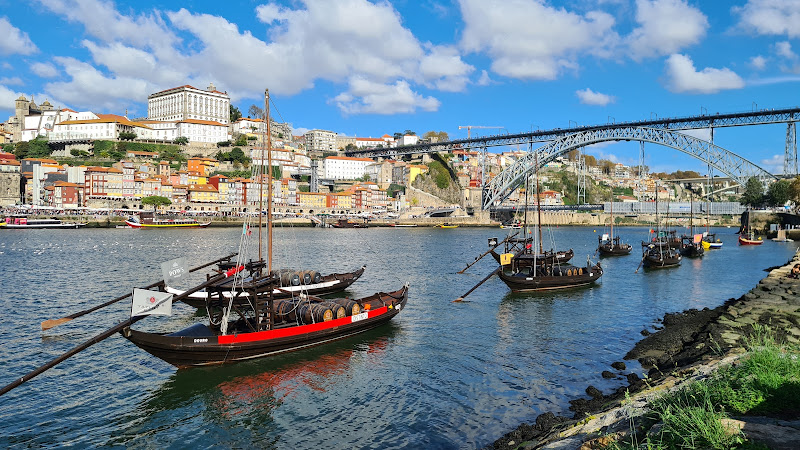
Quick answer: Porto is Portugal’s historic northern coastal city, perched dramatically above the Douro River. Famed for its port wine cellars in Vila Nova de Gaia, azulejo-tiled churches, and the iconic Dom Luís I Bridge, it offers a rich blend of maritime history and modern gastronomy.
Editorial disclosure: This destinations.ai guide was prepared with AI assistance and checked against the official sources linked below. Accommodation and activity placeholders may use affiliate links; that does not change the planning advice.
Porto, Portugal’s atmospheric second city, climbs the steep north bank of the Douro River in a tumble of pastel houses, baroque churches and tiled facades, with the port-wine lodges of Vila Nova de Gaia just across the water.
The UNESCO-listed Ribeira waterfront is the heart of it, linked to Gaia by the double-deck Dom Luis I Bridge. Don’t miss the ornate Livraria Lello bookshop, the blue azulejo tiles of Sao Bento railway station, the climb up Clerigos Tower, and a tasting in the riverside cellars where port has aged for centuries.
The best time to visit is spring (March to May) or autumn (September to October), when the weather is mild and crowds lighter than summer. Two to three days covers the historic centre, the food scene and a cross-river port tasting.
Affiliate placeholder: Compare accommodation options after checking the official property details, location, and cancellation terms.
Affiliate placeholder: Check current activity availability, meeting points, accessibility, and cancellation terms before reserving.
Sources and current planning links
Explore more destinations.ai travel guides when building a longer route.
How to plan a Porto visit
Porto is best explored as a layered river city: give the historic center one day, the south-bank wine lodges and riverfront another, and keep a third day for a slower neighborhood or northern Portugal excursion. The hills are real, the pavements can be slippery, and the most memorable moments often happen between the major sights. Build around walking routes, food reservations, and the time of your return rather than trying to cover every viewpoint on one long loop.
What are the best things to do in Porto?
Begin around São Bento Station, Porto Cathedral, the Clérigos area, and the streets that descend toward Ribeira. São Bento’s interior is a quick stop only if you allow yourself to look closely; the tiled scenes reward a few unhurried minutes. Clérigos and the cathedral provide different city views and historic context, but check current opening hours, ticket arrangements, and stair requirements before treating a tower visit as essential. Porto’s UNESCO-listed historic center is a setting to walk through, not just a backdrop for a single photograph.
The Dom Luís I Bridge connects Porto with Vila Nova de Gaia and creates one of the city’s most useful orientation walks. Choose the bridge level and riverside route that match your comfort, then leave time for a viewpoint, a meal, or a wine-lodge visit on the Gaia side. River cruises and tastings are separate bookings; verify the departure point, duration, age rules, and whether the price includes a tour or simply a tasting.
Which Porto neighborhoods are best for visitors?
Ribeira is atmospheric and close to the river, Baixa and Aliados are practical for first-time sightseeing, and Cedofeita or Bonfim can offer a more local evening rhythm. Ribeira lodging brings cobbles, steps, restaurant activity, and sometimes noise. A base near Aliados or Trindade usually makes transit and uphill returns simpler. Cedofeita suits travelers who want galleries, cafés, and a walkable creative district. Bonfim is useful for restaurants and a less postcard-driven feel, but compare the route back to your hotel at night.
Use the exact address when comparing places to stay. Ask about lift access, luggage storage, air conditioning, breakfast hours, steep streets, and whether a taxi can reach the door. A river view can come with a hill; a central apartment can come with narrow stairs. For a short trip, a quiet room near a Metro station often saves more energy than a property chosen only for its photograph.
What should you eat and drink in Porto?
Porto’s food itinerary can move from a quick bakery breakfast to a long northern Portuguese meal, with the dish and neighborhood changing the pace. Look for francesinha, bacalhau preparations, caldo verde, grilled fish, pastries, and regional produce, but read current menus rather than assuming every kitchen serves every specialty. Port wine is associated with the Douro and the Gaia lodges; choose a tasting that explains what you are drinking and confirm the current booking details.
Ask about allergens, shared kitchens, vegetarian substitutions, and service times. Lunch can be the more relaxed meal, while popular dinner rooms fill early on weekends. If you want to try several places, keep the route within one neighborhood and book only the one experience that truly needs a reservation. A market, café, or unplanned counter meal can be a better fit than forcing a second formal stop across the river.
What is the best time to visit Porto?
Late spring and early autumn are often comfortable for walking in Porto, while summer brings long days and higher demand. April through June and September into October can balance outdoor sightseeing with milder conditions, but rain is possible in every season. Winter may be a good fit for museums, food, and a quieter center, though daylight and attraction schedules can be shorter. Check current festival dates, river conditions, and hotel availability before choosing a peak weekend.
Pack shoes with grip and a light waterproof layer. Porto’s weather can change while you are moving between the river and higher streets, and a wet descent over polished pavement is not the moment to discover that your footwear has no traction. Keep an indoor backup such as a museum, church, market, or tasting room whenever the day depends on a viewpoint.
How do you get around Porto?
Walking, Metro, buses, and taxis cover most city visits, but Porto’s slopes make the best choice depend on the exact route. Use walking for connected historic-center stops and public transport for the uphill return or a longer move to Boavista, Foz, or the airport. Confirm the current fare, ticket validation, and airport connection before travel. A city card may be helpful when its included transport and attractions match your plan; compare the current terms instead of assuming it is automatically good value.
A car is rarely useful for the core of Porto. It can make sense for the Douro Valley or a northern Portugal road trip, but collect it after leaving the center and check parking at every overnight stop. For a bridge walk or river cruise, confirm which bank you need and leave time for stairs, queues, and a change in weather. Save the hotel address and the cruise departure point offline.
Porto for families and accessible travel
Families can combine a tram or river experience, one historic stop, a park or waterfront walk, and a meal that does not require a late bedtime. The city’s hills and cobbles make a full-day stroller route tiring, so choose short sections and use transit when appropriate. Children may enjoy watching boats, exploring the bridge area, or visiting a museum more than standing in every monument queue. Carry water and allow time to pause.
Accessibility is specific to each building, pavement, bridge route, and vehicle. Contact attractions and hotels about step-free entrances, lifts, accessible toilets, seating, and the distance from a taxi drop-off. Do not assume that a central address means a level approach. An itinerary with two reliable anchor stops is better than a route that depends on steep lanes and a timed crossing.
A practical three-day Porto itinerary
Three days gives you time to see Porto’s historic core, cross to Gaia, and choose either a coastal afternoon or a carefully planned northern Portugal day trip. Keep the steepest walking early and leave the final evening close to your base.
- Day one: walk São Bento, the cathedral, Clérigos, and the streets toward Ribeira, then choose a riverfront meal.
- Day two: cross the Dom Luís I Bridge, visit a confirmed Gaia tasting or cruise, and return via a viewpoint or relaxed dinner.
- Day three: choose Foz and the coast, a museum and market route, or one regional excursion after checking transport.
Which day trips work from Porto?
The Douro Valley, Braga, Guimarães, and Aveiro can each make a worthwhile extension, but they are different kinds of days. The Douro needs careful train, boat, or driver planning; Braga and Guimarães suit history and architecture; Aveiro adds canals and a different coastal atmosphere. Choose one, check the current return schedule, and do not book a late Porto reservation until you know how the day ends.
Porto is at its best when the itinerary leaves room for the city’s gradients and details: a tiled entrance, a bakery table, a river bend, or a quiet street above the tourist flow. Verify current opening times and transport, then let the route breathe.
For a longer regional route, compare Lisbon, Portugal, Madrid, Spain, Barcelona, Spain with this destination before finalizing your itinerary.
Frequently asked questions
What is Porto, Norte best known for?
Porto is famous for world-renowned port wine lodges, the UNESCO-listed medieval Ribeira riverfront district, elaborate blue-and-white tile murals (São Bento Station), and traditional francesinha sandwiches.
When is the best time to visit Porto?
The best time to visit is spring (March to May) or autumn (September to October), when the weather is mild and crowds lighter than summer.
How many days should you spend in Porto?
Plan about 3 days for a first visit, then add time if you want to explore beyond the central sights.
How should you get around Porto?
Porto’s historic core is compact and best explored on foot, though steep cobblestone hills require comfortable footwear. The Metro do Porto network, historic electric trams (Line 1 to Foz), and funiculars provide seamless transit across elevation changes.
What should you book ahead in Porto?
Pre-book timed-entry vouchers for the famous Livraria Lello bookshop and tickets to the Clérigos Tower. Guided tasting tours of historic port cellars (such as Taylor’s, Graham’s, and Sandeman) and Douro River Rabelo boat cruises should be booked in advance.
Explore Porto by Category: Discover top curated spots across Porto Attractions & Sightseeing, Best Places to Stay in Porto, Porto Restaurants & Dining.