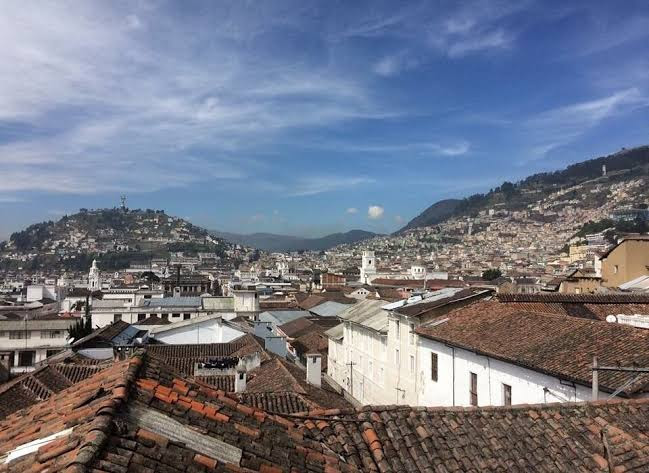
The Manuela Sáenz Museum is a compact history museum in Quito’s San Marcos neighborhood, a short walk through the historic center’s lanes and plazas. Set inside a courtyard house, it uses paintings, weapons, documents, and period objects to tell the story of Manuela Sáenz, the Quiteña revolutionary whose life is inseparable from the independence struggles that reshaped northern South America.
This is not a grand national museum with vast galleries; its appeal is close-looking and biography-driven. Room by room, the collection moves beyond the shorthand of Sáenz as Simón Bolívar’s companion, foregrounding her political commitment, military connections, correspondence, and public role. The intimate house setting makes it an especially rewarding stop for visitors seeking a more human-scale historical experience in Old Quito.
Standout Highlights & What Not to Miss
Come with a little patience for reading labels and following chronology. The museum’s strongest payoff is the way individual objects connect a familiar independence-era cast of Bolívar, Antonio José de Sucre, soldiers, and political allies to Sáenz’s own decisions and reputation. Start with the biographical sequence before lingering over the documents and portraits; it gives the military material much more meaning.
- Manuela Sáenz’s life story: Follow her path from Quito to involvement in the independence cause, rather than treating her as a secondary figure in someone else’s biography.
- Documents and written evidence: Spend time with correspondence and historical material that illuminate political networks, loyalties, exile, and how history is recorded.
- Portraits and paintings: Notice how visual depictions shape the memory of revolutionary personalities and the era’s social world.
- Weapons collection: These objects provide a tangible counterpoint to the personal narrative, placing Sáenz within a period of conflict and military campaigning.
- The courtyard-house atmosphere: Look up, pause in the central spaces, and appreciate the contrast between domestic-scale architecture and the continent-wide events explored inside.
Visitor Strategy & Planning Snapshot
| Planning Factor | What to Expect | Practical Strategy |
|---|---|---|
| Ideal Arrival Window | A calmer cultural stop than Quito’s largest headline sights, with small interior rooms that reward an unhurried visit. | Build it into the middle of a historic-center walk, when a focused indoor visit provides a useful reset between churches and plazas. |
| Typical Time Needed | Most visitors can cover the museum in 45 to 75 minutes, depending on how closely they read the displays. | Allow about an hour; add time if women’s history or the independence period is a main interest. |
| Booking / Queue Reality | It is a small museum rather than a high-volume attraction, but access arrangements can change. | Check current visiting procedures before setting out, particularly on weekends, holidays, or when coordinating a timed day. |
| Terrain & Accessibility | The historic house has stair-connected exhibition spaces and may present thresholds typical of older buildings. | Contact staff ahead of time about entrance conditions and which rooms can be accessed if mobility is a concern. |
| Weather / Seasonal Fit | Its indoor galleries work well in Quito’s variable highland weather, while the courtyard retains an open-air feel. | Pair it with nearby outdoor wandering on a clear stretch, and keep it as a flexible cultural option when rain arrives. |
Honest Trade-Offs: Best For vs. Who Might Skip
This museum is best for travelers who want historical context, women’s history, independence-era politics, or the texture of a historic house. Solo visitors and curious readers will likely get more from it than travelers who only want a quick photo stop. The trade-off is scale: expect a concentrated collection, not an encyclopedic account of Ecuadorian history or a large interactive institution. Those with very limited time, a strong preference for monumental art, or difficulty with stairs may choose a more accessible, broader museum instead. For many visitors, however, the focused lens is exactly the point: Sáenz emerges as an actor in history, not merely an accessory to it.
Neighborhood Context & How to Pair Your Visit
San Marcos is well suited to a slow historic-center itinerary. Pair the museum with a walk through its older residential streets, then continue toward central plazas, churches, viewpoints, or another museum according to your route. The most satisfying rhythm is to arrive on foot, let the house’s rooms provide a concentrated hour of history, and then return to the street with the names and events fresh in mind. Because the museum gives political depth to Quito’s colonial-era setting, it works particularly well early in a day devoted to the old city, before the architecture becomes simply a backdrop rather than part of a larger story.
When planning your Quito travel guide or browsing verified attractions in Quito, pair this stop with standout local spots including Café Quito Restaurante, Omnia Ecuador, Swissôtel Quito, and ILLA Experience Hotel & Spa (nearby).