
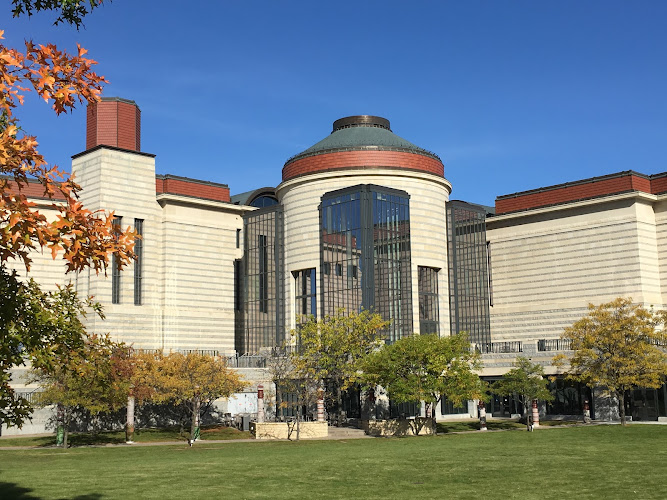
Minnesota History Center is Minnesota’s state history museum and research center at 345 W Kellogg Blvd, St Paul, Minnesota, United States of America, on downtown’s western edge near Cathedral Hill and the State Capitol. Opened in 1992, the building houses the Minnesota Historical Society’s museum galleries and Gale Family Library. Travelers come for hands-on storytelling, Native perspectives, objects from everyday Minnesota life, and an introduction to the people and events that shaped the state.
What to Expect at Minnesota History Center
Start with Our Home: Native Minnesota, which uses historic and contemporary photographs, maps, and artifacts to explore Native communities’ enduring connections to this land. Its emphasis is continuity: cultural practices, teachings, and community life belong to the present as well as the past. Reframing Our Stories brings Native people’s own words, experiences, and perspectives into the galleries. Together, these exhibitions offer context that extends well beyond a conventional chronology of Minnesota statehood. See the official exhibition listings before choosing your route.
The Stories We Keep turns attention to objects entrusted to the Minnesota Historical Society and the personal histories attached to them. Rather than rushing from label to label, choose several objects and follow their connections to work, home, identity, and memory. The building itself rewards a slower look: broad public spaces, substantial stone finishes, and windows framing the surrounding civic landscape distinguish it from a compact downtown gallery. The Gale Family Library adds another dimension, with research access to photographs, newspapers, manuscripts, maps, and family-history resources.
- Our Home: Native Minnesota: Photographs, maps, and artifacts connect Native history with contemporary community life.
- Reframing Our Stories: Native perspectives guide stories of resilience, experience, and identity.
- The Stories We Keep: Collection objects reveal the personal decisions and memories behind public history.
- Gale Family Library: Appointment-based research complements the museum galleries; arrange a separate research session.
- Free Thursday evenings: Museum admission and parking are free from 4–8 p.m., creating a useful after-work sightseeing option.
Minnesota History Center at a Glance
| Detail | Information |
|---|---|
| Address | 345 W Kellogg Blvd, St Paul, MN 55102 |
| Neighborhood / Area | Western downtown, near Cathedral Hill and the Capitol area |
| Operating Hours | Wednesday, Friday, Saturday: 10 a.m.–4 p.m.; Thursday: 10 a.m.–8 p.m.; Sunday: 11 a.m.–4 p.m.; closed Monday–Tuesday. Check holiday exceptions. |
| Admission & Ticket Prices | Adults $15; seniors 65+, veterans, active military, and college students $12; ages 5–17 $8; ages 4 and under and MNHS members free. Thursday 4–8 p.m.: free. |
| Recommended Visit Duration | 2–3 hours; longer for research or scheduled programs |
| Nearest Transit / Parking | Green Line Capitol/Rice Street station, approximately 15 minutes on foot; on-site lot entered from Kellogg Boulevard, $6 daily or $4 for members; free Thursday 4–8 p.m. |
| Official Website / Phone | Minnesota History Center visitor information; 651-259-3000 |
Visiting Tips, Getting There & Nearby Pairings
Arrive at opening for a full gallery circuit before lunch, or use Thursday’s free evening window for a shorter, lower-cost visit. Buy paid admission through the official website, and check separately for ticketed talks or performances. Drivers should enter the museum lot from Kellogg Boulevard rather than looking for a street entrance beside the galleries. Green Line riders can walk from Capitol/Rice Street; allow extra time for road crossings and winter conditions. Library research requires its own appointment rather than simply a museum ticket.
Inside, elevators connect public levels, accessible entrances provide step-free access, and wheelchairs are available to borrow. Strollers can use the elevator routes; ask at the information desk for the easiest gallery sequence. Outdoor sightseeing involves more slopes than the museum interior. The Cathedral of Saint Paul is roughly a 10-minute uphill walk toward Summit Avenue, while the Minnesota State Capitol is approximately 15 minutes away on foot. Either pairing adds architectural context; choose one rather than compressing both into a short museum afternoon.
Frequently Asked Questions
When is the best time to visit?
Choose opening time Wednesday through Sunday for an unhurried start. Thursday from 4–8 p.m. is especially useful for free admission and parking. The museum is closed Monday and Tuesday.
How much are tickets, and should I reserve?
Standard admission is $15 for adults, $12 for eligible discounted visitors, and $8 for ages 5–17. Children under five and MNHS members enter free. Purchase through the official site; check individual event reservation requirements separately.
How much time should I budget?
Allow two to three hours for several exhibitions and breaks. Add time for a performance, substantial reading, or library research; a research appointment should not be squeezed into a brief gallery visit.
Is it suitable for families and wheelchair users?
Yes. Exhibitions include experiences for different ages, and elevators make public floors accessible without stairs. Borrowable wheelchairs and step-free entrances support visits; ask staff about individual interactive features and sensory needs.
When planning your Saint Paul travel guide or browsing verified history museum in Saint Paul, pair this stop with standout local spots including The Gnome Craft Pub, Bullvino's Churrascaria St. Paul, Waldmann Brewery, and Radisson Hotel St. Paul Downtown (0.3 km away).


