
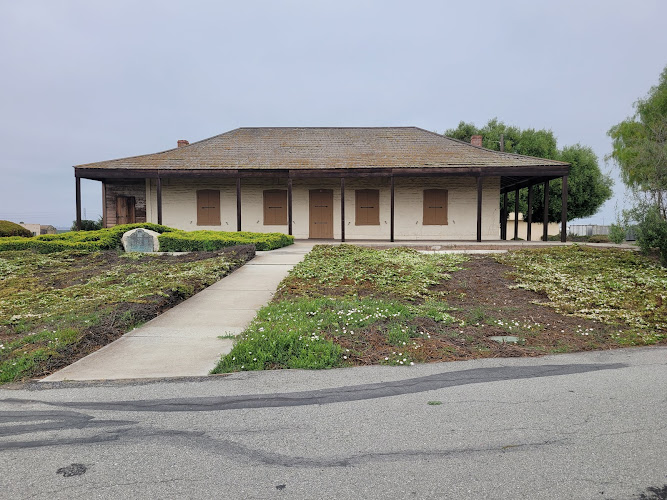
Boronda Adobe History Center is a historic-house and local-history campus at 333 Boronda Road, Salinas, California 93907, in the Boronda area on the city’s northwestern edge. Its centerpiece is the adobe home built in 1846 by José Eusebio Boronda, a survivor of California’s Mexican period. Managed by the Monterey County Historical Society, the property brings together domestic architecture, agricultural history, archival collections, and memorials that explain the Salinas Valley beyond its familiar Steinbeck associations.
What to Expect at Boronda Adobe History Center
Begin with the adobe itself. Its thick earthen walls, timber elements, pitched roof, and sheltered veranda illustrate the practical building traditions associated with Monterey Colonial architecture. Constructed before California became a state in 1850, the house connects visitors with the Boronda family and the ranching society that preceded the valley’s intensive agricultural development. Look at the relationship between the shaded exterior circulation and the enclosed rooms: temperature control and protection from weather were built into the design, rather than added mechanically.
The wider campus expands that story through the Lagunita Schoolhouse, Farm Labor Bunkhouse, and World War II Bataan Monument. The society also maintains the Gumper-Castro Library, collections vaults, and the Pat Hathaway Collection, an important photographic resource for Monterey County history. These are research holdings, not a promise that every photograph or object will be displayed. Arrange archive work separately from sightseeing. The society offers group-tour programming and an online shop carrying books, cards, and other history-related products; plan refreshments elsewhere rather than relying on a museum café.
- 1846 Boronda Adobe: Examine earthen construction and the veranda of a Mexican-era family home.
- Lagunita Schoolhouse: Explore the campus’s connection to rural schooling and the communities surrounding Salinas.
- Farm Labor Bunkhouse: Consider the everyday housing conditions behind the valley’s agricultural economy.
- Bataan Monument: Pause at a memorial connecting local military history with the Philippines campaign of World War II.
- Heirloom Botanic Gardens: Include the society’s garden landscape in an outdoor circuit between historic structures.
Boronda Adobe History Center at a Glance
| Detail | Information |
|---|---|
| Address | 333 Boronda Road, Salinas, CA 93907, United States |
| Neighborhood / Area | Boronda area, northwestern Salinas |
| Operating Hours | Monday–Friday, 9 a.m.–3 p.m.; Saturday–Sunday closed. Call ahead for historic-building access. |
| Admission / Price Range | $ planning tier; contact the historical society for current admission and any guided-tour charges. |
| Recommended Visit Duration | 45–90 minutes; longer for an arranged research appointment. |
| Nearest Transit / Parking | Regional connections through Salinas Transit Center; check Monterey-Salinas Transit for the final local connection. Approach the campus entrance from Boronda Road and confirm visitor parking when arranging access. |
| Official Website & Phone | Monterey County Historical Society; +1 831-757-8085 |
Visiting Tips, Getting There & Nearby Pairings
Choose a weekday morning and telephone before making a special trip: office hours and access to individual historic buildings need not be identical. Ask for a guided visit if the adobe’s interior is your priority, and arrange school or research groups in advance. Start outside with the house’s architectural details, then follow the available building openings. Carry a small bag rather than expecting a staffed cloakroom; ask about interior photography and reproduction permissions for archival material. For buses, use the current Monterey-Salinas Transit planner rather than assuming the downtown rail station is within walking distance.
This is a campus of separate historic structures, not a single modern gallery with continuous indoor circulation. Visitors using wheelchairs or strollers should ask specifically about the step-free entrance, doorway thresholds, outdoor surfaces, accessible restroom, and available seating before arrival. For close pairings, make the Lagunita Schoolhouse, Bataan Monument, and gardens part of the same campus walk, allowing roughly 5–15 minutes between short stops and interpretation. For a longer Salinas history day, continue by car to the National Steinbeck Center and Oldtown’s Main Street; neither is a short walk from the adobe.
Frequently Asked Questions
What are the hours, and when should I visit?
Hours are Monday through Friday, 9 a.m.–3 p.m., with weekends closed. A weekday morning leaves time to explore, but call first to arrange access to the historic interiors.
How much does admission cost, and should I reserve?
Contact the historical society at +1 831-757-8085 for current admission arrangements and guided-tour charges. Reserve group visits and research appointments directly rather than arriving with a fixed expectation of access.
How long should I allow?
Allow 45–90 minutes for the adobe, outdoor memorial, and accessible campus stops. Archival research deserves a separate appointment with a defined subject or collection request.
Is it suitable for families and visitors with limited mobility?
The schoolhouse, adobe construction, and agricultural buildings give families concrete subjects to discuss. Historic thresholds and movement between separate structures make advance accessibility planning important; request a route suited to your mobility needs.
When planning your Salinas travel guide or comparing verified attractions and museums in Salinas, pair this stop with standout local spots including Monterey & Salinas Valley Railroad Museum, Portola Hotel & Spa at Monterey Bay, National Steinbeck Center, and Courtyard Salinas Monterey (0.8 km away).


