
Editorial disclosure: This destinations.ai guide was prepared with AI assistance and checked against the official sources linked below. Accommodation and activity placeholders may use affiliate links; that does not change the planning advice.
Overview: Why Visit Salzburg
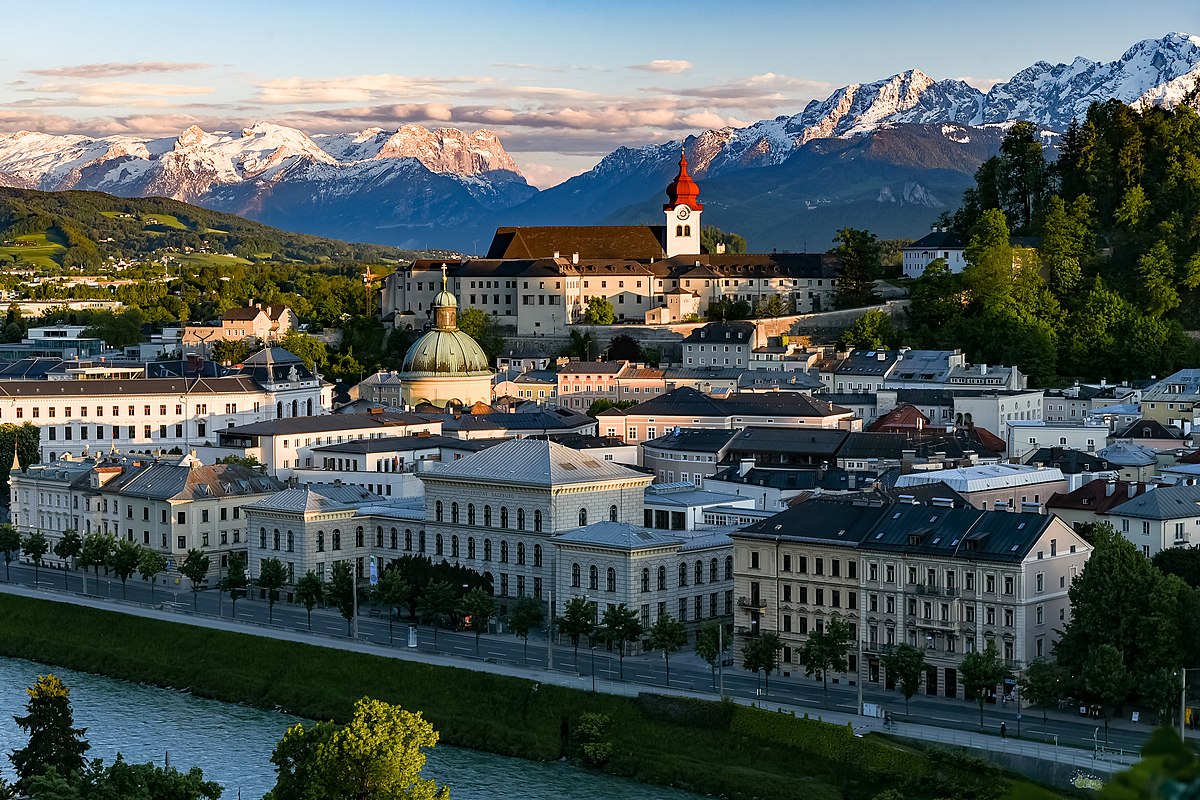
Salzburg, the Austrian city situated on the Salzach River at the northern boundary of the Alps, is the birthplace of Wolfgang Amadeus Mozart and an internationally renowned center of classical music and Italianate baroque architecture. Designated a UNESCO World Heritage site, Salzburg seamlessly frames its historic Altstadt between the steep emerald cliffs of Mönchsberg and Kapuzinerberg, crowned by one of the largest intact medieval castles in Central Europe.
Major highlights include exploring the 900-year-old ramparts of Hohensalzburg Fortress, strolling through the marble statues and manicured parterres of Mirabell Palace & Gardens (famed for The Sound of Music), visiting Mozart’s Birthplace along the wrought-iron guild signs of the Getreidegasse, admiring the Italian baroque twin-towered Salzburg Cathedral, sampling fresh monastery lager straight from wooden barrels at Augustiner Bräu Mülln, tasting original hand-rolled chocolate Mozartkugeln at Café Konditorei Fürst, and indulging in the airy, golden soufflé dessert Salzburger Nockerl.
Best Time to Visit Salzburg
Quick answer: Salzburg Festival & Summer (July to August): The cultural pinnacle of the Austrian Alps. The world-famous Salzburg Festival ( Salzburger Festspiele ) brings top international conductors, opera stars, and theatrical productions to the Grosses Festspielhaus and Domplatz. Pleasant summer temperatures average 23°C to 26°C (73°F to 79°F). Book hotels and performance tickets 6 to 9 months in advance.
- Salzburg Festival & Summer (July to August): The cultural pinnacle of the Austrian Alps. The world-famous Salzburg Festival (Salzburger Festspiele) brings top international conductors, opera stars, and theatrical productions to the Grosses Festspielhaus and Domplatz. Pleasant summer temperatures average 23°C to 26°C (73°F to 79°F). Book hotels and performance tickets 6 to 9 months in advance.
- Spring & Autumn (May to June & September to October): Crisp, golden Alpine seasons with daily highs averaging 17°C to 22°C (63°F to 72°F). Excellent for walking tours through the Altstadt, visiting Hellbrunn Palace gardens, and riding the Untersberg Cable Car without summer festival crowds.
- Advent & Christmas Markets (Late November to December): One of Europe’s most atmospheric winter settings. The historic Salzburger Christkindlmarkt fills Residenzplatz and Domplatz with wooden chalets selling hot spiced Glühwein, roasted chestnuts, and hand-carved nativity scenes beneath snow-covered baroque domes.
Key Historic Fortresses, Baroque Palaces & Musical Landmarks
Quick answer: Hohensalzburg Fortress (Festung Hohensalzburg): Constructed in 1077 by Prince-Archbishop Gebhard and expanded into an impregnable citadel over subsequent centuries. Perched 120 meters above the city on the Festungsberg, this massive fortress is reached by walking up the Festungsgasse or riding the historic 1892 Festungsbahn funicular . Tour the lavish Gothic Golden Chamber ( Goldene Stube ) with gilded twisted pillars, the Fortress Museum, and the panoramic observation deck overlooking the city and the snow-capped Berchtesgaden Alps.
- Hohensalzburg Fortress (Festung Hohensalzburg): Constructed in 1077 by Prince-Archbishop Gebhard and expanded into an impregnable citadel over subsequent centuries. Perched 120 meters above the city on the Festungsberg, this massive fortress is reached by walking up the Festungsgasse or riding the historic 1892 Festungsbahn funicular. Tour the lavish Gothic Golden Chamber (Goldene Stube) with gilded twisted pillars, the Fortress Museum, and the panoramic observation deck overlooking the city and the snow-capped Berchtesgaden Alps.
- Mirabell Palace & Gardens (Schloss Mirabell): Built in 1606 by Prince-Archbishop Wolf Dietrich Raitenau for his beloved Salome Alt. The palace is renowned for the Marble Hall (Marmorsaal)—once a banquet hall where the Mozart family performed, now regarded as one of the world’s most beautiful wedding venues. Outside, the baroque gardens feature the Grand Fountain surrounded by four mythological marble statues, the Hedge Theater, the quirky Dwarf Garden (Zwergerlgarten), and the Pegasus Fountain, famously featured during the “Do-Re-Mi” sequence in The Sound of Music.
- Mozart’s Birthplace (Mozarts Geburtshaus) & Getreidegasse: Located at No. 9 Getreidegasse in a distinctive bright yellow townhouse. Wolfgang Amadeus Mozart was born here on January 27, 1756. The museum preserves the original three-room family apartment, Mozart’s childhood violin, his concert violin, clavichord, family portraits, and handwritten letters. The Getreidegasse itself is Salzburg’s most famous historic shopping alley, characterized by tall narrow townhouses and intricate gilded wrought-iron guild signs hanging above boutique storefronts.
- Salzburg Cathedral (Dom zu Salzburg): A monumental Italian baroque masterpiece completed in 1628 by Santino Solari. Features a massive 71-meter copper-domed ceiling, striking white marble facade, and seven historic bells. Mozart was baptized here in the 1311 Romanesque bronze baptismal font, and later served as the cathedral organist, composing church sonatas and masses for the choir.
- Hellbrunn Palace & Trick Fountains (Wasserspiele Hellbrunn): Built between 1612 and 1615 as an Italian-style summer villa for Prince-Archbishop Markus Sittikus. World-famous for its ingenious Renaissance trick fountains—hidden water jets concealed in stone dining benches, grottoes, marble statues, and mechanical puppet theaters designed to mischievously douse unsuspecting aristocratic guests with water.
- Augustiner Bräu Kloster Mülln: Austria’s largest beer tavern, founded by Augustinian monks in 1621. Visitors enter the vast multi-room monastic cellar halls, grab a heavy ceramic stoneware stein from wooden shelves, rinse it under running mountain water fountains, pay the cashier, and have their stein filled straight from massive oak barrels with traditional Märzen lager. Order pork knuckles (Stelze), roast chicken, and pretzels from the indoor market stalls (Schmankerlgang).
Suggested 3-Day Salzburg Itinerary
Quick answer: Day 1: Historic Altstadt, Mozart & Hohensalzburg Fortress. Start with an early morning stroll through the Getreidegasse to photograph the wrought-iron signs before tour groups arrive. Visit Mozart’s Birthplace at No. 9. Walk through the Residenzplatz and tour the Salzburg Cathedral. In the afternoon, ride the Festungsbahn funicular up to Hohensalzburg Fortress to tour the Prince’s Chambers and take in mountain views. In the evening, dine on Wiener Schnitzel in a historic tavern like St. Peter Stiftskulinarium (Europe’s oldest documented restaurant, dating to 803 AD).
- Day 1: Historic Altstadt, Mozart & Hohensalzburg Fortress. Start with an early morning stroll through the Getreidegasse to photograph the wrought-iron signs before tour groups arrive. Visit Mozart’s Birthplace at No. 9. Walk through the Residenzplatz and tour the Salzburg Cathedral. In the afternoon, ride the Festungsbahn funicular up to Hohensalzburg Fortress to tour the Prince’s Chambers and take in mountain views. In the evening, dine on Wiener Schnitzel in a historic tavern like St. Peter Stiftskulinarium (Europe’s oldest documented restaurant, dating to 803 AD).
- Day 2: Mirabell Gardens, Hellbrunn & Augustiner Bräu. Cross the Salzach footbridge to explore Mirabell Palace and stroll through the manicured floral gardens. Take bus #25 south to Hellbrunn Palace for a guided tour of the Renaissance trick fountains. Return to the city in the late afternoon to experience monastery beer culture at Augustiner Bräu Kloster Mülln.
- Day 3: Untersberg Cable Car & Original Mozartkugeln. Take bus #25 to St. Leonhard and board the Untersbergbahn cable car, ascending over 1,300 vertical meters in 10 minutes to the rocky peak of Mount Untersberg for alpine panoramas across Austria and Germany. In the afternoon, return to the Altstadt for afternoon coffee (Melange) and original silver-wrapped Mozartkugeln at Café Konditorei Fürst, followed by a sweet plate of Salzburger Nockerl.
Authentic Salzburger & Austrian Gastronomy
Quick answer: Salzburger Nockerl: Salzburg’s iconic sweet dessert soufflé dating to the 17th century. Made from whipped egg whites, egg yolks, sugar, and vanilla, baked into three golden peaked mounds dusted with powdered sugar, representing the three snow-capped mountains framing the city: Mönchsberg, Kapuzinerberg, and Gaisberg. Served piping hot over a bed of warm raspberry or cranberry compote.
- Salzburger Nockerl: Salzburg’s iconic sweet dessert soufflé dating to the 17th century. Made from whipped egg whites, egg yolks, sugar, and vanilla, baked into three golden peaked mounds dusted with powdered sugar, representing the three snow-capped mountains framing the city: Mönchsberg, Kapuzinerberg, and Gaisberg. Served piping hot over a bed of warm raspberry or cranberry compote.
- Original Salzburger Mozartkugeln (Fürst): Invented in 1890 by Salzburg master confectioner Paul Fürst. Unlike mass-market red-wrapped factory candies, the authentic Fürst confection is hand-crafted with a marzipan-pistachio core coated in hazelnut nougat, dipped on a wooden stick in bittersweet dark chocolate, and wrapped in distinctive blue-and-silver foil. Available exclusively at Konditorei Fürst shops in Salzburg.
- Bosna Sausage: Salzburg’s most famous street snack, created in 1949 at the tiny Balkan Grill hidden in passage No. 33 on the Getreidegasse. Two grilled spiced pork bratwurst sausages are served in a toasted white roll topped with minced raw onions, fresh parsley, and a secret blend of spicy curry powder.
- Kaiserschmarrn & Traditional Schnitzel: Fluffy, caramelized shredded pancakes dusted with powdered sugar and served with stewed plum compote (Zwetschkenröster), or tender milk-fed veal Wiener Schnitzel breaded in crisp breadcrumbs and pan-fried in clarified butter with parsley potatoes and lingonberry jam.
Practical Travel Tips, Transit & Budget
Quick answer: Getting Around: Salzburg Airport (SZG) is located 3 miles west of downtown (15 minutes by city bus #2 or #10 to the central train station). Frequent ÖBB and Westbahn express trains connect Salzburg Hauptbahnhof directly to Vienna (2.5 hours) and Munich (1.5 hours). The historic Altstadt is compact, flat, and largely pedestrianized, making walking the primary way to explore.
- Getting Around: Salzburg Airport (SZG) is located 3 miles west of downtown (15 minutes by city bus #2 or #10 to the central train station). Frequent ÖBB and Westbahn express trains connect Salzburg Hauptbahnhof directly to Vienna (2.5 hours) and Munich (1.5 hours). The historic Altstadt is compact, flat, and largely pedestrianized, making walking the primary way to explore.
- Salzburg Card Value: Purchase an all-inclusive Salzburg Card (available in 24, 48, or 72-hour increments). It covers free one-time admission to all museums and sights (Hohensalzburg Fortress and funicular, Mozart’s Birthplace, Hellbrunn Palace, Untersberg Cable Car) and unlimited free rides on all public city buses, paying for itself after visiting just two or three attractions.
- Daily Budget Breakdown:
- Budget traveler: €65–€95 EUR/day (hostel dorm, bakery breakfasts, street-food Bosna sausages, free Mirabell Gardens and cathedral visits).
- Mid-range traveler: €150–€280 EUR/day (3-star/4-star historic hotel in the Altstadt, 48-hour Salzburg Card, sit-down dinners with wine or monastery beer at Augustiner Bräu).
- Luxury traveler: €500–€1,200+ EUR/day (5-star luxury hotel like Hotel Sacher Salzburg or Hotel Schloss Mönchstein, VIP Salzburg Festival opera seats, Michelin-starred dining at Ikarus or Senns Restaurant).
Frequently Asked Questions
What is Salzburger Nockerl?
Salzburger Nockerl is a famous sweet Austrian soufflé dessert made of baked whipped egg whites, sugar, and vanilla shaped into three golden mounds symbolizing Salzburg’s surrounding alpine peaks.
Where can you buy the original Mozartkugeln?
The authentic, original Mozartkugel—wrapped in blue-and-silver foil and made by hand—is produced and sold exclusively at Café Konditorei Fürst in Salzburg, invented by Paul Fürst in 1890.
Is the Salzburg Card worth buying?
Yes, the Salzburg Card is exceptionally worthwhile because it grants free admission to Hohensalzburg Fortress (including the funicular), Mozart’s Birthplace, Hellbrunn Palace, the Untersberg Cable Car, and free public transport.
Affiliate placeholder: Compare accommodation options after checking the official property details, location, and cancellation terms.
Affiliate placeholder: Check current activity availability, meeting points, accessibility, and cancellation terms before reserving.
Sources and current planning links
Explore more destinations.ai travel guides when building a longer route.
For a longer regional route, compare Amsterdam, Paris, London, Vienna, Rome with this destination before finalizing your itinerary.
Explore Salzburg by Category: Discover top curated spots across Salzburg Attractions & Sightseeing, Best Places to Stay in Salzburg, Salzburg Restaurants & Dining.


