The National Folk Museum of Korea is a free museum of Korean everyday life at 37 Samcheong-ro, Jongno-gu, Seoul, beside Gyeongbokgung Palace in the Samcheong-dong area. Established in 1946 and housed here since 1993, it explains how Koreans farmed, dressed, celebrated, and marked life’s milestones. Visit for household objects, seasonal customs, and outdoor village displays that put the neighboring royal palace into a broader social context.
What to Expect at The National Folk Museum of Korea
The permanent galleries connect material objects with ordinary routines: preparing meals, making clothing, working the agricultural year, and observing family ceremonies. Look for hanbok clothing, farming implements, household utensils, and ceremonial objects associated with weddings, ancestor rites, and funerals. Rather than treating Korea’s past solely through kings and battles, the displays explain relationships between households, communities, and the changing seasons. Begin indoors, following the gallery sequence, before heading outside.
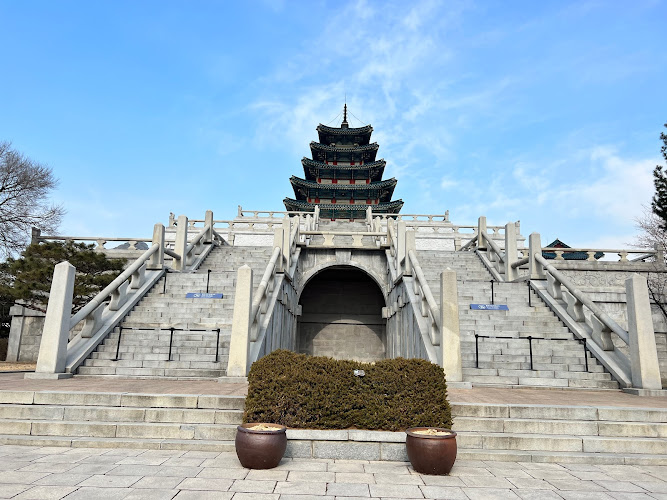
The building is itself an attraction. Its tiered central tower recalls Palsangjeon Hall at Beopjusa Temple, drawing on Buddhist architectural forms rather than the appearance of a conventional museum. Outside, stone figures and village objects extend the galleries into the grounds. The reconstructed Street of Memories shifts the focus to twentieth-century urban life through period shopfronts. Leave time for the museum shop’s craft-inspired souvenirs; check the visitor information desk for guided-tour schedules and current English-language interpretation.
- Seasonal traditions: Agricultural tools and festival displays explain the annual rhythm of planting, harvesting, and communal celebrations.
- Life-cycle customs: Clothing and ritual objects illuminate marriage, family obligations, ancestor remembrance, and mourning.
- Street of Memories: Reconstructed businesses evoke the neighborhood streets of Korea’s recent past.
- Outdoor folk objects: Guardian figures and stone sculptures show how communities marked boundaries and expressed protective beliefs.
- Children’s Museum: A separate, hands-on experience introduces younger visitors to folklore; reserve a session through the official website.
The National Folk Museum of Korea at a Glance
| Detail | Information |
|---|---|
| Address | 37 Samcheong-ro, Jongno-gu, Seoul 03045, South Korea |
| Neighborhood / Area | Samcheong-dong area, eastern edge of Gyeongbokgung Palace |
| Operating Hours | Monday–Friday and Sunday, 9am–6pm; Saturday, 9am–8pm. Check seasonal schedules and holiday closures before traveling. |
| Admission / Price Range | Free permanent exhibitions; $ overall. Gyeongbokgung Palace admission is separate. |
| Recommended Visit Duration | 1.5 to 2 hours; longer with a Children’s Museum session |
| Nearest Transit / Parking | Anguk or Gyeongbokgung, Seoul Subway Line 3; paid public parking at Gyeongbokgung |
| Official Website & Phone | National Folk Museum of Korea; +82 2-3704-3114 |
Visiting Tips, Getting There & Nearby Pairings
Arrive around opening for a straightforward route through the permanent galleries, then explore the outdoor displays. General admission does not require a paid timed ticket, but book Children’s Museum sessions ahead. Leave bulky belongings in visitor lockers where available, keep flash off, and follow exhibition-specific photography notices. The museum has ramps, elevators, accessible toilets, and wheelchair-loan facilities; use designated accessible routes rather than the monumental exterior stairs. Outdoor stone paving can be less comfortable for small stroller wheels.
From Anguk Station, Line 3, Exit 1, allow roughly 15 minutes on foot through the streets toward Samcheong-ro. Gyeongbokgung Station on the same line is another approach; palace opening arrangements can affect routes through the grounds, so use the museum’s Samcheong-ro access when necessary. Drivers can use Gyeongbokgung’s paid public car park, but weekend traffic makes rail easier. Pair the visit with Gyeongbokgung immediately west, the National Museum of Modern and Contemporary Art’s Seoul branch about five minutes east, or Samcheong-ro’s cafés within a five-to-ten-minute walk.
Frequently Asked Questions
What are the opening hours, and when should I visit?
Regular listed hours are 9am–6pm, with Saturday opening until 8pm; seasonal schedules can differ. Aim for a weekday morning and check the official calendar for holiday closures.
Is admission free, and do I need a reservation?
The permanent museum exhibitions are free, and individual visitors can ordinarily enter without advance booking. Reserve separately for the Children’s Museum, and remember that museum admission does not include a palace ticket.
How long should I spend at the museum?
Allow 90 minutes to two hours for the permanent galleries and outdoor displays. Add extra time for temporary exhibitions, shopping, or a reserved children’s session rather than rushing straight through to the palace.
Is the museum suitable for wheelchair users and families?
Accessible indoor routes include ramps and elevators, with accessible toilets and wheelchair loans available. Families can combine object-based galleries with outdoor exploring; there is no religious dress code despite the temple-inspired architecture.
When planning your Seoul travel guide or comparing verified attractions and museums in Seoul, pair this stop with standout local spots including Woo Lae Oak (Uraeok), Changdeokgung Secret Garden, Alive Museum, and Bokjeong Well (0.3 km away).