
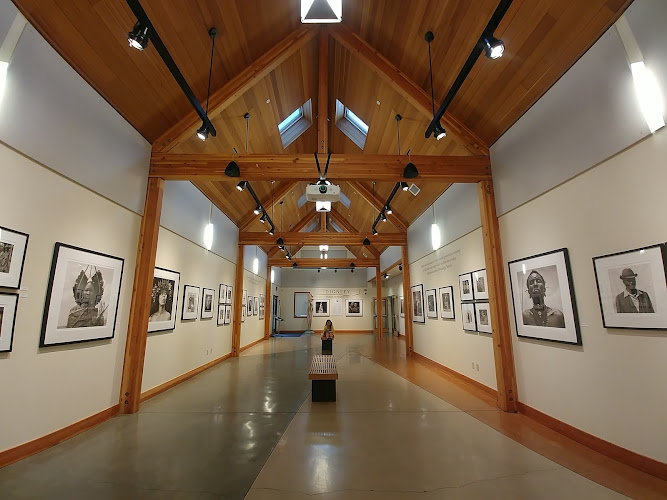
Museum of Natural and Cultural History is the state’s official repository for archaeological and paleontological collections, located on the east side of the University of Oregon campus at 1680 E 15th Ave in Eugene, Oregon. Tracing its academic roots to the university’s founding collection donated by naturalist Thomas Condon in 1876 and formally established by the Oregon Legislature in 1935–1936, the museum safeguards hundreds of thousands of artifacts, fossils, and biological specimens. Set inside a dramatic cedar-and-stone building inspired by traditional Pacific Northwest Native plankhouses, it draws travelers, families, and researchers eager to examine 15,000 years of Indigenous history alongside the prehistoric geology and ancient megafauna of the Pacific Northwest.
What to Expect at Museum of Natural and Cultural History
The exhibition halls at the Museum of Natural and Cultural History divide into two flagship permanent wings complemented by rotating science and cultural galleries. In the Oregon—Where Past is Present gallery, visitors encounter the world-famous 10,000-year-old Fort Rock sagebrush sandals—discovered in central Oregon by archaeologist Luther Cressman in 1938 and recognized as the oldest directly dated footwear in the world. This hall also presents 14,000-year-old archaeological context from the Paisley Caves, intricate Native American basketry, beadwork, contemporary Tribal art, and interactive digital storytelling created in partnership with Oregon’s nine federally recognized Tribes.
Across the lobby, the Explore Oregon natural history hall traces 300 million years of tectonic plate collisions, volcanic eruptions, and shifting climates that shaped the Cascade Range, the Willamette Valley, and the John Day Fossil Beds. Guests come face-to-face with a towering 8.5-foot skeleton replica of the Eremotherium giant ground sloth, a ferocious saber-toothed salmon (Oncorhynchus rastrosus) with tusk-like teeth, and prehistoric saber-toothed cats. Outside, an enclosed courtyard displays the massive 4.5-ton replica of the Willamette Meteorite alongside native Oregon plants and basalt columns. On Fridays and Sundays at 2:00 p.m., museum docents lead Walk & Talk highlight tours, and the Museum Store stocks regional geology guides, Native-authored books, jewelry, and educational science kits.
- Fort Rock Sagebrush Sandals: View the 10,000-year-old woven sagebrush-bark sandals from Fort Rock Cave, the oldest directly radiocarbon-dated footwear on Earth.
- Explore Oregon Paleontology Hall: Stand beneath the Eremotherium giant ground sloth and examine fossils of the spike-toothed salmon, miniature ancient horses, and Ice Age predators.
- Oregon—Where Past is Present: Explore 15,000 years of First Americans archaeology, including artifacts from the Paisley Caves and living cultural traditions of Oregon’s Tribes.
- Willamette Meteorite Courtyard: Step into the outdoor plaza to inspect a full-scale casting of North America’s largest meteorite surrounded by native Pacific Northwest flora.
- Friday & Sunday Walk & Talks: Join included 2:00 p.m. guided gallery tours on Fridays and Sundays, or browse the curated Museum Store for regional history books and crafts.
Museum of Natural and Cultural History at a Glance
| Detail | Information |
|---|---|
| Address | 1680 E 15th Ave, Eugene, OR 97401 |
| Neighborhood / Area | University of Oregon East Campus / Fairmount |
| Operating Hours | Wednesday, Friday–Sunday: 10:00 AM–5:00 PM; Thursday: 10:00 AM–8:00 PM; Monday–Tuesday: Closed |
| Admission / Price Range | $7 General; $5 Seniors (62+) & Youth (3–18); $14 Family (up to 2 adults & 4 youths); Free for children 2 & under, UO/LCC students & staff, and veterans/active military |
| Recommended Visit Duration | 1 to 2 hours |
| Nearest Transit / Parking | Lane Transit District (LTD) EmX Agate Station (3-minute walk); limited reserved visitor parking lots off E 15th Ave and Moss St |
| Official Website & Phone | mnch.uoregon.edu | +1 541-346-3024 |
Visiting Tips, Getting There & Nearby Pairings
Weekday afternoons after 1:00 p.m. (once morning school field trips depart) and Thursday evenings between 5:00 p.m. and 8:00 p.m. offer the calmest gallery conditions. Because campus parking enforcement is strict on weekdays, the easiest transit arrival is the Lane Transit District (LTD) Emerald Express (EmX) bus rapid transit line, which stops at Agate Station on Franklin Boulevard just three blocks north. Drivers can use the small number of designated free museum visitor stalls in the lot adjacent to the building off East 15th Avenue and Moss Street—be sure to obtain a free dashboard parking permit from the admissions desk immediately upon arrival—or use metered street spaces along 15th Avenue.
The single-level exhibition layout, outdoor courtyard, and restrooms are completely step-free and wheelchair and stroller accessible, with tactile fossil touch stations, quiet sensory kits, and gallery benches available throughout. After exploring the exhibits, walk five minutes west past the Historic Knight Library to the Jordan Schnitzer Museum of Art to view extensive Asian and Pacific Northwest art collections, or stroll two blocks north to Hayward Field, the world-renowned track-and-field stadium whose observation tower and interactive museum celebrate Eugene’s TrackTown USA legacy. For coffee, pastries, or lunch, the cafes along East 13th Avenue and the artisanal bakeries and wood-fired pizzerias on East 19th Avenue in the Fairmount neighborhood are less than a 10-minute walk away.
Frequently Asked Questions
What are the opening hours and best times to visit the Museum of Natural and Cultural History?
The museum is open Wednesday through Sunday from 10:00 a.m. to 5:00 p.m., with extended evening hours on Thursdays until 8:00 p.m., and is closed on Mondays and Tuesdays. Visiting on Thursday evenings or on Fridays and Sundays at 2:00 p.m. for the guided Walk & Talk tour provides an engaging, unhurried experience.
How much does admission cost and are discounts available?
General admission is $7 for adults, $5 for seniors aged 62 and older and youth aged 3 to 18, and $14 for a family pass covering up to two adults and four youths. Entry is free for children aged 2 and under, University of Oregon and Lane Community College students, faculty, and staff with ID, active-duty military personnel and veterans, and Museums for All (EBT/Oregon Trail card) participants.
How much time should I budget for a visit?
Most visitors spend between 60 and 90 minutes exploring the permanent archaeology and paleontology halls, the rotating exhibition gallery, and the outdoor meteorite courtyard. If you plan to attend a 2:00 p.m. docent tour or have children engaging with the hands-on fossil and geology stations, allow up to two hours.
Is the museum accessible and suitable for young children?
Yes, the entire building and courtyard are located on a single step-free ground floor with automatic entry doors, wide pathways for strollers and wheelchairs, and accessible restrooms. Children gravitate toward the hands-on touchable fossils, interactive drawers, giant sloth skeleton, and family activity backpacks available at the front desk.
When planning your Springfield travel guide or comparing verified attractions and museums in Springfield, pair this stop with standout local spots including President Abraham Lincoln Springfield – a DoubleTree by Hilton Hotel, Hampton Inn & Suites Springfield-Southwest, History Museum on the Square, and Jordan Schnitzer Museum of Art (0.7 km away).


