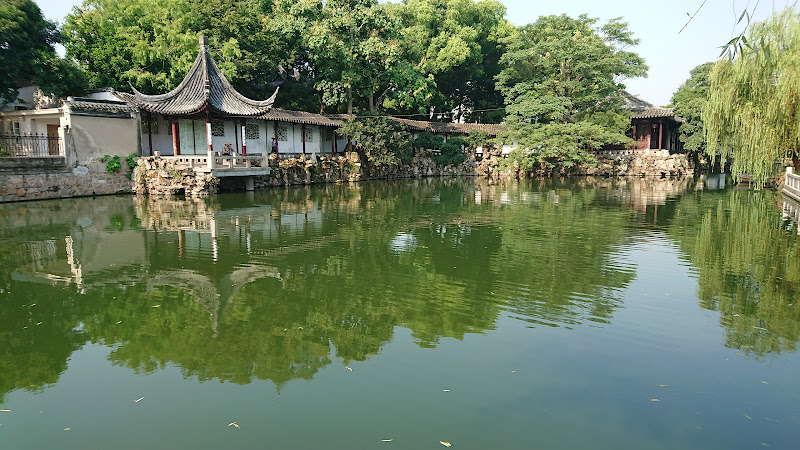
Canglang Pavilion is an approximately 1.1-hectare classical Chinese garden at 3 Canglangting Street, Gusu District, Suzhou, Jiangsu 215005, in the old city’s southern Canglang area. Established in 1044 by the Northern Song poet and official Su Shunqin, it is Suzhou’s oldest surviving classical garden by foundation date. Travelers come for its canal-facing covered corridor, wooded artificial hill, intricately patterned windows, and unusually clear expression of the scholar’s garden as a retreat from public life.
What to Expect at Canglang Pavilion
Unlike Suzhou gardens organized around a large central pond, Canglang Pavilion draws much of its waterside character from the canal outside its boundary. A bridge leads toward the entrance, while a double-sided covered corridor connects views of the water with scenes inside the garden. Its lattice windows frame bamboo, rocks, white walls, and passing reflections. The central rockery rises into a wooded hill crowned by the pavilion that gives the garden its name; climb slowly to appreciate the changing relationships between rooflines, trees, and stone.
The garden’s Song origins do not mean every building is medieval: successive owners rebuilt and reshaped it, with important Qing-dynasty work establishing much of today’s arrangement. Mingdao Hall and the Five Hundred Worthies Shrine add an architectural and biographical dimension to the landscape. The shrine’s carved portraits commemorate figures associated with Suzhou rather than presenting a conventional art collection. Added to UNESCO’s Classical Gardens of Suzhou World Heritage property in 2000, Canglang rewards close looking more than a hurried circuit of photograph stops.
- Canal-side corridor: Follow the roofed passage to see how an external waterway becomes part of the garden’s composition.
- 108 patterned windows: Compare the varied lattice designs, which turn small openings into carefully framed landscape views.
- Hilltop Canglang Pavilion: Ascend the rockery paths for elevated views through mature trees toward surrounding tiled roofs.
- Mingdao Hall: Examine the formal hall’s timber architecture and its relationship with the garden’s principal rock-and-tree scenery.
- Five Hundred Worthies Shrine: Look for the stone-carved portrait tradition honoring Suzhou’s scholars, officials, and other distinguished historical figures.
Canglang Pavilion at a Glance
| Detail | Information |
|---|---|
| Address | 3 Canglangting Street, Suzhou, Jiangsu 215005, China |
| Neighborhood / Area | Southern old city, Canglang area, Gusu District |
| Operating Hours | Daily; generally opens at 7:30 a.m., with seasonal closing around 5–5:30 p.m.; confirm before traveling |
| Admission / Price Range | Paid admission; budget tier ($); seasonal ticket rates apply |
| Recommended Visit Duration | 60 to 90 minutes |
| Nearest Transit / Parking | Sanyuanfang, Metro Line 4; Nanmen, Lines 4 and 5; use signed public parking around Renmin Road |
| Official Website & Phone | Suzhou municipal visitor information; +86 512 6519 4375 |
Visiting Tips, Getting There & Nearby Pairings
Arrive near opening for softer light along the canal and more room to study the windows. Start with the waterside corridor, continue through the halls, and tackle the hill before lingering in the shaded lower paths. Spring brings fresh foliage; summer makes the covered passages especially welcome, although humidity can be heavy. Autumn offers comfortable walking weather. Treat this as a daytime garden rather than an evening attraction, and check holiday ticket arrangements before setting out.
Walk roughly 5–10 minutes from Sanyuanfang station on Line 4; Nanmen’s Lines 4 and 5 provide another approach. Narrow historic streets make driving less convenient, and curbside spaces should not be your plan. Stone paving, raised thresholds, steps, and steep rockery sections restrict wheelchair and stroller access; the hilltop route is not step-free. Covered corridors provide shaded pauses. Pair your visit with Keyuan Garden across the entrance lane, the Suzhou Confucian Temple about 5–10 minutes west, or Shiquan Street, roughly 10–15 minutes away for food and a longer neighborhood walk.
Frequently Asked Questions
What are Canglang Pavilion’s hours, and when should I visit?
The garden generally opens daily at 7:30 a.m., with closing varying seasonally around 5–5:30 p.m. Aim for the first hour, and telephone ahead when planning a late-afternoon visit.
Is admission free, and should I reserve?
Admission is paid and falls within the budget sightseeing tier, with seasonal rates. Check the municipal visitor page or call the garden for current prices and holiday booking requirements; carry your passport for identification.
How long does a visit take?
Allow 60–90 minutes for the corridors, halls, portrait carvings, and hilltop pavilion. Architecture enthusiasts and photographers can comfortably spend longer comparing window patterns and viewpoints.
Is the garden suitable for children and wheelchair users?
Children can enjoy the framed views and winding paths, but need supervision beside water and on rockery steps. Wheelchair users should discuss a suitable lower-level route with staff; thresholds and uneven surfaces prevent an entirely step-free circuit.
When planning your Suzhou travel guide or browsing verified attractions in Suzhou, pair this stop with standout local spots including Hyatt Regency Suzhou, Tonino Lamborghini Hotel Suzhou, Suzhou Museum of Opera and Theatre, and Kimpton Suzhou Bamboo Grove, an IHG Hotel (0.7 km away).