
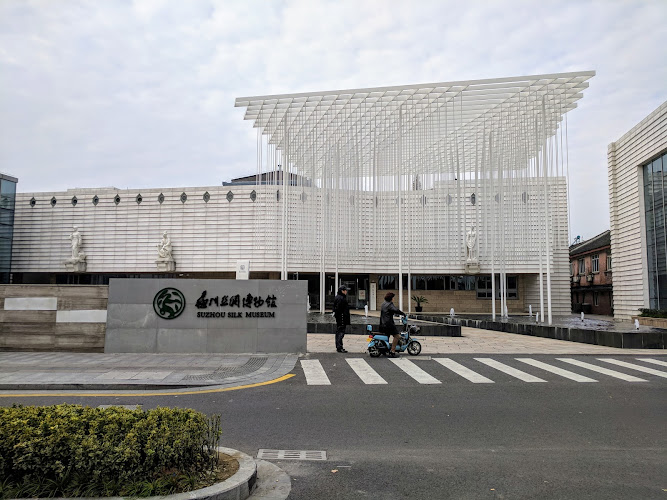
Suzhou Silk Museum is a specialist textile museum at 2001 Renmin Road, Gusu District, Suzhou, Jiangsu 215001, in the northern old town near Beisi Pagoda. Opened in 1991, it explores the silk-making traditions that helped make Suzhou one of China’s great craft cities. Travelers come to understand how mulberry leaves, silkworm cocoons, reeling equipment, and sophisticated looms connect to the patterned fabrics and luxurious clothing associated with Jiangnan.
What to Expect at Suzhou Silk Museum
The historical displays follow silk from its early development through successive Chinese dynasties, placing Suzhou’s production within a wider story of craftsmanship and trade. Look closely at weaving equipment, patterned textiles, and the explanations of reeling: a cocoon’s continuous filament must be unwound and combined with others before it becomes usable thread. The distinction between weaving a pattern into fabric and adding embroidery afterward is especially useful here. Suzhou is celebrated for both, but they involve different tools and skills.
The sericulture displays and weaving areas give this museum its strongest practical dimension. Mulberry cultivation explains the agricultural foundation of the industry, while loom displays reveal the labor behind figured silk. Live silkworm displays are seasonal, so a winter visit should focus on equipment and textiles rather than feeding caterpillars. The purpose-built museum uses white walls, gray rooflines, and garden spaces that echo Suzhou’s architectural vocabulary without being a historic merchant’s residence. Start with the historical sequence, then examine production techniques before browsing contemporary silk products.
- Silk history galleries: Follow changes in textile production and use across China’s dynastic periods.
- Sericulture displays: Trace the relationship between mulberry leaves, silkworm development, cocoons, and raw silk.
- Reeling equipment: Understand how delicate cocoon filaments become thread suitable for weaving.
- Traditional looms: Examine the mechanisms behind patterned fabrics; staffed demonstrations depend on the day’s program.
- Mulberry garden: Connect the museum’s textile displays with the living plant that sustains silk production.
Suzhou Silk Museum at a Glance
| Detail | Information |
|---|---|
| Address | 2001 Renmin Road, Suzhou, Jiangsu, China, 215001 |
| Neighborhood / Area | Northern old town, Gusu District; formerly Pingjiang District |
| Operating Hours | Tuesday–Sunday, 9am–5pm; last admission generally 4pm. Closed Mondays, with public-holiday exceptions. |
| Admission / Price Range | Free permanent exhibitions; $ overall, with optional shopping purchases extra. |
| Recommended Visit Duration | 60 to 90 minutes |
| Nearest Transit / Parking | Beisita station, Metro Line 4; short walk north along Renmin Road. Public parking nearby is limited. |
| Official Website & Phone | Suzhou Silk Museum; +86 512 6753 6506 |
Visiting Tips, Getting There & Nearby Pairings
Arrive shortly after 9am on a weekday for an unhurried circuit, allowing extra time if a loom demonstration is running. Check the official website before holiday visits and ask about current admission registration, group bookings, and guided interpretation; do not assume an English-language tour or audio guide is available. Carry your passport for identification. Travel with a small bag, ask reception about storage, and seek permission before photographing delicate textiles or working demonstrators. Avoid flash. Any retail browsing is separate from the exhibition visit; this is a public museum, not a compulsory-shopping silk-factory tour.
Metro Line 4 to Beisita is the simplest approach; walk north along Renmin Road for roughly five minutes. Drivers should use signed public parking rather than expect a large visitor lot or convenient curbside stopping. The low-rise complex keeps much of the visit close to ground level, but garden paving and thresholds deserve attention with wheelchairs or strollers; call ahead about the step-free entrance route and accessible toilet facilities. Pair the museum with Beisi Pagoda, about five minutes away, or the Suzhou Arts and Crafts Museum on Xibei Street, roughly 10–15 minutes on foot, for a broader introduction to local craftsmanship.
Frequently Asked Questions
When is Suzhou Silk Museum open?
Usual hours are 9am–5pm Tuesday through Sunday, with last admission generally at 4pm. Monday closures can change around public holidays; a weekday morning leaves the most flexibility for demonstrations.
Is admission free, and should I reserve?
The permanent exhibitions are free. Check current registration arrangements before visiting, particularly during Chinese holidays or when organizing a group.
How long should I spend here?
Allow 60–90 minutes for the historical displays, production equipment, and garden. Textile enthusiasts may prefer two hours, especially when demonstrations are available.
Is the museum suitable for children?
Yes: cocoons, looms, and seasonal silkworm displays make the production story tangible. Keep children away from working machinery and explain that live silkworms may not be on display year-round.
When planning your Suzhou travel guide or comparing verified attractions and museums in Suzhou, pair this stop with standout local spots including Suzhou Garden Museum, Suzhou Park (West Gate), Suzhou Art Gallery, and Suzhou Museum (0.9 km away).


