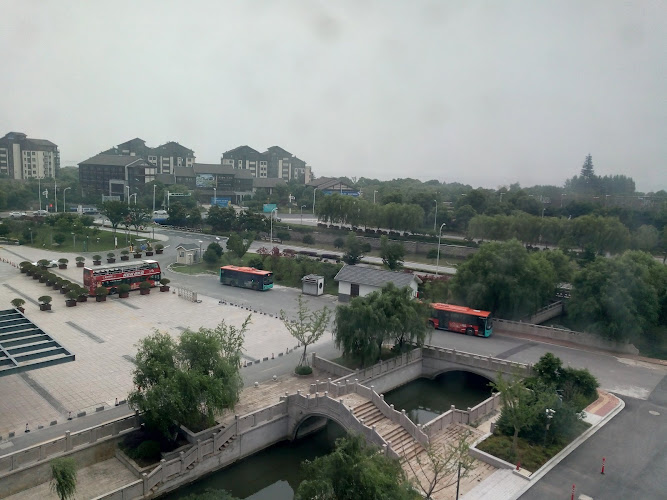
Wujiang Museum is a regional-history museum in Suzhou’s Wujiang District, where the story of Jiangnan is told through excavated objects, waterways, bridges and silk. Its galleries follow the area from Neolithic settlement through the ancient Wu and Yue worlds, imperial-era canal life and the social changes of modern China. Rather than presenting Suzhou as a single grand city narrative, the museum brings the focus down to one lake-and-canal district and the communities shaped by it.
The museum sits within the low-rise setting of Wujiang Cultural Square, a useful backdrop for an unhurried cultural stop. Water and bridge imagery around the complex echo themes inside: movement across rivers and canals, the engineering of local crossings, and the textile trade that connected Wujiang to the wider Jiangnan region. It is a particularly rewarding choice for visitors who want historical context beyond Suzhou’s headline classical gardens.
Standout Highlights & What Not to Miss
Follow the galleries in chronological order if possible. The museum’s strength is the way individual finds and regional traditions build into a coherent account of place: early settlement becomes state history, waterways become commercial infrastructure, and silk becomes both craft and economic history. Allow time to read the interpretive panels rather than treating this as a quick object-by-object collection.
- Early Jiangnan settlement: The prehistoric material, including Neolithic artifacts and pottery, provides a grounded introduction to life in the region before its later fame for canals, gardens and textiles.
- The Wu and Yue context: Galleries on the period between the ancient states of Wu and Yue help position Wujiang within a larger political and cultural landscape, rather than treating the district in isolation.
- Bridges, embankments and canals: Look closely at displays concerning local crossings and water routes. They explain how geography directed travel, exchange and settlement in this flat, water-rich part of Jiangsu.
- Silk heritage: The textile-focused section is essential for understanding why Wujiang mattered within Jiangnan’s manufacturing history. It connects skilled production and everyday clothing to wider trade networks.
- Modern local stories: The later galleries move beyond dynasties into literary, rural and civic change, giving the visit a more human, recent conclusion than an archaeology-only museum would offer.
Visitor Strategy & Planning Snapshot
| Planning Factor | What to Expect | Practical Strategy |
|---|---|---|
| Ideal Arrival Window | A calmer daytime cultural stop, best approached before building the rest of a Wujiang District outing around it. | Start here when you want historical orientation, then continue into the Cultural Square surroundings or toward another nearby district stop. |
| Typical Time Needed | Most visitors can cover the permanent displays in 1 to 1.5 hours. | Reserve the full 1.5 hours if archaeology, canal infrastructure or textile history are particular interests. |
| Booking / Queue Reality | Entry procedures and any timed-entry arrangements can change. | Confirm current admission requirements directly before setting out, especially on weekends, holidays or during school travel periods. |
| Terrain & Accessibility | This is an indoor museum visit, but step-free routes and facilities should be confirmed in advance. | Telephone ahead for the appropriate step-free entrance, lift access, wheelchair circulation and accessible-facility guidance. |
| Weather / Seasonal Fit | The galleries make a useful shelter from rain, summer heat or winter chill. | Use it as an all-weather anchor, then add an outdoor walk around the square when conditions are comfortable. |
Honest Trade-Offs: Best For vs. Who Might Skip
Wujiang Museum is best for history buffs, art lovers, solo travelers and first-time visitors seeking a clearer sense of local Jiangnan identity. It rewards curiosity about material culture: pottery, civic history, river transport, bridge building and silk all gain meaning through their regional setting. It also works well for travelers who prefer a measured indoor visit to a crowded landmark. Visitors seeking spectacular architecture, immersive entertainment or a vast collection of internationally famous masterpieces may find the experience more modest than Suzhou’s major garden or city-museum attractions. The appeal lies in specificity and context, not blockbuster scale. If your schedule is extremely tight and your interests are limited to classical gardens, it may be sensible to prioritize those instead.
Neighborhood Context & How to Pair Your Visit
Pair the museum with a slow circuit through Wujiang Cultural Square, allowing the open setting to extend the visit rather than rushing immediately back to central Suzhou. Begin indoors with the chronological galleries, then use the surrounding water-and-bridge atmosphere to notice the landscape themes you have just encountered. This makes an easy half-day framework: museum first, a walk around the square afterward, and a relaxed meal or further exploration in Wujiang District. Travelers based in central Suzhou should treat it as a district-focused excursion, not a quick add-on between the city’s better-known garden sites. The combination is most satisfying when approached as an introduction to the local history behind Jiangnan’s canals, craft traditions and everyday settlement patterns.
When planning your Suzhou travel guide or comparing verified attractions and museums in Suzhou, pair this stop with standout local spots including Suzhou Sports Museum, W Suzhou, Hilton Suzhou, and Le Méridien Suzhou, Suzhou Bay (5.5 km away).