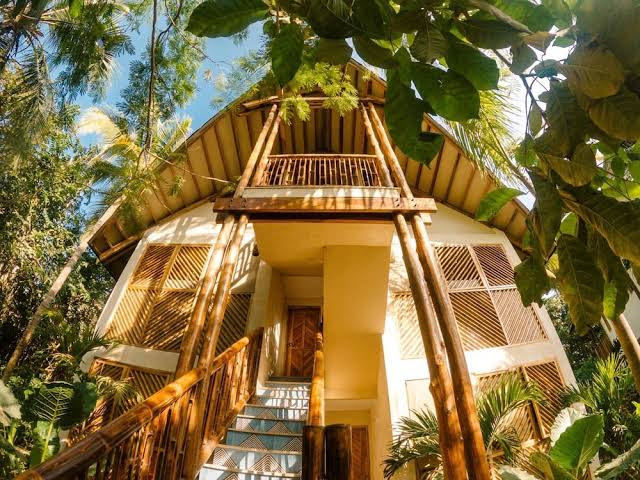
Quick answer: Tayrona National Natural Park is Colombia’s premier Caribbean wilderness, where lush coastal rainforests of the Sierra Nevada mountains meet giant granite boulders and secluded white-sand swimming bays like Cabo San Juan.
Editorial disclosure: This destinations.ai guide was prepared with AI assistance and checked against the official sources linked below. Accommodation and activity placeholders may use affiliate links; that does not change the planning advice.
Overview: Why Visit Tayrona National Park
Tayrona National Natural Park (Parque Nacional Natural Tayrona), located on Colombia’s northern Caribbean coast in the Magdalena department just 34 kilometers northeast of Santa Marta, protects 150 square kilometers (58 square miles) of coastal wilderness where the dramatic jungle-covered foothills of the Sierra Nevada de Santa Marta—the world’s highest coastal mountain range—plunge directly into the Caribbean Sea.
Major highlights include hiking the lush coastal rainforest trails from the El Zaino entrance, photographing the iconic double-decker thatched gazebo atop the rocky ocean promontory at Cabo San Juan del Guía, swimming in the calm, reef-sheltered turquoise lagoon of La Piscina, sleeping in open-air sea-breeze hammocks overlooking the Caribbean, encountering wild cotton-top tamarin monkeys and toucans, and savoring fresh Caribbean fried red snapper with coconut rice and fried plantains.
Best Time to Visit & Scheduled Annual Closures
- Dry Season (December to April): The premier travel window. Sunny, warm Caribbean days average 28°C to 32°C (82°F to 90°F) with low rainfall, making coastal jungle trails dry, firm, and easily walkable.
- Mid-Year Dry Period (July to August): Warm tropical weather with moderate ocean swells. Excellent for swimming at La Piscina and Cabo San Juan.
- Mandatory Park Closure Periods (Respira Tayrona): To allow environmental regeneration and sacred spiritual cleansing rituals by the four ancestral indigenous tribes of the Sierra Nevada (Kogui, Wiwa, Arhuaco, and Kankuamo), Tayrona National Park completely closes to all tourism three times per year:
- February 1 to February 15
- June 1 to June 15
- October 19 to November 2
Always verify dates with the Colombian National Parks Authority (Parques Nacionales Naturales de Colombia) before booking travel.
Key Coastal Beaches & Jungle Trails
Quick answer: Cabo San Juan del Guía: The definitive postcard image of Tayrona. Two golden crescent-shaped sandy beaches divided by a rocky granite peninsula crowned with a two-story thatched-roof mirador gazebo. Offers hammock rentals, tent camping, rustic private cabins, and an open-air beachfront restaurant. Arrive before 10:00 AM or stay overnight to enjoy the beaches in tranquility before day-tripper boats arrive.
- Cabo San Juan del Guía: The definitive postcard image of Tayrona. Two golden crescent-shaped sandy beaches divided by a rocky granite peninsula crowned with a two-story thatched-roof mirador gazebo. Offers hammock rentals, tent camping, rustic private cabins, and an open-air beachfront restaurant. Arrive before 10:00 AM or stay overnight to enjoy the beaches in tranquility before day-tripper boats arrive.
- La Piscina Beach: A tranquil cove naturally protected from treacherous Caribbean undertows by a long offshore barrier of granite boulders and coral reef. The safest and most popular beach for swimming, snorkeling with sea turtles, and sunbathing inside the park.
- Arrecifes & Arenilla: The first major beach cluster reached after the 1-hour jungle hike from Cañaveral. Swimming at Arrecifes is strictly prohibited due to powerful and fatal rip currents, but the expansive golden sand and massive wave crashes make it a scenic spot for photography and shaded hammock relaxation. Adjacent Arenilla offers calm waters for wading.
- El Zaino Jungle Trail (Main Route): The most popular and well-maintained trail. From the El Zaino gate, take a 10-minute shuttle van to the trailhead at Cañaveral, followed by a 2.5-hour (6.5 km) scenic trek through tropical rainforest boardwalks, coconut groves, and boulder scrambles connecting Cañaveral, Arrecifes, Arenilla, La Piscina, and Cabo San Juan.
- Calabazo Trail to Playa Brava: A rugged, strenuous 4-to-5-hour backcountry trek starting at the western Calabazo gate, climbing steep forested ridges before descending to the remote and secluded eco-cabins at Playa Brava.
- Indigenous Sacred Sites Note: The ancient pre-Columbian stone settlement of Pueblito Chairama is permanently closed to tourists at the request of indigenous elders to protect sacred ceremonial grounds.
Suggested 2-Day Overnight Tayrona Itinerary
Quick answer: Day 1: El Zaino Trek, La Piscina & Sunset at Cabo San Juan. Depart Santa Marta or Palomino by 6:30 AM to reach the El Zaino entrance at 7:00 AM opening. Complete entry registration and mandatory park medical insurance. Take the shuttle to Cañaveral and hike through lush coastal rainforest, spotting howler monkeys and blue morpho butterflies. Stop for a refreshing swim at La Piscina at midday. Reach Cabo San Juan by 2:00 PM, secure your hammock or cabin reservation, and watch the Caribbean sunset from the rocky gazebo. Dine on fresh fried fish beneath the stars.
- Day 1: El Zaino Trek, La Piscina & Sunset at Cabo San Juan. Depart Santa Marta or Palomino by 6:30 AM to reach the El Zaino entrance at 7:00 AM opening. Complete entry registration and mandatory park medical insurance. Take the shuttle to Cañaveral and hike through lush coastal rainforest, spotting howler monkeys and blue morpho butterflies. Stop for a refreshing swim at La Piscina at midday. Reach Cabo San Juan by 2:00 PM, secure your hammock or cabin reservation, and watch the Caribbean sunset from the rocky gazebo. Dine on fresh fried fish beneath the stars.
- Day 2: Early Morning Ocean Swim, Return Trek & Departure. Wake up at 6:00 AM to photograph the serene empty beaches and swim in the calm morning sea. Enjoy fresh *arepa de huevo* and Colombian coffee for breakfast. Hike back along the coastal trail to Cañaveral, or take a direct afternoon speedboat from Cabo San Juan to the picturesque fishing village of Taganga (approx. 50 minutes) before returning to Santa Marta.
Caribbean Colombian Coastal Gastronomy
Quick answer: Pargo Rojo Frito con Arroz de Coco: Whole fresh Caribbean red snapper seasoned with lime and sea salt, deep-fried whole until crisp, served alongside fragrant coconut rice (*arroz con coco*), crispy twice-fried green plantain rounds (*patacones*), and fresh tomato-onion salad.
- Pargo Rojo Frito con Arroz de Coco: Whole fresh Caribbean red snapper seasoned with lime and sea salt, deep-fried whole until crisp, served alongside fragrant coconut rice (*arroz con coco*), crispy twice-fried green plantain rounds (*patacones*), and fresh tomato-onion salad.
- Arepa de Huevo: A classic Caribbean coastal breakfast staple: a yellow cornmeal arepa deep-fried until puffed, slit open, stuffed with a raw egg and spiced ground beef, and flash-fried again until the egg is cooked through and the crust is golden-crispy.
- Fresh Ceviche de Camarón: Fresh Caribbean shrimp cured in tangy lime juice, blended with finely diced red onion, fresh cilantro, tomato sauce, and mayonnaise, served with soda crackers.
- Fresh Tropical Fruit Juices: Refreshing cold juices blended on-demand at trailside stands from freshly harvested passionfruit (maracuyá), soursop (guanábana), lulo, and cold green coconuts (agua de coco).
Practical Travel Tips, Transit & Budget
Quick answer: Getting There: Fly into Simón Bolívar International Airport (SMR) in Santa Marta. Public buses depart frequently from the Santa Marta Public Market (Calle 11 & Carrera 11) directly to the El Zaino gate (approx. 1 hour, $10,000 COP / ~$2.50 USD). Taxis from Santa Marta cost approx. $100,000–$140,000 COP ($25–$35 USD).
- Getting There: Fly into Simón Bolívar International Airport (SMR) in Santa Marta. Public buses depart frequently from the Santa Marta Public Market (Calle 11 & Carrera 11) directly to the El Zaino gate (approx. 1 hour, $10,000 COP / ~$2.50 USD). Taxis from Santa Marta cost approx. $100,000–$140,000 COP ($25–$35 USD).
- Park Entrance Fees & Requirements: Foreign non-residents pay approximately $73,500 COP (low season) to $96,500 COP (high season) plus a mandatory daily medical insurance fee ($6,000 COP/day). Bring original passport and physical cash (COP)—there are NO ATMs inside the park and credit cards are rarely accepted. Yellow Fever vaccination is recommended.
- Packing Essentials: Travel light (large rolling luggage cannot be brought onto the trail; store bulky luggage at your Santa Marta or Palomino hotel and bring only a 25–35L backpack). Pack a headlamp, biodegradable insect repellent, high-SPF reef-safe sunscreen, quick-dry microfiber towel, and at least 2 liters of water for the initial hike.
- Daily Budget Breakdown:
- Budget traveler: $35–$60 USD (140,000–240,000 COP)/day (public bus from Santa Marta, open-air hammock rental at Cabo San Juan or Arrecifes for $50,000–$70,000 COP, trailside meals and snacks).
- Mid-range traveler: $110–$220 USD (440,000–880,000 COP)/day (private taxi from Santa Marta, private wooden cabin at Cabo San Juan or Ecohabs at Cañaveral, speedboat transfer, sit-down seafood dinners).
- Luxury traveler: $350–$800+ USD (1,400,000–3,200,000+ COP)/day (luxury thatch-and-teak Ecohabs overlooking Cañaveral beach, private guided indigenous birding tours, private chartered boat from Santa Marta marina).
Frequently Asked Questions
When is Tayrona National Park closed?
Tayrona uses scheduled closures and changing sector rules for conservation and cultural reasons. Current national-park guidance lists the active sectors, entry times, capacity controls, required visitor insurance, and any closure notices; check it immediately before booking accommodation or transport.
How long is the hike to Cabo San Juan?
The route to Cabo San Juan is a substantial tropical hike with heat, uneven ground, sand, and changing trail conditions. Ask the park or your accommodation about the current entrance, shuttle, horses, distances, water, and return timing, and do not plan it as a quick beach transfer.
Can you swim at all beaches in Tayrona National Park?
Swimming is not safe at every Tayrona beach, and permitted areas can change with sea conditions and park instructions. Follow lifeguard and park signage, never enter a closed water area, and treat a beach walk as the plan when currents or weather are unfavorable.
Affiliate placeholder: Compare accommodation options after checking the official property details, location, and cancellation terms.
Affiliate placeholder: Check current activity availability, meeting points, accessibility, and cancellation terms before reserving.
Sources and current planning links
Explore more destinations.ai travel guides when building a longer route.
Which entrance and sector should you use in Tayrona?
Choose the entrance and sector that match your time, overnight booking, fitness, and beach goal, then confirm current capacity and entry hours with Parques Nacionales before leaving Santa Marta. Zaino, Calabazo, Palangana, and Bahía Concha do not create the same visit.
Zaino is commonly used for the main coastal route, while other sectors provide different approaches and may have different transport or walking requirements. The park’s official visitor information lists seasonal entry windows, capacity controls, designated parking, required visitor insurance, and guidance for marked trails. Save the exact entrance in your phone, carry water, and do not assume a taxi driver’s estimate includes the internal trail or shuttle.
How should you plan an overnight at Cabo San Juan?
Reserve the accommodation or camping arrangement before hiking in, arrive with light luggage, and treat the return walk as a real effort rather than a quick transfer between beaches. Cabo San Juan is memorable because it is reached through the landscape, not because it is effortless.
Ask what bedding, lockers, meals, drinking water, showers, and baggage storage are included. Protect electronics from rain and sand, use a headlamp after dark, and keep valuables secured. Horses may be available for some luggage or route sections, but confirm welfare, cost, and the exact arrangement instead of assuming a ride covers the whole trek. Leave early enough to reach the next bed or campsite before the hottest hours.
Can you swim at every Tayrona beach?
No. Currents, surf, signage, and park instructions determine where swimming is allowed, and a beach that looks calm can still be dangerous. Follow the lifeguard and park signs on the day, even if an old guide lists a beach as safe.
Wear secure footwear for the trail, keep children close to the waterline, and never enter a closed area for a photograph. Ask the park team where swimming is currently permitted and what the sea conditions mean for your group. If the water is rough, make the day about shade, wildlife, and a responsible shoreline walk. Reef, tide, and wave conditions can change faster than a printed itinerary.
What should you pack for Tayrona?
Pack light, breathable clothing, sturdy shoes, swimwear, sun and insect protection, a refillable water container, dry bags, cash, and only the luggage you can carry through heat and sand. A rainforest-coast visit punishes overpacking.
Use biodegradable or park-approved products where required, keep food secured, and carry your own rubbish until a proper bin is available. A charged phone and offline map are useful, but signal can be uneven. Bring a light rain layer even in a dry-looking forecast. Visitors with mobility, medical, or dietary needs should ask the park and accommodation about surfaces, assistance, toilets, water, food, and emergency contacts before committing to an overnight route.
How do you get to Tayrona from Santa Marta?
Use a confirmed shuttle, taxi, bus, or tour from Santa Marta to the correct park sector, then allow for the gate, ticket, insurance, internal shuttle, and trail time. The drive is only the first part of the visit.
Ask for the exact drop-off and pickup point, the final return time, and what happens if the park reaches capacity. Keep a little cash for local transport and small purchases, but confirm current prices rather than relying on an old fare. If you are connecting to an airport, ferry, or long-distance bus, return a day earlier or use a generous buffer. Traffic on the Caribbean coast and park entry procedures can make a short map distance unpredictable.
What is a practical two-day Tayrona itinerary?
A two-day itinerary uses the first day for entry and a measured coastal hike, then the second for an early beach or return route before the park’s exit time. It is better to enjoy one sector than to chase every named beach.
- Day one: Enter through the confirmed sector, complete the internal transfer or trail at a comfortable pace, and settle into booked accommodation before dark.
- Day two: Swim only where current signs permit, take a short wildlife or shoreline route, and leave enough time for the trail and gate.
When should you visit Tayrona?
Choose a period with a workable forecast and confirmed park access, remembering that conservation closures, high-season capacity, heat, rain, and sea conditions shape the experience. There is no single perfect month for every traveler.
Check the current Tayrona National Park visitor guidance immediately before booking. The official page emphasizes sector schedules, capacity, insurance, marked trails, wildlife conduct, and respect for the ancestral territory of the Sierra Nevada’s Indigenous peoples. Book accommodation ahead when access is open, and never plan around an annual closure date copied from an old article.
For a longer regional route, compare Cartagena, Colombia, Medellín, Colombia, Quito, Ecuador with this destination before finalizing your itinerary.
Explore Tayrona National Park by Category: Discover top curated spots across Tayrona National Park Attractions & Sightseeing, Best Places to Stay in Tayrona National Park, Tayrona National Park Restaurants & Dining.