Editorial disclosure: This destinations.ai guide was prepared with AI assistance and checked against the official sources linked below. Accommodation and activity placeholders may use affiliate links; that does not change the planning advice.
Overview: Why Visit The Hague
The Hague (Den Haag / ‘s-Gravenhage), located on the western North Sea coast of the Netherlands in South Holland, is the seat of the Dutch parliament, the working palace of King Willem-Alexander, and the international judicial capital of the United Nations. Blending stately royal avenues and 17th-century brick architecture with expansive North Sea sandy beaches, The Hague delivers a sophisticated, relaxed alternative to Amsterdam.
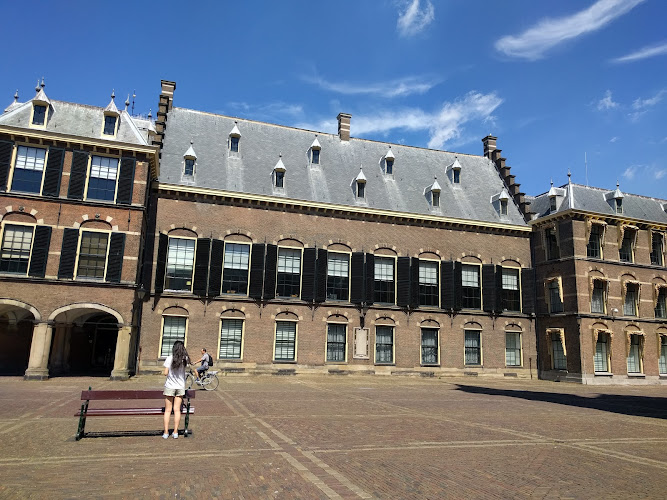
Top attractions include the Mauritshuis collection of Dutch Golden Age art, the Neo-Renaissance architecture of the Peace Palace (Vredespaleis), the optical illusions inside Escher in Het Paleis, the Hofvijver pond beside the historic Binnenhof, and Scheveningen Beach. Check current museum notices before promising a particular painting or opening time.
Best Time to Visit The Hague
Quick answer: Summer (June to August): Peak season for seaside activities at Scheveningen and Kijkduin. Daytime temperatures average 21°C to 25°C (70°F to 77°F). Enjoy open-air beach clubs along the promenade, outdoor dining in the Plein and Grote Markt, and long coastal bicycle rides through the dunes.
- Summer (June to August): Peak season for seaside activities at Scheveningen and Kijkduin. Daytime temperatures average 21°C to 25°C (70°F to 77°F). Enjoy open-air beach clubs along the promenade, outdoor dining in the Plein and Grote Markt, and long coastal bicycle rides through the dunes.
- Spring (April to May): Spectacular Dutch spring weather with blooming tulips across the Lange Voorhout and nearby Bollenstreek flower fields. Temperatures average 13°C to 18°C (55°F to 64°F) with uncrowded museum galleries. King’s Day (Koningsdag) on April 27 turns the historic center into an orange-clad street festival.
- Autumn (September to October): Crisp North Sea breezes with daytime temperatures of 14°C to 18°C (57°F to 64°F). Golden leaves blanket the historic Lange Voorhout promenade, and seasonal cultural exhibitions open across the city’s world-class museums.
- Winter (November to February): Cool and quiet (averaging 3°C to 7°C / 37°F to 45°F). Features the Royal Christmas Fair along the Lange Voorhout, indoor gallery visits, cozy brown cafes (*bruine kroegen*), and the legendary New Year’s Day polar dip at Scheveningen.
Key Royal Sights, Museums & Seaside Landmarks
Quick answer: Mauritshuis: A 17th-century classicist palace housing a major collection of Dutch Golden Age paintings. Highlights associated with the collection include Johannes Vermeer’s Girl with a Pearl Earring and View of Delft , Rembrandt van Rijn’s The Anatomy Lesson of Dr. Nicolaes Tulp , Carel Fabritius’s The Goldfinch , and works by Jan Steen and Frans Hals. Check the museum’s current visitor notice because individual works and galleries can be unavailable.
- Mauritshuis: A 17th-century classicist palace housing a major collection of Dutch Golden Age paintings. Highlights associated with the collection include Johannes Vermeer’s Girl with a Pearl Earring and View of Delft, Rembrandt van Rijn’s The Anatomy Lesson of Dr. Nicolaes Tulp, Carel Fabritius’s The Goldfinch, and works by Jan Steen and Frans Hals. Check the museum’s current visitor notice because individual works and galleries can be unavailable.
- Peace Palace (Vredespaleis): Opened in 1913 through donations by philanthropist Andrew Carnegie. Serves as the global seat of international law, housing the United Nations International Court of Justice (ICJ) and the Permanent Court of Arbitration. Admire the stunning Neo-Renaissance facade and visit the Visitors Centre exhibitions.
- Escher in Het Paleis: Located inside the former 18th-century winter palace of Queen Mother Emma on the Lange Voorhout. Showcases more than 120 famous woodcuts and lithographs by Dutch graphic artist M.C. Escher, famous for impossible architecture, infinite staircases, and mathematical tessellations.
- Binnenhof & Hofvijver: The oldest functioning parliament building complex in the world, founded in the 13th century by Count Floris IV. While the interior undergoes a comprehensive historic restoration through 2028+, visitors can view the gothic Ridderzaal (Knights’ Hall) and parliament spires reflected in the swans of the picturesque Hofvijver lake.
- Kunstmuseum Den Haag: Designed by famed architect H.P. Berlage. Houses the world’s largest collection of paintings by De Stijl pioneer Piet Mondrian (including his famous final masterpiece Victory Boogie Woogie), alongside extensive collections of 19th-century Hague School realism, Delft Blue pottery, and Haute Couture fashion.
- Scheveningen Beach & Pier: The Netherlands’ most famous seaside resort, located 15 minutes by tram from the city center. Walk the long sandy beach, ride the climate-controlled Ferris wheel over the ocean on De Pier, and visit the seaside sculpture museum Museum Beelden aan Zee built into coastal sand dunes.
Suggested 3-Day The Hague Itinerary
Quick answer: Day 1: Art, Binnenhof & Historic Center. Check the Mauritshuis visitor notice first; if the museum and the galleries you want are open, make it the morning anchor. Otherwise, use the Hofvijver, Binnenhof area, Passage, and Escher in Het Paleis as the central route, then choose an Indonesian Rijsttafel dinner in the city center.
- Day 1: Art, Binnenhof & Historic Center. Check the Mauritshuis visitor notice first; if the museum and the galleries you want are open, make it the morning anchor. Otherwise, use the Hofvijver, Binnenhof area, Passage, and Escher in Het Paleis as the central route, then choose an Indonesian Rijsttafel dinner in the city center.
- Day 2: Peace Palace & Scheveningen Seaside. Visit the Peace Palace Visitor Centre in the morning. Rent a bicycle or take Tram 1 to Scheveningen Beach. Walk along the pier, view modern outdoor sculptures at Museum Beelden aan Zee, and enjoy fresh North Sea herring and craft beers at a beachfront pavilion.
- Day 3: Royal Palaces, Modern Art & Zeeheldenkwartier. Photograph the gates of King Willem-Alexander’s workplace at Paleis Noordeinde and wander the tranquil Palace Gardens. In the afternoon, tour the Mondrian collection at Kunstmuseum Den Haag. Explore indie boutiques and cafes in the trendy Zeeheldenkwartier neighborhood before departing.
Indonesian Heritage & Dutch Coastal Gastronomy
Quick answer: Indonesian Rijsttafel: Reflecting The Hague’s historic role as the administrative center for the former Dutch East Indies. A lavish feast comprising 15 to 25 small shared dishes—including slow-braised beef *Rendang*, grilled chicken *Satay* with peanut sauce, spiced *Sambal Goreng Telur* (eggs in chili sambal), and *Sayur Lodeh* vegetable curry.
- Indonesian Rijsttafel: Reflecting The Hague’s historic role as the administrative center for the former Dutch East Indies. A lavish feast comprising 15 to 25 small shared dishes—including slow-braised beef *Rendang*, grilled chicken *Satay* with peanut sauce, spiced *Sambal Goreng Telur* (eggs in chili sambal), and *Sayur Lodeh* vegetable curry.
- Hollandse Nieuwe (Raw Herring): Fresh, lightly cured North Sea herring served at traditional fish stalls (*vishandels*), swallowed whole by the tail with diced raw white onions and sweet pickles, or served in a soft white roll (*broodje haring*).
- Kibbeling: Deep-fried chunks of battered white cod or pollock tossed in savory herb seasoning, served piping hot with garlic mayonnaise or tartar sauce.
- Haagse Hopjes: Traditional hard candy flavored with coffee and caramel, invented in The Hague in the 18th century by Baron Hendrik Hop.
Practical Travel Tips, Transit & Budget
Quick answer: Getting Around: Rotterdam The Hague Airport (RTM) is 25 minutes away, while Amsterdam Airport Schiphol (AMS) is just 30 minutes away via direct, frequent NS intercity trains. The city features an exceptional tram and bus network (HTM) connecting the city center to Scheveningen Beach in under 15 minutes. Bicycles can be easily rented via OV-fiets or city apps.
- Getting Around: Rotterdam The Hague Airport (RTM) is 25 minutes away, while Amsterdam Airport Schiphol (AMS) is just 30 minutes away via direct, frequent NS intercity trains. The city features an exceptional tram and bus network (HTM) connecting the city center to Scheveningen Beach in under 15 minutes. Bicycles can be easily rented via OV-fiets or city apps.
- Public Transit Payment: Public buses and trams accept contactless credit and debit cards (OVpay) directly at onboard card readers—no paper tickets required.
- Daily Budget Breakdown:
- Budget traveler: €65–€95 USD ($70–$105)/day (hostel dorm, bakery sandwiches and street herring, public tram transit, free Hofvijver and Palace Gardens walks).
- Mid-range traveler: €150–€260 USD ($165–$285)/day (3-star/4-star boutique hotel near center or beach, Mauritshuis and Peace Palace tickets, Indonesian Rijsttafel feast, tram passes).
- Luxury traveler: €450–$1,100+ USD ($495–$1,210+)/day (5-star historic luxury at Hotel Des Indes, private guided art history tours, Michelin-starred fine dining).
Frequently Asked Questions
Where is Vermeer’s “Girl with a Pearl Earring” located?
Johannes Vermeer’s famous 1665 painting Girl with a Pearl Earring is part of the Mauritshuis collection in The Hague, but display status is not permanent. As of September 3, 2026, the museum’s visitor notice says the painting is off display from August 15 through October 4 and the museum is closed for maintenance from August 24 through September 20; check the official notice again before visiting.
How far is Scheveningen Beach from The Hague city center?
Scheveningen Beach is located just 4.5 kilometers (about 2.8 miles) northwest of The Hague city center, easily reached in 12 to 15 minutes via direct HTM Tram Lines 1 or 9.
Why is The Hague famous for Indonesian food?
As the former administrative and naval capital of the Dutch East Indies during colonial times, many colonial civil servants, soldiers, and repatriation families settled in The Hague, establishing the Netherlands’ deepest and most authentic culinary tradition of Indonesian *Rijsttafel* (rice table) restaurants.
Affiliate placeholder: Compare accommodation options after checking the official property details, location, and cancellation terms.
Affiliate placeholder: Check current activity availability, meeting points, accessibility, and cancellation terms before reserving.
Sources and current planning links
Explore more destinations.ai travel guides when building a longer route.
What are the best things to do in The Hague?
Combine the Mauritshuis and the Binnenhof area with one international-law landmark, then save Scheveningen or the city’s parks for a separate half-day. The Hague is a working political city as well as a museum destination, so its best itinerary mixes grand buildings with ordinary streets, cafés, and the coast.
The Mauritshuis is the natural first stop for Dutch and Flemish paintings, including Vermeer’s Girl with a Pearl Earring. Buy a timed slot when the museum recommends it and check special exhibitions before promising a particular work. The Peace Palace, Escher in Het Paleis, the Royal Picture Gallery, and the Binnenhof each have different opening arrangements; use the current Mauritshuis visitor information and venue pages rather than relying on one city timetable.
Should you stay in the city center or Scheveningen?
Stay in the historic center for museums, restaurants, and easy rail connections, or choose Scheveningen for beach access and a different evening rhythm. The two areas are connected, but a beach hotel is not a substitute for being close to the Mauritshuis or central government district.
Compare the final walk from the tram, the seasonality of beach businesses, parking rules, and the noise level at night. A central base suits a first visit built around art and architecture. Scheveningen works better when you want a morning on the sand, a pier walk, or a coastal sunset and are comfortable commuting back into town for museums.
How do you get around The Hague?
Walk the compact center, use the tram for Scheveningen and farther museums, and use trains when adding Delft, Rotterdam, or Amsterdam. A car is usually a burden for a short city stay because parking and traffic can erase the time saved between attractions.
Check the current Dutch transit planner, ticket products, and engineering notices. Cycling is practical for confident riders, but leave the cycle lane clear and lock the bike properly. Travelers using a wheelchair, stroller, or other mobility aid should confirm lift access and the final pavement route at each museum; historic buildings do not all have the same entrance.
What are good day trips from The Hague?
Delft is the easiest culture-and-canal add-on, while Rotterdam suits modern architecture and Amsterdam suits a longer museum day. Choose one rather than trying to visit all three between breakfast and dinner.
Check the return train before leaving and allow for a slow walk from the station. In spring, the coast and nearby bulb fields can be attractive, but seasonal displays and transport patterns vary. If rain is heavy, keep the Hague museums as the main plan and treat a day trip as optional.
What is a practical three-day The Hague itinerary?
Use one day for central art and politics, one for the coast and a neighborhood, and one for Delft or another confirmed regional outing. Put timed museums first and leave open space around them.
- Day one: Visit the Mauritshuis, walk around the Hofvijver and Binnenhof area, and choose Escher or another current museum in the afternoon.
- Day two: Take the tram to Scheveningen, walk the beach or dunes, and return for dinner in the center or a coastal restaurant.
- Day three: Choose Delft, the Peace Palace, Madurodam, or a second museum based on opening times and the forecast.
When is the best time to visit The Hague?
Late spring through early autumn is easiest for combining museums with the beach, while winter works well for indoor culture, restaurants, and a quieter coast. Wind and rain can make Scheveningen feel colder than the city center, so pack a waterproof layer in every season.
Check school holidays, major conferences, gallery closures, and current museum notices before booking. The city is friendly to families when the plan alternates indoor exhibits with parks and short tram rides. A slower route also makes the center more manageable for visitors who need frequent seating or step-free stops.
For a longer regional route, compare Amsterdam, Netherlands, Rotterdam, Netherlands, Brussels, Belgium with this destination before finalizing your itinerary.
Explore The Hague by Category: Discover top curated spots across The Hague Attractions & Sightseeing, Best Places to Stay in The Hague, The Hague Restaurants & Dining.