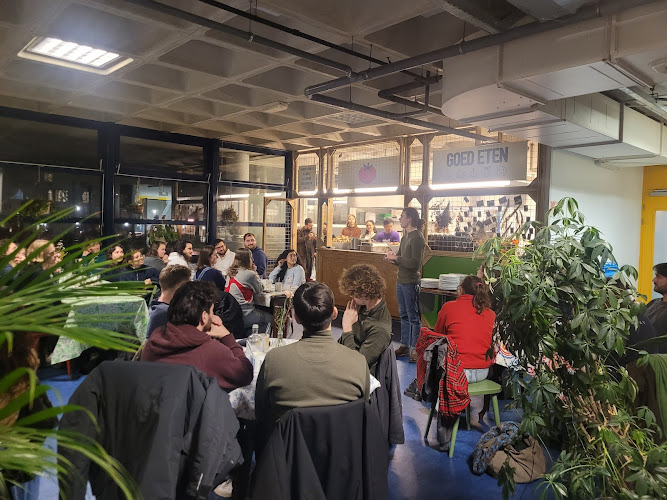
The Conscious Kitchen Den Haag is a community kitchen built around a shared weekly dinner rather than the usual restaurant model. Its long-table format puts locals, internationals, newcomers and visitors in the same room for a meal shaped by sustainable, low-waste cooking. The experience is as much about conversation and exchange as it is about what arrives on the plate, making it a distinctive choice for travelers who would rather meet people than simply dine beside them.
Set on the western side of The Hague’s city-centre area, this is a low-key neighborhood gathering with an intentionally informal feel. There is no fixed à la carte routine to study in advance: the food rotates with available ingredients, and communal seating is central to the evening. Come expecting a sociable, shared occasion instead of a private-table dinner, and the format becomes one of the city’s more approachable ways to connect with everyday life.
Standout Highlights & What Not to Miss
The Conscious Kitchen works best when treated as a hosted neighborhood meal. The appeal lies in the combination of a changing, ingredient-led dinner and the chance to join a mixed table without needing to arrive with a group. Travelers who are curious, patient and willing to introduce themselves will get considerably more from it than those looking for fast, highly individualized service.
- Communal dining tables: Seating is designed for sharing, so expect conversation across the table and a setting where solo guests are part of the format, not an afterthought.
- A weekly shared-dinner rhythm: The gathering has the feel of a recurring local ritual, which gives the evening more personality than a one-off tourist experience.
- Low-waste cooking: The kitchen’s conscious approach makes the meal especially appealing to visitors interested in practical sustainability rather than polished green branding.
- A rotating menu: Flexibility is part of the point. Arrive open to what is being cooked that week instead of expecting a familiar signature dish or a broad menu of choices.
- An easy social entry point: Expats, newcomers and independent travelers can use the dinner as a natural setting to ask locals about neighborhoods, life in The Hague and everyday food culture.
Visitor Strategy & Planning Snapshot
| Planning Factor | What to Expect | Practical Strategy |
|---|---|---|
| Ideal Arrival Window | This is a shared gathering, so the start of the meal is the best moment to settle in and meet the table naturally. | Plan to arrive a little before the dinner begins rather than dropping in late; it is easier to join conversations from the outset. |
| Typical Time Needed | Most visitors should allow about 1.5 to 2 hours for the meal, introductions and the unhurried communal pace. | Avoid scheduling a tightly timed museum, train or reservation immediately afterward. Leave room for conversation to run longer than expected. |
| Booking / Queue Reality | It operates as a limited weekly event, and menus, sign-up arrangements or schedule details can change. | Check the organizer’s current channels before setting out and treat advance confirmation as essential, particularly if visiting on a short stay. |
| Terrain & Accessibility | The indoor social format is straightforward once inside, but entrance and restroom access may vary. | Guests who need step-free access should contact the organizer ahead of time to confirm the current setup and discuss any requirements. |
| Weather / Seasonal Fit | As an indoor dinner, it is a useful year-round plan and a particularly cozy counterpoint to wet or windy Hague weather. | Pair it with a nearby daytime walk, gallery or central-city errand, then let the dinner become the warm, social finish. |
Honest Trade-Offs: Best For vs. Who Might Skip
This is an excellent fit for solo travelers, food-minded visitors, sustainability enthusiasts and people newly arrived in The Hague who want a human-scale introduction to the city. The communal format lowers the barrier to meeting people, while the changing meal rewards flexibility. It is less suitable for diners seeking privacy, a predictable menu, a quick service cadence or the control of choosing from a full à la carte list. Shy visitors need not avoid it, but should know that talking with unfamiliar people is part of the appeal rather than an optional extra. Likewise, anyone with specific dietary or accessibility needs should clarify arrangements in advance instead of assuming a rotating community meal can accommodate every request.
Neighborhood Context & How to Pair Your Visit
Use The Conscious Kitchen as an evening anchor for a central The Hague itinerary rather than as an isolated food stop. Spend the afternoon exploring the city centre on foot, browsing independent shops, taking in a museum or simply wandering toward the quieter streets on the western side of the core. Because the dinner is intentionally unhurried, avoid overpacking the night with another major plan. A good pairing is a daytime cultural visit followed by a relaxed walk to the gathering, leaving enough time to arrive composed and ready to participate. For visitors staying near the centre, the social nature of the meal can make the city feel more legible: conversations often yield neighborhood recommendations that no conventional restaurant dinner is likely to provide.
When planning your The Hague travel guide or browsing verified restaurants in The Hague, pair this stop with standout local spots including Brasserie Stocks And Bonds, Art in the Forest – Speelbos, Novotel Den Haag World Forum, and Van Kleef Distillery Museum (nearby).