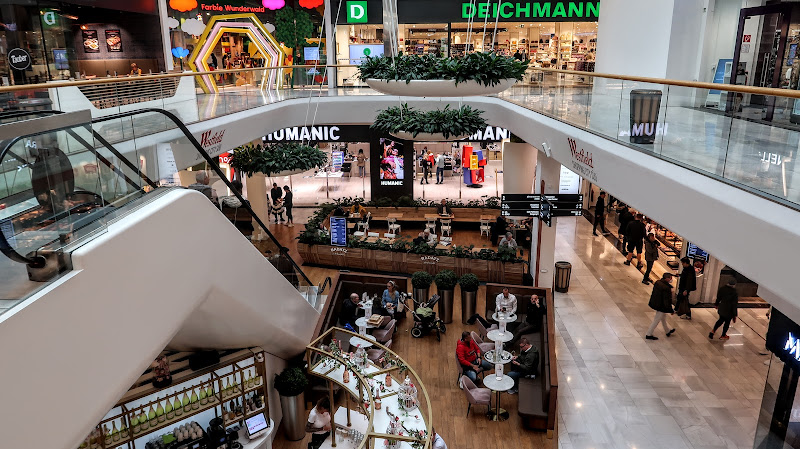
The Mercure Grand Hotel Biedermeier Wien occupies one of the more unusual architectural footprints in central Vienna’s Landstrasse district: a long, arcaded 19th-century passage building converted into a 203-room hotel that keeps its Biedermeier-era shell while operating as a modern four-star Accor property. It sits between the Ringstrasse museum quarter and the Wien Mitte transit hub, making it a functional base rather than a headline attraction in itself, but its courtyard architecture and passage design give it genuine local character worth understanding before booking or visiting.
The Mercure Grand Hotel Biedermeier Wien is a 203-room, four-star hotel in Vienna’s 3rd district (Landstrasse), built around a preserved 19th-century Biedermeier-style arcaded courtyard passage. Rooms run roughly €110–€220/night depending on season. Highlights include the glass-roofed atrium, on-site restaurant, and proximity to Wien Mitte station, Stadtpark, and the Belvedere Palace, a 20-minute walk away.
At A Glance
| Category | Details |
|---|---|
| Address | Landstraßer Hauptstraße 28, 1030 Vienna, Austria |
| Operating Hours | 24-hour reception; check-in from 3:00 PM, check-out by 12:00 PM |
| Price Range | €110–€220 per night (standard double, seasonal variation) |
| Highlights | Biedermeier courtyard passage, glass-roofed atrium lobby, on-site restaurant and bar, proximity to Belvedere Palace and Stadtpark |
| Transport/Transit Access | U3/U4 Landstraße-Wien Mitte (5-min walk), Rochusgasse U3 station (350m), Weyrgasse bus stop (5-min walk), City Airport Train terminus nearby |
Deep Origins, Architectural Evolution & Cultural Significance
The building that now houses the Mercure Grand Hotel Biedermeier Wien began life as a covered shopping passage in the mid-1800s, during Vienna’s Biedermeier period — an era named for its restrained, bourgeois aesthetic that favored practical elegance over imperial ornamentation. Unlike the grand Habsburg palaces along the Ringstrasse, Biedermeier architecture in Vienna emphasized domestic comfort, symmetrical proportions, and modest decorative detailing suited to the rising merchant class. The passage design, with shops and workshops lining a covered walkway, was itself a product of the era’s growing commercial middle class, and Landstraße, the surrounding district, developed as a residential and trade quarter for exactly this demographic.
Over the following century, the passage building underwent multiple functional transformations before its 20th-century conversion into hospitality use. What makes the site notable today is that renovators retained the original arcaded courtyard structure rather than demolishing it for a conventional hotel block. The glass-roofed atrium that now operates as the hotel’s central circulation space follows the footprint of the original passage, and several ground-floor architectural elements — window proportions, wrought-iron balustrade details, and the rhythm of structural bays — echo Biedermeier design conventions. This makes the hotel a rare example in Vienna of adaptive reuse that preserves a specific historical building typology (the covered passage) rather than simply restoring a facade.
Its cultural significance is modest but real: the hotel operates as a physical artifact of Vienna’s passage architecture, a building type that once numbered in the dozens across the inner city but has largely disappeared or been converted into retail arcades. As a Mercure-branded Accor property, it also represents the broader pattern of European heritage buildings being absorbed into international hotel chains — a trend that has both preserved structures financially unviable as single-use buildings and altered their original public character from open commercial passage to private guest accommodation.
Signature Highlights & Detailed Offerings
The hotel’s most photographed feature is its central atrium — a glass-roofed courtyard that floods the lobby and breakfast area with natural light and preserves the original passage’s linear geometry. Guest rooms number 203 total, split across Standard, Superior, and Privilege categories, with several rooms retaining higher ceilings and larger windows consistent with the building’s original 19th-century room proportions on the lower floors.
The on-site restaurant serves a Viennese-Austrian menu with rotating seasonal dishes; typical offerings include Wiener Schnitzel (veal, breaded, served with lingonberry and parsley potatoes, priced around €22–€26), Tafelspitz (boiled beef with apple-horseradish sauce, a Habsburg-era classic, around €24), and a breakfast buffet included in many rate packages featuring Austrian pastries, cold cuts, and regional cheeses. The hotel bar operates in the evenings with a compact list of Austrian wines, including Grüner Veltliner by the glass, alongside standard international spirits.
A barber shop mentioned in several booking listings operates within or adjacent to the property, and the hotel maintains a small fitness area for guest use. Meeting and event space is available for business travelers, a segment the hotel actively courts given its location near Vienna’s international organizations along the Wien Mitte corridor.
Sensory & Spatial Walkthrough
Entering from Landstraßer Hauptstraße, the transition from a busy tram-lined commercial street into the quiet, glass-covered atrium is immediate and deliberate. The material palette throughout the lobby favors warm wood tones, cream and ochre wall finishes referencing Biedermeier color schemes, and wrought-iron accents on railings and light fixtures. Acoustically, the atrium’s height and glass roof create a soft echo that is quickly absorbed by soft furnishings arranged around the reception and lounge seating, giving the space a hushed, insulated feel distinct from the street noise outside.
Natural light shifts noticeably through the day: morning light enters at a low angle through the eastern edge of the glass roof, casting long shadows across the breakfast seating area, while by early afternoon the atrium is evenly and brightly lit from directly overhead, ideal for photography of the architectural details. By evening, the space transitions to warm artificial lighting from wall sconces and pendant fixtures, giving the courtyard a more intimate, low-lit ambiance suited to the bar service. Guest room corridors are narrower and more traditionally hotel-like, with less of the historic character present in the public spaces below.
Insider Visitor Strategy & Pro Tips
- Book rooms facing the internal atrium rather than the street side for quieter sleep, as Landstraßer Hauptstraße carries tram and bus traffic into the late evening.
- Arrive after 3:00 PM for guaranteed room readiness; early arrivals can store luggage at reception and explore Stadtpark or the Belvedere while waiting.
- Breakfast service is typically busiest between 8:00–9:30 AM on weekdays with business travelers; arriving before 8:00 AM secures quieter seating in the atrium’s best-lit corner.
- Photography of the atrium is unrestricted for personal use; the best angle is from the first-floor corridor looking down into the courtyard, capturing the full glass roof structure.
- Book directly through Accor’s ALL loyalty platform rather than third-party aggregators for better cancellation flexibility and occasional member-rate discounts.
- Carry cash in small denominations for the barber shop and incidental services, as not all ancillary vendors on-site accept card payment.
Curated Half-Day Neighborhood Pairing Itinerary
Start at the hotel and walk five minutes north to Wien Mitte The Mall for coffee at one of the ground-floor cafés and a look at the mall’s modern glass architecture, a useful contrast to the hotel’s historic passage design. From there, walk approximately 12–15 minutes southwest, or take one stop on the U3/U4 to Stadtpark, Vienna’s landscaped 19th-century park famous for the gilded Johann Strauss II monument; allot 30–40 minutes for a walking loop through the park’s pond and pathways. Continue on foot roughly 15 minutes south to the Lower Belvedere and Belvedere Palace gardens, where the Upper Belvedere houses Gustav Klimt’s The Kiss; budget at least 90 minutes if entering the museum, or 20 minutes for garden views alone if time is short. This circuit totals roughly three to four hours including museum time, or 90 minutes as a walking-only loop, and returns easily to the hotel via the U4 line back to Landstraße-Wien Mitte.
Practical Logistics & Universal Accessibility
The hotel is served by the U3 and U4 subway lines at Landstraße-Wien Mitte station, roughly a five-minute walk, and by the U3 at Rochusgasse, approximately 350 meters away. The City Airport Train (CAT) terminus at Wien Mitte connects directly to Vienna International Airport in 16 minutes, making this hotel a practical airport-adjacent base despite its inner-city location. Tram lines O and 71 and several bus routes, including the one serving the Weyrgasse stop, run within a five-minute walk.
Step-free access is available from the main street entrance into the lobby and atrium, and the hotel offers elevator access to all guest floors; travelers requiring accessible rooms should request one at booking, as the historic building’s older sections have some layout constraints compared to a purpose-built modern hotel. Private parking is available nearby, typically priced around €25–€35 per day for garage parking in this central district, though the hotel itself has limited on-site spaces and often directs guests to nearby public garages. There is no strict dress code for the lobby, restaurant, or bar, though smart-casual attire is customary for dinner service. The property accepts all major credit cards and mobile payment methods at the front desk and restaurant.
Frequently Asked Questions
Is the Mercure Grand Hotel Biedermeier Wien within walking distance of St. Stephen’s Cathedral? Yes, it is approximately a 15–20 minute walk or a short subway ride via U3/U4 through the inner city to St. Stephen’s Cathedral.
Does the hotel offer airport transfer options? The City Airport Train terminus at Wien Mitte, a five-minute walk from the hotel, reaches Vienna International Airport in 16 minutes; the hotel does not typically operate its own shuttle.
Is breakfast included in standard room rates? Breakfast is included in many but not all rate plans; travelers should confirm at booking, as room-only rates are also offered at a lower nightly price.
Is the hotel suitable for business travelers? Yes, it offers meeting rooms, business-friendly Wi-Fi, and proximity to Vienna’s international organizations district along the Wien Mitte corridor.
What is the best time of year to visit for lower rates? Rates typically drop in January, February, and late November outside major trade fair and Christmas market periods, when demand across Vienna’s hotel market softens.
Are pets allowed at the hotel? Pet policies vary by booking channel and should be confirmed directly with the hotel prior to arrival, as Accor properties often permit small pets for an additional fee.