
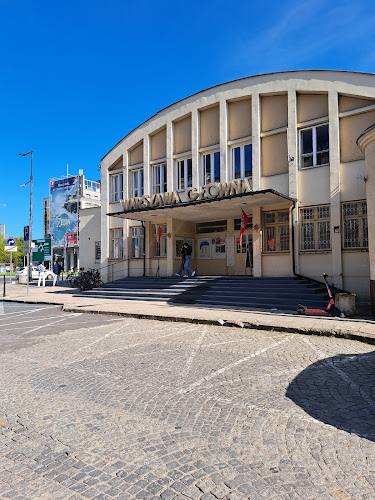
Warsaw Railway Museum, officially known as Stacja Muzeum, occupies the former Warszawa Główna station hall and its platforms on the Wola–Ochota border, just west of central Warsaw. It is Poland’s national railway collection: a place where the architecture of an old terminus becomes part of the exhibit and full-size locomotives stand where passengers once waited for trains.
The museum works on two scales. Inside, railway history is told through the objects of everyday travel and operations—signals, uniforms, clocks, ticketing equipment, plans and banners. Outside, the former platforms form an open-air rolling-stock yard of steam engines, carriages, freight wagons and military vehicles. It is an especially rewarding stop for families, transport enthusiasts, photographers and anyone interested in Poland’s industrial and wartime past.
Standout Highlights & What Not to Miss
Give the indoor displays enough attention before heading out to the platforms: the contrast explains why this is more than a lineup of impressive machinery. The collection spans over 170 years of Polish railways, from the practical tools that kept a network running to the large vehicles that made it visible in the landscape. The outdoor section is the visual centerpiece, while the smaller exhibits add human detail and historical context.
- Steam locomotive platforms: Walk alongside substantial Polish and German-built engines, including freight and passenger types, and notice the differences in wheel arrangements, tenders and cab proportions. The old platform setting gives the display a rare sense of scale.
- Armoured trains and wartime rail vehicles: These military wagons, draisines and armoured-train elements are among the museum’s most distinctive objects. They offer a direct route into the railway’s strategic role during 20th-century conflict.
- The model railway layout: A working miniature railway is a dependable family highlight and a useful pause between the denser technical displays. Look closely at the scenery, operations and tiny station details rather than treating it as a quick children’s diversion.
- EU07 and EN57 driving simulators: These simulators focus on familiar PKP-era electric traction rather than fantasy rail travel. Availability and participation arrangements can vary, so ask on arrival if a cab experience is a priority.
- Station-life artifacts: Seek out signalling equipment, uniforms, ticket machines, clocks, railway banners and technical drawings. Together they reveal how rail travel was organized, timed and communicated long before digital displays.
Visitor Strategy & Planning Snapshot
| Planning Factor | What to Expect | Practical Strategy |
|---|---|---|
| Ideal Arrival Window | The indoor galleries and open platforms reward an unhurried visit, with the outdoor collection best appreciated in comfortable daylight. | Arrive earlier in your sightseeing day, leaving room to explore the platforms before weather, fatigue or changing light becomes a factor. |
| Typical Time Needed | Most visitors need 1.5 to 2.5 hours; enthusiasts and families using interactive elements may stay longer. | Allow two hours as a baseline and add time if locomotives, military history or photography are central to your visit. |
| Booking / Queue Reality | This is primarily a browse-at-your-own-pace museum, though special events and simulator experiences may have their own arrangements. | Check current museum guidance before travel, especially for model-railway fairs, screenings or a simulator session. |
| Terrain & Accessibility | Indoor halls are largely step-free, while outdoor paving can be uneven and vehicle interiors require steep steps. | Choose stable footwear, take the platforms slowly, and treat climbing into rolling stock as optional rather than essential. |
| Weather / Seasonal Fit | Much of the headline collection is outdoors and exposed to rain, cold, heat and wind. | Use the indoor galleries as your anchor in poor weather; in colder months, dress for a prolonged platform walk. |
Honest Trade-Offs: Best For vs. Who Might Skip
This is a strong choice for train enthusiasts, history-minded visitors, children who enjoy large machines, and photographers drawn to rivets, wheels and industrial geometry. It also suits travelers who prefer a specific, characterful museum to a conventional art-and-history circuit. The trade-off is that the experience is object-led and partly outdoors: visitors wanting a highly polished multimedia narrative, extensive English interpretation, or a fully barrier-free route through every exhibit may find it less seamless. Those with no interest in railways can still appreciate the station setting and wartime material, but should pair it with another nearby stop rather than make it their only museum of the day.
Neighborhood Context & How to Pair Your Visit
Stacja Muzeum sits in the changing Wola–Ochota area west of the centre, a useful position for building a practical city day rather than backtracking across Warsaw. Pair it with a walk through central Wola’s former industrial streets and newer business district, then continue toward Ochota for a more local urban feel. It also fits naturally before or after central Warsaw sights: treat the museum as the slower, tactile counterpoint to the reconstructed Old Town, major historical institutions and the city’s grander boulevards. Because the outdoor platforms invite lingering, avoid squeezing it between tightly timed reservations. A relaxed route with a meal or coffee stop nearby makes the old-station atmosphere feel like a destination rather than a quick detour.
When planning your Warsaw travel guide or comparing verified attractions and museums in Warsaw, pair this stop with standout local spots including The Westin Warsaw, Sheraton Grand Warsaw, Bellotto Hotel, and "I Love Warsaw" Sign (0.7 km away).


