
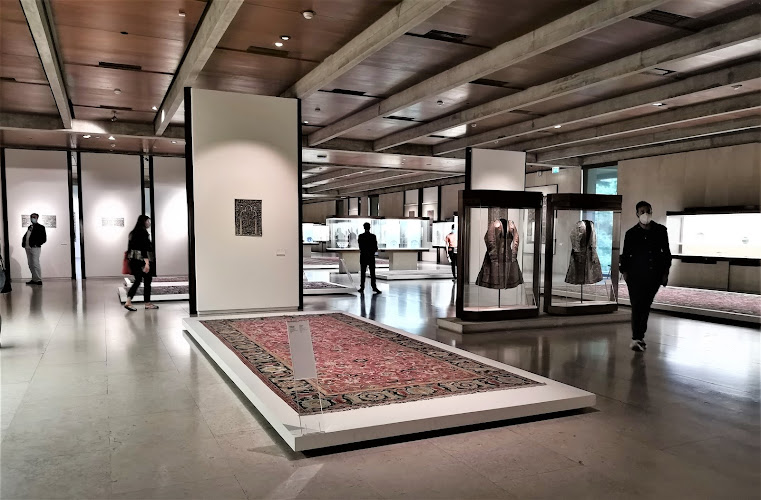
Calouste Gulbenkian Foundation is Lisbon’s leading arts-and-philanthropy campus at Avenida de Berna 45 A, 1067-001 Lisboa, in the Avenidas Novas area of Lisbon, Portugal. Created in 1956 under the will of Armenian-born oil entrepreneur and collector Calouste Sarkis Gulbenkian, it brings together the Gulbenkian Museum, the Centre for Modern Art, an auditorium, library, gardens and a major cultural programme. Travelers come for an exceptional collection spanning antiquity to the early 20th century, acclaimed classical concerts and a calm landscape of water, mature trees and Modernist architecture.
What to Expect at Calouste Gulbenkian Foundation
The core museum displays Gulbenkian’s personal collection of more than 6,000 objects, presented in a purpose-built 1960s complex designed by Alberto Pessoa, Pedro Cid and Ruy Jervis d’Athouguia. Its chronological galleries move from Egyptian, Greco-Roman, Islamic, Armenian and Far Eastern art to European painting, sculpture and decorative arts. Look for René Lalique jewellery and glass, Persian carpets, Iznik ceramics, paintings by Rembrandt, Rubens, Turner, Manet, Monet, Degas and Renoir, and the richly detailed 18th-century French furniture and goldsmith work that reflect Gulbenkian’s collecting eye.
Allow time outdoors as well. The 7.5-hectare Gulbenkian Garden, shaped by landscape architects António Viana Barreto and Gonçalo Ribeiro Telles, threads lawns, woodland, ponds and a lake around the buildings. Large windows and sheltered terraces deliberately frame the garden from inside the museum. The nearby Centre for Modern Art, known as CAM, focuses on Portuguese art from the late 19th century onward and international modern and contemporary work; its renewed building and garden-facing spaces make it a worthwhile second museum stop. Evening visitors can pair galleries with an orchestra, chamber-music, jazz or visiting-performance event in the Grand Auditorium.
- Founder’s Collection: Egyptian, Islamic, Armenian, East Asian and European works assembled by Calouste Gulbenkian.
- Lalique galleries: A major grouping of René Lalique jewellery, glass, drawings and objets d’art.
- Modernist campus: Low-slung stone, glass and concrete buildings designed to connect art with landscape.
- Gulbenkian Garden: A lake, lawns, shaded paths and bird-rich planting across the central grounds.
- CAM: Portuguese modern art and changing contemporary exhibitions in the Centre for Modern Art.
- Live performance: Gulbenkian Orchestra, Choir and international artists in the Grand Auditorium.
Calouste Gulbenkian Foundation at a Glance
| Detail | Information |
|---|---|
| Address | Avenida de Berna 45 A, 1067-001 Lisboa, Portugal |
| Neighborhood / Area | Avenidas Novas, near São Sebastião and Praça de Espanha |
| Operating Hours | 10am–6pm Wednesday–Monday; closed Tuesday. Concert and event times vary. |
| Admission & Ticket Prices | Museum entry is paid, while garden access is free; concert and exhibition prices vary. Check the official ticket page before visiting. |
| Recommended Visit Duration | 2–3 hours for the museum and garden; add time for CAM or a performance. |
| Nearest Transit / Parking | São Sebastião Metro is the closest station; paid on-site parking is available subject to capacity. |
| Official Website / Phone | gulbenkian.pt / +351 21 782 3000 |
Visiting Tips, Getting There & Nearby Pairings
Arrive close to opening for the quietest gallery experience and to walk the garden before Lisbon’s warmer afternoon hours. Book timed museum entry and performance tickets online when a temporary exhibition or Gulbenkian Orchestra programme is on your dates; concerts often begin after the galleries close. The Blue and Red lines meet at São Sebastião Metro, about a short walk from the Avenida de Berna entrance. Praça de Espanha station on the Blue Line is another practical option. Drivers should use the campus car park rather than expect unrestricted street parking in this busy office-and-residential district.
Main museum and auditorium routes are step-free, with lifts and adapted toilets for visitors using wheelchairs or strollers. Garden paths are generally broad but include changes in level, slopes and natural surfaces, so allow extra time outdoors. Within roughly 10 minutes on foot, El Corte Inglés Lisboa offers food counters and restaurants beside São Sebastião; the cafés and restaurants around Avenida da República and Saldanha are also an easy choice. Parque Eduardo VII and its upper Jardim Amália Rodrigues are around a 15-minute walk north, giving an urban green-space pairing after the galleries.
Frequently Asked Questions
When is Calouste Gulbenkian Foundation open, and what is the best time to go?
The main visitor hours are 10am–6pm from Wednesday through Monday, with Tuesday closure. Visit at opening for more space in the permanent galleries and cooler, quieter garden paths. Performance schedules follow separate evening timetables.
Do I need tickets or reservations?
The garden is free to enter, but museum galleries require paid admission and concerts require separately ticketed seats. Reserve online through the Foundation’s official website, especially for temporary exhibitions and high-demand orchestra dates.
How much time should I budget for a visit?
Budget two to three hours for the Founder’s Collection and garden. Add 60–90 minutes for CAM, and allow additional time for a café stop, a special exhibition or an evening performance.
Is the Foundation suitable for families and wheelchair users?
Yes. The museums offer manageable indoor gallery routes, lifts and adapted facilities, while the garden gives children room to pause between exhibits. Wheelchair users and families with strollers should use the step-free entrances and expect some slopes and uneven natural surfaces in the landscaped grounds.
When planning your Lisbon travel guide or browsing verified museums in Lisbon, pair this stop with standout local spots including InterContinental Lisbon, Museum of Lisbon / Pimenta Palace, Alameda Park (Garden), and Calouste Gulbenkian Museum (0.1 km away).


