
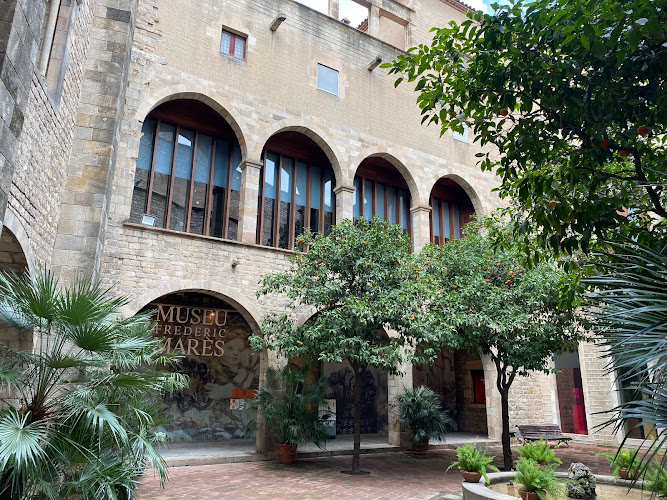
Museu Frederic Marès is a sculpture and collectors’ museum at Plaça Sant Iu, 5, Ciutat Vella, 08002 Barcelona, Spain, in the Gothic Quarter beside Barcelona Cathedral. Opened in 1948, it grew from the collections donated to the city by sculptor Frederic Marès (1893–1991). Visitors come for Spanish religious sculpture, an extraordinary assortment of everyday historical objects, and a quiet courtyard within buildings belonging to Barcelona’s former royal palace complex.
What to Expect at Museu Frederic Marès
The sculpture collection spans antiquity to the nineteenth century, with particular strength in medieval religious art. Romanesque wooden crucifixes and seated Virgins lead into Gothic figures whose gestures, drapery and expressions become increasingly naturalistic. Renaissance and Baroque sculpture extends the sequence. Look closely at surviving polychromy: these devotional figures were often painted rather than intended as bare wood or stone. The collection reflects Marès’s choices as a sculptor and collector, not simply a chronological survey of Catalan art.
Upstairs, the Gabinet del Col·leccionista, or Collector’s Cabinet, changes the mood completely. Fans, pipes, clocks, toys, keys, photographs and other objects document habits of dress, leisure and domestic life, particularly in the nineteenth century. Dense displays reward slow looking; recently introduced trilingual panels and graphics help explain the rooms and collections. Marès’s library-study adds a more personal perspective through his own sculpture and working environment. Outside, the arcaded courtyard occupies the former orchard of the Counts of Barcelona, offering a pause between the museum and the surrounding medieval streets.
- Romanesque crucifixes: Compare rigid, frontal compositions with the more expressive figures that follow.
- Virgin and Child sculptures: Trace changing devotional imagery through medieval woodcarving and surviving painted surfaces.
- Collector’s Cabinet: Seek out fans, smoking accessories and toys rather than trying to inspect every case.
- Library-study: Connect Marès the collector with Marès the practicing sculptor through his own work.
- Palace courtyard: Notice the surrounding arcades and the contrast with the busy cathedral precinct.
Museu Frederic Marès at a Glance
| Detail | Information |
|---|---|
| Address | Plaça Sant Iu, 5, Ciutat Vella, 08002 Barcelona, Spain |
| Neighborhood / Area | Gothic Quarter, beside Barcelona Cathedral |
| Operating Hours | Tuesday–Saturday, 10am–7pm; Sunday, 11am–8pm. Normally closed Monday; check holiday exceptions. |
| Admission & Ticket Prices | Paid general admission, with concessions and free-entry periods. See official hours and prices for current rates. |
| Recommended Visit Duration | 1.5–2 hours; longer for detailed sculpture viewing |
| Nearest Transit / Parking | Jaume I, Metro L4, about 5 minutes’ walk; Liceu, L3, about 10 minutes. Paid Catedral parking on Avinguda de Francesc Cambó. |
| Official Website / Phone | Museu Frederic Marès / +34 932 56 35 00 |
Visiting Tips, Getting There & Nearby Pairings
Arrive near opening on a weekday to tackle the sculpture rooms before museum fatigue sets in, then move to the Collector’s Cabinet. Check the official ticket page before paying, especially for concession eligibility and free-entry sessions; a temporary free-admission announcement should not be treated as a permanent policy. Review booking requirements separately for guided activities. From Jaume I, walk toward the cathedral and follow its side to Plaça Sant Iu. Driving into the surrounding narrow streets is inconvenient; leave the car in a perimeter garage and finish on foot.
The museum has lift access between exhibition floors; wheelchair users and visitors with strollers should ask reception to indicate the accessible route through the historic building. Allow extra time for uneven paving around the cathedral, and do not assume every small historic space has identical access. Pair the museum with Barcelona Cathedral, immediately next door, then walk roughly five minutes to Plaça del Rei for the royal palace setting. Santa Caterina Market, around ten minutes away, makes a practical lunch pairing when its food stalls and restaurants are open.
Frequently Asked Questions
What are the hours, and when is the best time to visit?
Regular hours are 10am–7pm Tuesday–Saturday and 11am–8pm Sunday, with Monday normally closed. A weekday opening-time visit gives you a clear sequence through the collections. Check holiday arrangements before traveling.
How much are tickets, and should I reserve?
General admission is paid, with concessions and scheduled free-entry opportunities. Consult the official admission page for current prices and booking options. Guided visits and special activities can have separate reservation requirements.
How much time should I budget?
Allow 90 minutes to two hours for both main collections and the courtyard. With only an hour, choose selected medieval sculptures and a few Collector’s Cabinet rooms rather than rushing through every display.
Is it suitable for families and wheelchair users?
Toys, fans and unfamiliar household objects offer children an approachable starting point, although this is primarily a looking museum rather than a hands-on attraction. Lifts support access between floors; ask staff about the step-free itinerary and individual-room access.
When planning your Barcelona travel guide or comparing verified attractions and museums in Barcelona, pair this stop with standout local spots including Jardins de Laribal, Parc de Les Aigües, Eix Comercial Poblenou, and Cathedral of Barcelona (nearby).


