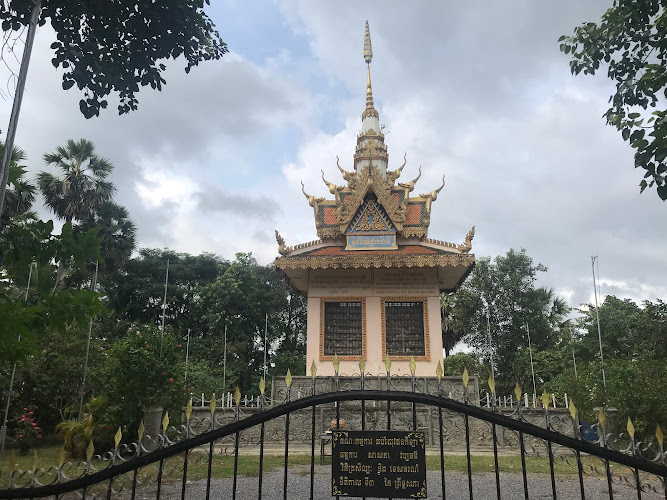
The Well of Shadows is a Khmer Rouge memorial within Wat Samrong Knong, at 46H9+FFP, Krong Battambang, Cambodia, in the Samrong Knong area northeast of the city center. This Buddhist monastery became a place of detention and killing during the Khmer Rouge’s 1975–1979 rule. Travelers visit to remember the victims, examine the memorial’s narrative reliefs, and understand how Cambodia commemorates mass violence within an active religious landscape. It is a remembrance site, not a conventional art museum.
What to Expect at The Well of Shadows
The focus is a memorial containing victims’ skeletal remains, with sculpted panels depicting persecution, forced labor, and killing under the Khmer Rouge. The reliefs communicate through human figures and recognizable scenes rather than through a sequence of indoor galleries. Some imagery is distressing, particularly when viewed alongside the remains. Approach slowly, read any explanatory material available, and avoid treating the monument as a decorative backdrop. A knowledgeable local guide can explain the relationship between this site and the wider destruction of religious and civilian life.
The surrounding Wat Samrong Knong compound gives the visit its essential context. The monastery traces its origins to the early eighteenth century, long before its wartime use. Prayer buildings, Buddhist ornament, trees, and everyday monastic activity sit beside evidence of a much more recent catastrophe. Begin at the memorial, then walk through the permitted temple grounds to understand that contrast. There is no conventional gallery circuit or dependable audio-guide service to organize the visit around; arrange interpretation with a guide beforehand rather than expecting a staffed museum reception.
- Human-remains memorial: The preserved remains make this a burial and remembrance setting requiring particular restraint.
- Narrative relief panels: Sculpted scenes address Khmer Rouge brutality and its effects on ordinary Cambodians.
- Wat Samrong Knong: An established Buddhist monastery provides the historical and religious setting for the monument.
- Temple architecture: Prayer buildings and Khmer Buddhist decorative details offer context beyond the memorial itself.
- Living religious landscape: Monks and worshippers continue to use the compound; ceremonies take priority over sightseeing.
The Well of Shadows at a Glance
| Detail | Information |
|---|---|
| Address | Wat Samrong Knong, 46H9+FFP, Krong Battambang, Cambodia; use the temple name and map code for navigation. |
| Neighborhood / Area | Samrong Knong, northeast of central Battambang. |
| Operating Hours | Monday–Sunday: listed as open 24 hours; make visitor trips during daylight and respect temple gate access. |
| Admission / Price Range | Generally free to visit; donations welcome. Budget tier: $. Transport and guiding cost extra. |
| Recommended Visit Duration | 30 to 60 minutes, longer with guided historical discussion. |
| Nearest Transit / Parking | Use a tuk-tuk, bicycle, or private vehicle from central Battambang; no urban rail connection. Ask your driver where vehicles may wait outside the worship areas. |
| Official Website & Phone | No dedicated official visitor website; telephone +855 10 865 810 for access enquiries. |
Visiting Tips, Getting There & Nearby Pairings
Arrive in the morning for cooler walking conditions and enough daylight to study the reliefs. The monastery is roughly five kilometers northeast of central Battambang; agree on a round-trip tuk-tuk fare and waiting time before leaving. There is no useful metro or numbered city-bus connection for this excursion. Cyclists should allow for heat, mixed traffic, and changing road surfaces. Bring water and sun protection, and use a small day bag rather than relying on luggage storage, a café, or museum-style visitor facilities.
This is an outdoor temple visit, not a fully controlled, step-free museum route. Ground surfaces and changes of level can complicate wheelchair or stroller movement; telephone ahead about your specific needs, and do not assume access to raised religious buildings. Within a 5–15-minute walk, pair the memorial with the monastery’s prayer buildings and the surrounding Samrong Knong village lanes, keeping clear of private homes. Central Battambang’s market and riverfront require a separate ride. Cover shoulders and knees, remove shoes when entering prayer halls, and request permission before photographing people or religious interiors.
Frequently Asked Questions
What are the opening hours and best visiting time?
The grounds are listed as open 24 hours daily, but this is not an overnight museum service. Visit in daylight, preferably early morning, and follow any gate restrictions or ceremony arrangements.
Do I need a ticket or reservation?
Independent visits are generally free, with donations welcome rather than a standard museum admission ticket. Reserve transport and a guide separately if you want historical interpretation.
How long should I allow?
Allow 30–60 minutes for the memorial and a respectful walk through the monastery. Budget additional time for the return journey from central Battambang.
Is it suitable for children?
Visible human remains and violent imagery can be upsetting for younger children. Older children may benefit from a carefully explained visit, but this is a place for quiet remembrance rather than recreation.
When planning your Battambang travel guide or comparing verified attractions and museums in Battambang, pair this stop with standout local spots including Battambang Day Tour, Coconut ice cream, Classy Hotel & Spa, and Samrong Knong Killing Field (nearby).