
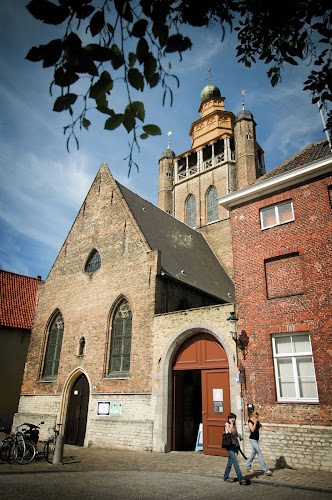
Kantcentrum is Bruges’ working home for lace, a combined museum, school and needlework shop set inside the Jerusalem Almshouses complex on Balstraat. It is the place in the city where lace is still being made by hand in front of you, rather than only displayed behind glass. The centre is run by a non-profit association that teaches the craft and preserves its history, and that dual mission shapes the whole visit.
The setting is a quiet residential corner on the eastern side of the old centre, a short walk from the Jerusalem Church and the Windmills along the canal ring. Visitors who come here are usually looking for something more tactile than the city’s big-name museums: bobbins clicking, pins and patterns spread across cushions, and local lacemakers who are happy to explain a stitch. Reviewers consistently describe it as a small museum with a warm atmosphere, and that scale is part of the appeal.
Standout Highlights & What Not to Miss
The best way to approach Kantcentrum is to treat the live craft as the main event and the display rooms as the context that explains what you are watching.
- Lace-making demonstrations: Lacemakers work with bobbins on pillows in the workshop space, and visitors frequently mention these sessions as the highlight. Ask what pattern is on the pillow and how many bobbins it takes.
- The history of lace in Bruges: Exhibits trace how lace moved from a household craft and trade product to a heritage skill, with antique pieces that show how fine the thread work could get.
- Comparing techniques: Look for the difference between bobbin lace and needle lace, and for the embroidery examples that sit alongside them. Seeing them side by side makes the shop and the souvenir stalls elsewhere in town easier to judge.
- Lace in fashion and contemporary use: Some displays show lace beyond tablecloths and collars, including clothing and modern design applications.
- The needlework shop: Supplies, patterns, bobbins and finished pieces are sold here, which makes it a more informed place to buy than general tourist shops. Handmade pieces cost more than machine-made imports, and the staff can explain why.
- The almshouse setting: The surrounding Jerusalem complex adds a historic residential character that is worth a slow look on your way in and out.
Visitor Strategy & Planning Snapshot
| Planning Factor | What to Expect | Practical Strategy |
|---|---|---|
| Ideal Arrival Window | Demonstrations depend on lacemakers being present, so activity varies through the week. | Check the official site for current demonstration times before you go, and aim for an afternoon slot when the city centre is at its busiest and you want a calm break. |
| Typical Time Needed | Most visitors spend about 45 minutes to 1.5 hours, longer if they chat with the lacemakers or shop. | Allow a full hour so you can watch the craft before walking the exhibits. |
| Booking / Queue Reality | A small venue with modest paid admission; museumPASSmusées is accepted. Queues are rarely an issue. | Bring your museum pass if you have one, and check the webshop for current rates and any workshop or course bookings. |
| Terrain & Accessibility | The wheelchair accessible entrance and restroom are listed, and the interior is compact and mostly on a walkable scale. | Contact the centre ahead if you need to confirm access to specific rooms. Surrounding Bruges streets are cobbled. |
| Weather / Seasonal Fit | It is an indoor stop that works in any season. | Use it as a rainy-day or midday-heat fallback, and pair it with outdoor canal walking in good weather. |
Honest Trade-Offs: Best For vs. Who Might Skip
Kantcentrum suits travelers who like crafts, textiles, design history or simply watching skilled hands at work. It is also a good fit for families with patient children, for anyone who wants an authentic lace purchase, and for visitors who prefer small museums with real conversation over audio-guide tours. Those who want to try the craft should ask about workshops and courses, which the school side of the organisation runs.
It is less suited to people expecting large galleries, blockbuster artefacts or an hours-long museum day. The collection is modest, and a quiet afternoon with no demonstration running means a shorter, more static visit. If lace holds no interest for you, the admission is better spent on one of the city’s larger museums.
Neighborhood Context & How to Pair Your Visit
Balstraat sits in the calmer northeast of the historic centre, away from the Markt and Burg crowds. Start at the Jerusalem Church nearby, then spend an hour at Kantcentrum, and continue along the canal toward the Windmills on the Kruisvest ramparts for a green, low-key walk. For a longer half-day, loop back through the quiet lanes toward the Sint-Anna quarter for a coffee or lunch, and finish in the centre if you still have energy. This route keeps you off the busiest streets for most of the afternoon and gives the lace visit a natural place in the day.
When planning your Bruges travel guide or browsing verified attractions in Bruges, pair this stop with standout local spots including 't Hartje van Brugge, Vrienden van de musea Brugge, Historium Bruges, and Guido Gezellemuseum (0.3 km away).


