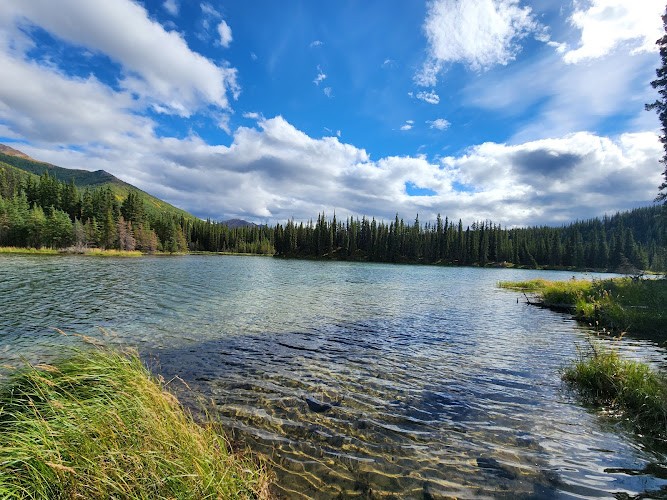
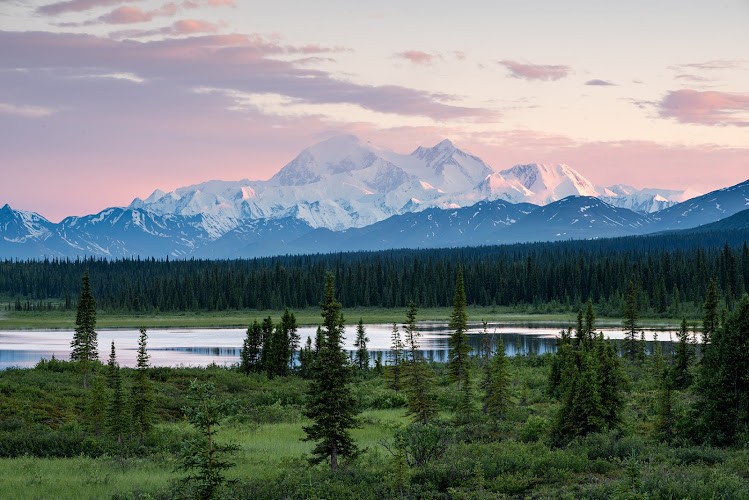
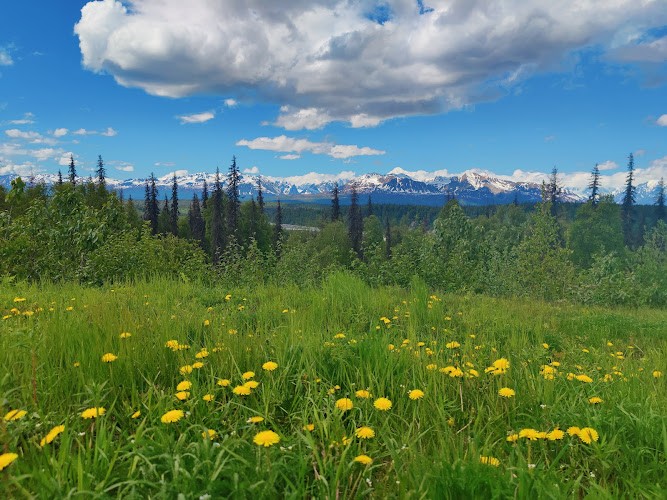
Denali is North America’s highest mountain, rising 20,310 feet above sea level in Denali National Park and Preserve, Alaska 99755, in Alaska’s central Interior. There is no street address or road to the summit: travelers reach the park from the Parks Highway and come for immense views of the snowbound Alaska Range, wildlife country, and the formidable mountaineering history surrounding a peak first climbed in 1913.
What to Expect at Denali
Denali is an experience of scale rather than a roadside stop. The mountain rises roughly 18,000 feet from its surrounding lowlands, a greater vertical rise than many higher Himalayan peaks have above their bases. Its two summits, North Peak and the 20,310-foot South Summit, are wrapped in glaciers including Kahiltna, Muldrow, Ruth, and Peters. Clear views from the east side of the Alaska Range are memorable but never assured; cloud frequently covers the upper mountain, even in summer.
Most visitors encounter Denali from the park road corridor, the Denali Visitor Center, or a flightseeing trip from nearby communities. The 92-mile Denali Park Road penetrates a largely roadless landscape, though access beyond Mile 43 has been affected by the Pretty Rocks landslide and is managed according to current conditions. The mountain itself lies deep in wilderness, with no hiking trail to its base or summit. Climbers use the West Buttress route from Kahiltna Glacier and must meet National Park Service registration, orientation, and expedition requirements.
- South Summit: At 20,310 feet, the true summit is the highest point in North America and was remeasured by the U.S. Geological Survey in 2015.
- Kahiltna Glacier: The broad glacier on Denali’s south side is the usual air-taxi landing area and start of the West Buttress climbing route.
- Wickersham Wall: Denali’s dramatic north-face wall rises above the Peters Glacier and is best appreciated in broad mountain views or on specialist flights.
- Denali Park Road: Park buses provide the principal ground-level route for viewing tundra, braided rivers, caribou, moose, Dall sheep, and, on clear days, the peak.
- Mountaineering legacy: Hudson Stuck, Harry Karstens, Walter Harper, and Robert Tatum made the first verified summit ascent on June 7, 1913.
Denali at a Glance
| Detail | Information |
|---|---|
| Address | Denali National Park and Preserve, Alaska 99755; summit coordinates 63.0692, -151.0070 |
| Neighborhood / Area | Alaska Range, Denali National Park and Preserve, central Alaska |
| Operating Hours | The mountain is wilderness with no gate; visitor services, buses, and road access are strongly seasonal. Check current conditions before travel. |
| Admission / Price Range | Park entrance is free. Bus trips, campgrounds, flights, and mountaineering permits are paid separately. |
| Recommended Visit Duration | One full day for park-road sightseeing; several days for wildlife, hiking, or flightseeing. |
| Nearest Transit / Parking | Denali Depot on the Alaska Railroad and the park entrance at Mile 237 of the Parks Highway; parking is at developed visitor facilities, not the peak. |
| Official Website & Phone | National Park Service: Denali; 907-683-9532 |
Visiting Tips, Getting There & Nearby Pairings
For the best chance of an unobscured mountain, allow more than one day and look for clear morning conditions; weather can close in rapidly. Reserve transit or narrated bus seats as soon as summer dates are released, and book flightseeing with an operator that can accommodate weather delays. Private vehicles are generally limited to the first 15 miles of the park road in the main season, so do not plan to drive to classic interior viewpoints. Bring layers, rain protection, food, water, insect repellent, and binoculars; this is bear country, so follow food-storage and wildlife-distance rules.
From Anchorage or Fairbanks, the Parks Highway reaches the park entrance near Mile 237; the summer Alaska Railroad stops at Denali Depot near the entrance. Use the parking areas at the Denali Visitor Center or Wilderness Access Center, rather than expecting parking anywhere near the mountain. The visitor center area has accessible parking, restrooms, and paved facilities, while the peak, glaciers, and backcountry routes are remote, unpaved wilderness without step-free access. Nearby pairings include the park’s sled-dog kennels, Riley Creek and its easy trails, and the restaurants and lodging along the Highway 3 entrance corridor, all within a short drive or seasonal shuttle ride.
Frequently Asked Questions
When is the best time to see Denali?
Summer, particularly late May through early September, brings the fullest range of buses and visitor services. Start early on a clear day, but keep your schedule flexible: the summit creates its own weather and can disappear behind clouds at any hour.
Does Denali National Park charge admission or require reservations?
There is no entrance fee for Denali National Park and Preserve. Reservations are essential for popular park buses and advisable for campgrounds and flightseeing; climbing Denali requires advance registration and a separate National Park Service mountaineering permit.
How much time should I budget for Denali?
Budget a full day for an interior bus journey and visitor center orientation, with two or three days providing better odds for mountain views and wildlife encounters. Reaching the summit is an elite expedition, not a day hike; West Buttress climbs commonly require weeks and glacier travel expertise.
Is Denali suitable for families and wheelchair users?
Families can enjoy the visitor center, ranger programming, short developed trails, sled-dog demonstrations, and wildlife viewing from buses. The mountain itself is inaccessible wilderness, but the entrance-area facilities offer accessible parking and restrooms; confirm accessible transportation arrangements with the park when reserving a bus.
Travelers exploring Denali National Park often pair this stop with nearby highlights including Muldrow Glacier (35.6 km away) and Camp Denali.