
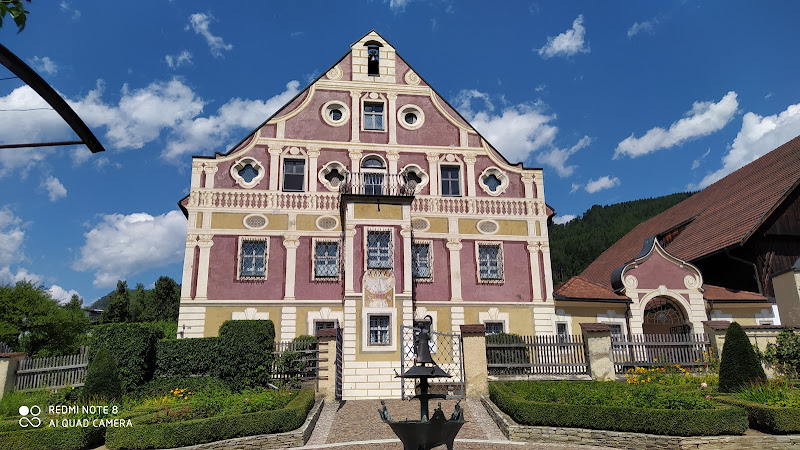
Museo provinciale degli usi e costumi is South Tyrol’s provincial ethnographic museum at Via Duca Diet 24, 39031 Teodone/Dietenheim, a village within Brunico/Bruneck, Italy. Established in 1976, it explores Alpine rural society through a Baroque manor house, relocated farm buildings, workshops, gardens, and livestock. Travelers come to understand how landowners, farming families, laborers, and craftspeople lived—not simply to admire old buildings.
What to Expect at Museo provinciale degli usi e costumi
Begin at Mair am Hof, the late-17th-century manor that anchors the museum. Its formal rooms and domestic collections introduce the comfortable world of the landed elite, with furnishings, religious objects, and traditional dress providing context for the farmsteads outside. The contrast matters: this is a museum about differences within rural society, rather than a single, romanticized version of mountain life.
The outdoor grounds extend across roughly three hectares, bringing together original rural buildings moved here from different parts of South Tyrol. Follow the paths between farmhouses, barns, storage buildings, and craft installations, looking closely at timber construction, smoke-darkened cooking spaces, and compact living quarters. Kitchen gardens, cultivated plots, and domestic animals connect the buildings to the work that sustained them. Consult the event calendar for craft demonstrations; these are scheduled activities, not a continuous feature.
- Mair am Hof manor: Baroque architecture and furnished interiors reveal the status and domestic life of prosperous rural landowners.
- Historic farmhouses: Relocated buildings show regional construction methods and the relationship between kitchens, living rooms, and agricultural spaces.
- Craft and work buildings: Tools and installations explain the practical skills needed before industrial production transformed village economies.
- Gardens and cultivated ground: Useful plants place food production and household self-sufficiency alongside the architectural displays.
- Farm animals: Livestock adds a living dimension to the grounds and gives children another way into agricultural history.
Museo provinciale degli usi e costumi at a Glance
| Detail | Information |
|---|---|
| Address | Via Duca Diet 24, 39031 Teodone/Dietenheim, Brunico, South Tyrol, Italy |
| Neighborhood / Area | Teodone/Dietenheim, northeast of central Brunico in the Val Pusteria |
| Operating Hours | Seasonal opening; Tuesday–Sunday 10:00–17:00 listed, Monday closed. Check the official calendar for seasonal dates and holiday exceptions. |
| Admission / Price Range | Paid admission; $$ sightseeing budget. Consult the official ticket page for current adult, reduced, and family rates. |
| Recommended Visit Duration | 2 to 3 hours |
| Nearest Transit / Parking | Local buses from Brunico toward Dietenheim; use Südtirolmobil for the museum stop and current departures. Visitor parking is available by the museum. |
| Official Website & Phone | Official museum website; +39 0474 255 100 |
Visiting Tips, Getting There & Nearby Pairings
Arrive near opening and tour the manor before exploring the grounds, particularly on warm days. Wear shoes suitable for gravel, grass, and uneven historic surfaces; carry rain protection because buildings are separated by outdoor paths. Arrange guided group visits ahead, and check the museum regulations before photographing interiors or bringing bulky bags. The museum shop is a useful final stop for regional-history publications. Check refreshment arrangements before relying on a full meal onsite.
From Brunico railway station, plan the local connection through Südtirolmobil, searching both “Teodone” and “Dietenheim.” Drivers can use the museum’s visitor parking rather than hunting for spaces in village lanes. Wheelchair and stroller routes require care: outdoor surfaces and gradients differ from the thresholds and stairs inside historic buildings, so request the accessible route before arrival. For a short extension, walk into Dietenheim’s village center and visit the parish church of the Assumption, then follow Herzog-Diet-Straße past its traditional village buildings; these are nearby pairings rather than trips into central Brunico.
Frequently Asked Questions
When is the museum open, and when should I arrive?
The museum operates seasonally, with Tuesday–Sunday hours listed as 10:00–17:00 and Monday closure. Check the official opening calendar before traveling, especially around winter closure and holidays; opening time gives you the fullest choice of routes.
Is admission free, and should I reserve?
Admission is paid, with current ticket categories published on the museum website. Arrange guided tours and group visits in advance, and check whether special events require separate registration.
How long does a visit take?
Allow two to three hours for the manor, farm buildings, and gardens. Families or visitors attending demonstrations should leave additional time rather than treating the grounds as a quick walk-through.
Is it suitable for children and visitors with limited mobility?
Animals and outdoor spaces make this a rewarding family visit, although agricultural equipment is not playground equipment. Historic thresholds, stairs, and uneven paths mean accessibility varies by building; discuss wheelchair access and toilet arrangements with the museum beforehand.
When planning a wider itinerary across Dolomites or browsing more top-rated attractions in Dolomites, consider pairing your visit with nearby highlights such as Museum Gherdëina (33.2 km away) and Messner Mountain Museum Ripa (1.5 km away).


