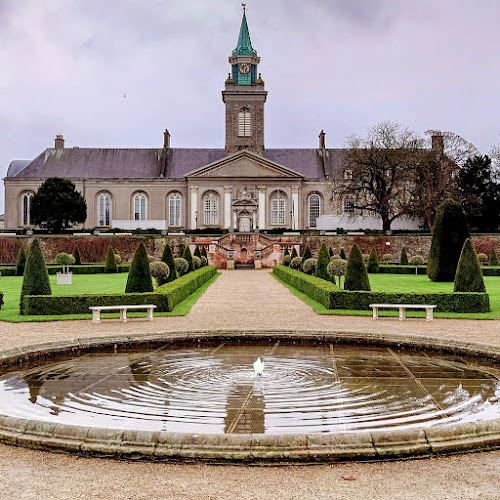
National Museum of Ireland – Natural History is Dublin’s Victorian zoological museum at Merrion Street Upper, Dublin 2, D02 F627, in the Georgian quarter beside Leinster House and Merrion Square. Opened in 1857, it became known as the “Dead Zoo” for its densely arranged animal specimens, skeletons and historic cabinets. The Merrion Street building is currently closed for refurbishment. Travelers can instead see selected collections at the Dead Zoo Lab at Collins Barracks or explore the historic galleries through the museum’s online 3D visit.
What to Expect at National Museum of Ireland – Natural History
Designed by architect Frederick Clarendon for the Royal Dublin Society, the museum opened shortly after explorer David Livingstone delivered a lecture there in 1857. Its restrained classical exterior gives little indication of the crowded zoological displays inside. The historic arrangement places Irish wildlife in the ground-floor Irish Room and mammals from around the world upstairs, with further collections on overlooking balconies. These are historic gallery descriptions, not spaces currently accessible to visitors.
Giant Irish deer skeletons, with their enormous spreading antlers, are among the museum’s defining specimens. The collections also encompass whales, mounted mammals, birds, insects and delicate glass models of marine creatures made by Leopold and Rudolf Blaschka. Their appeal lies partly in the history of scientific collecting: handwritten labels, comparative anatomy and specimens assembled long before digital interpretation. During refurbishment, the Dead Zoo Lab at Collins Barracks offers an alternative encounter with selected natural-history material; it is not a recreation of the entire Merrion Street display.
- Giant Irish deer: The extinct Megaloceros giganteus anchors the museum’s association with Ireland’s prehistoric wildlife.
- Irish Room: Historically the ground-floor introduction to native mammals, birds and other Irish fauna.
- Victorian display cabinets: Closely packed specimens preserve the character of nineteenth-century zoological interpretation.
- Blaschka glass models: Intricate representations of marine invertebrates form a distinctive part of the scientific collections.
- Dead Zoo Lab: Selected collections are now displayed at the museum’s separate Collins Barracks location.
National Museum of Ireland – Natural History at a Glance
| Detail | Information |
|---|---|
| Address | Merrion Street Upper, Dublin 2, D02 F627, Ireland |
| Neighborhood / Area | Georgian Dublin; beside Merrion Square and Leinster House |
| Operating Hours | Merrion Street: closed for refurbishment. Collins Barracks: Tuesday–Saturday 10am–5pm; Sunday–Monday 1pm–5pm. |
| Admission / Price Range | Free admission; no paid entry to the closed Merrion Street building. |
| Recommended Visit Duration | 45–60 minutes for the Dead Zoo Lab; longer for other Collins Barracks exhibitions. |
| Nearest Transit / Parking | Merrion Street: Dawson, Luas Green Line; Pearse, DART. Collins Barracks: Museum, Luas Red Line. Paid street parking near Merrion Square. |
| Official Website & Phone | Official Natural History website; +353 1 677 7444 |
Visiting Tips, Getting There & Nearby Pairings
For an actual exhibition visit, head to Collins Barracks on Benburb Street, not Merrion Street. Museum stop on the Luas Red Line is immediately beside the barracks complex. Arriving near opening gives you time to combine the Dead Zoo Lab with decorative arts and military-history galleries. General admission is free; check the official event calendar for separately scheduled activities. Collins Barracks has lifts and accessible toilets, although its large stone-paved courtyards require some care with wheelchairs and strollers. The closed Merrion Street building has no visitor access, including to its historic stair-linked galleries.
If you are already around Merrion Street, Dawson’s Green Line stop and Pearse DART station are each roughly a ten-minute walk away. Nearby parking is controlled and paid: read the signs rather than assuming weekend parking is unrestricted. The National Gallery of Ireland’s Merrion Square entrance is about five minutes away, while St Stephen’s Green and Trinity College are approximately ten to fifteen minutes on foot. These make sensible alternatives to a closed-door museum stop. Collins Barracks is across the city, not within this short walking circuit.
Frequently Asked Questions
Is the Natural History Museum open, and when should I visit?
Merrion Street is closed for refurbishment. Visit the Dead Zoo Lab at Collins Barracks during its published opening hours, ideally near opening for a more flexible itinerary.
How much are tickets, and should I reserve?
National Museum of Ireland admission is free. Consult the official website for activity bookings and group arrangements; there is no admission ticket that grants access to the closed building.
How much time should I allow?
Allow 45–60 minutes for the Dead Zoo Lab. Set aside two to three hours if you also want to explore Collins Barracks’ other museum exhibitions.
Is the alternative exhibition suitable for families and wheelchair users?
Animal specimens offer families a concrete introduction to wildlife and scientific collecting. Collins Barracks provides lifts and accessible toilets; allow extra time for crossing its stone-paved courtyards.
When planning your Dublin travel guide or comparing verified attractions and museums in Dublin, pair this stop with standout local spots including Dublinia, Chester Beatty, Conrad Dublin, and National Museum of Ireland – Archaeology (0.1 km away).