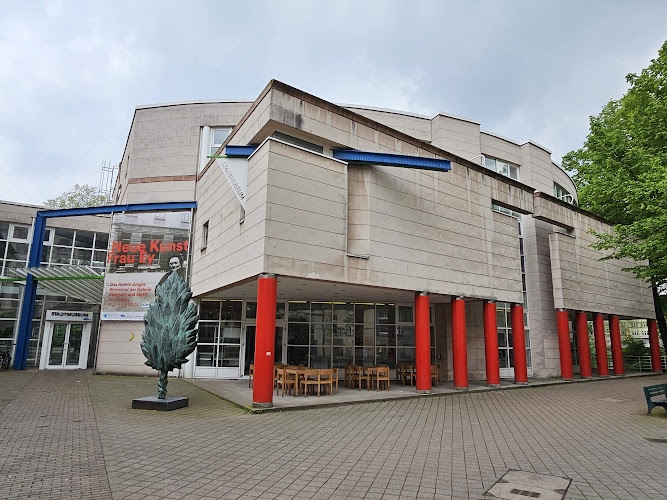
Memorial Dusseldorf is Düsseldorf’s municipal memorial and documentation centre for the victims of National Socialism, at Mühlenstraße 29 in the Altstadt, Düsseldorf, Germany. Founded in 1987, it examines how dictatorship, persecution, deportation and resistance shaped the city between 1933 and 1945. Travelers come for its evidence-led permanent exhibition, personal Düsseldorf stories and the historic basement detention rooms, which make the city’s Nazi-era history immediate and local.
What to Expect at Memorial Dusseldorf
The permanent exhibition, Düsseldorfer Kinder und Jugendliche im Nationalsozialismus (Düsseldorf Children and Young People under National Socialism), approaches the period through individual lives rather than a broad chronological survey alone. Documents, photographs, reproduced records and biographical accounts show how school, youth organisations, family life, exclusion and persecution affected young people in Düsseldorf. It addresses both those drawn into Nazi structures and those targeted because of Jewish heritage, political beliefs, religion, disability or other grounds for persecution.
The most affecting part of a visit is the historic cellar. These former police detention rooms preserve the physical setting in which people were held during the Nazi period; their confined architecture changes the scale of the story from museum interpretation to a place of incarceration. Temporary exhibitions, public talks, guided visits and educational materials extend the programme, so return visitors should check the current listings before arriving.
- Permanent youth exhibition: A Düsseldorf-specific account of childhood, adolescence, indoctrination, exclusion and persecution under National Socialism.
- Historic detention cellar: Former police holding rooms that preserve the memorial’s most powerful original-site experience.
- Personal source material: Photographs, documents and biographies connect major events to named people and families from the city.
- Changing exhibitions: Rotating projects add focused perspectives on victims, remembrance and contemporary historical research.
- Public programme: Look for guided tours, talks, encounters and publications organised through the memorial and its support association.
Memorial Dusseldorf at a Glance
| Detail | Information |
|---|---|
| Address | Mühlenstraße 29, 40213 Düsseldorf, Germany |
| Neighborhood / Area | Altstadt, close to Burgplatz, the Rhine promenade and Heinrich-Heine-Allee |
| Operating Hours | Tuesday–Friday 11am–5pm; Saturday 1pm–5pm; Sunday 11am–5pm; closed Monday. Check holiday changes before travel. |
| Admission & Ticket Prices | Free public admission. Arrange guided tours and group visits in advance through the memorial. |
| Recommended Visit Duration | 60–90 minutes for the permanent exhibition and historic cellar; longer with a guided tour or special exhibition. |
| Nearest Transit / Parking | Heinrich-Heine-Allee U-Bahn station is about a five-minute walk. Use central Altstadt garages, including the Altstadt/Rheinufertunnel area, rather than searching for street parking. |
| Official Website / Phone | Official website · +49 211 8996205 |
Visiting Tips, Getting There & Nearby Pairings
Arrive soon after the 11am opening on Tuesday through Friday for the quietest reading time; weekend afternoons can be busier with Altstadt visitors. There is no ordinary admission ticket to buy, but groups, school parties and visitors wanting a guided introduction should contact the memorial ahead of time. Heinrich-Heine-Allee is the simplest arrival point, served by numerous U-Bahn services and a short, level walk toward Mühlenstraße. Drivers should allow extra time for the one-way streets and pedestrian-heavy lanes of the Altstadt.
The exhibition areas are accessible by lift, while the historic cellar’s older, narrow spaces and changes in level can be more difficult for wheelchair users or strollers; call before visiting to discuss the most suitable route and assistance. Pair a visit with Burgplatz and the Rhine promenade, roughly five minutes away, or Kunstsammlung Nordrhein-Westfalen’s K20 museum near Grabbeplatz, around a six-minute walk. Düsseldorf’s Marktplatz and the cafés and restaurants around Carlsplatz are within about 10–15 minutes on foot and provide a respectful place to pause after the visit.
Frequently Asked Questions
When is Memorial Dusseldorf open, and what is the best time to visit?
It is open Tuesday through Friday from 11am to 5pm, Saturday from 1pm to 5pm, and Sunday from 11am to 5pm; it closes on Monday. Weekday mornings offer the calmest setting. Confirm holiday hours on the official website before setting out.
How much are tickets, and do I need a reservation?
General admission is free. Individual visitors can normally enter during opening hours without a reservation. Pre-booking is advisable for guided tours, school groups and larger parties, as these require staff coordination and may follow a separate schedule.
How long should I allow for a visit?
Plan 60 to 90 minutes to read the permanent exhibition carefully and visit the former detention cellar. Allow up to two hours if a temporary exhibition is on display or if you join a guided tour.
Is Memorial Dusseldorf suitable for families and wheelchair users?
The material is historically important but includes persecution, imprisonment and Nazi violence, so families should judge it according to a child’s maturity and discuss the visit together. Exhibition levels are reached by lift; contact the memorial in advance about wheelchair or stroller access to the historic cellar.
When planning your Dusseldorf travel guide or browsing verified attractions in Dusseldorf, pair this stop with standout local spots including Nari Sushi, Piazza Saitta, beets&roots | Düsseldorf, and Living Hotel De Medici (nearby).