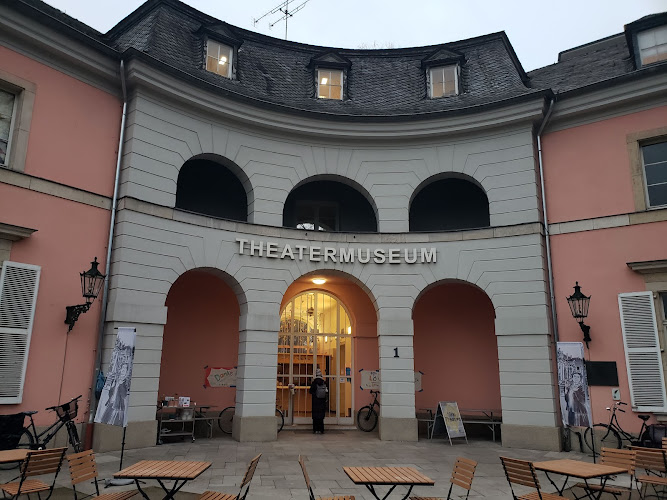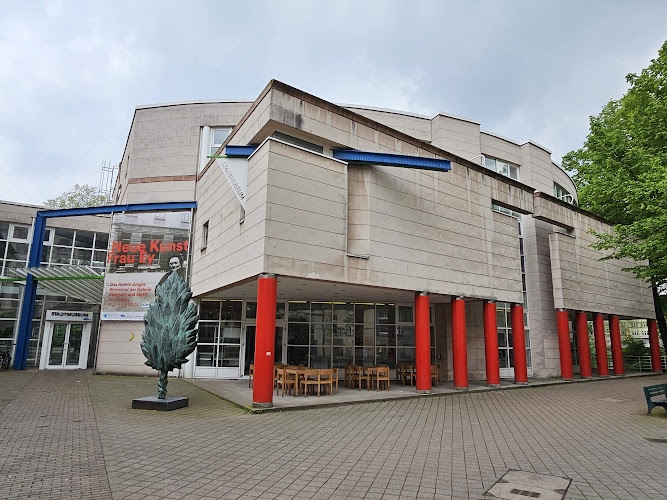
Stadtmuseum Düsseldorf is Düsseldorf’s municipal history museum at Berger Allee 2, 40213 Düsseldorf, Germany, on the edge of Carlstadt beside the old town and the Rhine. Founded in 1874, it traces the city’s development from prehistory to the present through art, maps, photographs, models and everyday objects. Travelers come for a grounded introduction to Düsseldorf’s people, urban growth and cultural life, presented in the historic Palais Spee and its later museum extension.
What to Expect at Stadtmuseum Düsseldorf
The permanent displays follow a broadly chronological route, beginning with the region’s early settlement history and moving through the electoral-residential city, industrial expansion and modern Düsseldorf. Rather than treating history as a sequence of dates alone, the museum combines paintings, graphic art, historical photographs, documents, maps and three-dimensional objects to show how the city was planned, inhabited and represented. It is an especially useful first stop for visitors who want context before walking the Altstadt, Königsallee or MedienHafen.
One of the collection’s most significant holdings is the Julo Levin Collection of children’s drawings. Created by Jewish children in Düsseldorf in 1936–1938 and preserved by artist and teacher Julo Levin, the group of about 200 drawings is inscribed in UNESCO’s Memory of the World register. The museum also uses exhibitions and talks to connect historical material with contemporary city life. From 20 September 2026 to 3 January 2027, 100 Jahre GeSoLei: Forschen, Entdecken, Verstehen examines the major 1926 health, social welfare and physical education exhibition held in Düsseldorf.
- City-history route: Follow Düsseldorf from early settlement and courtly rule to the twentieth century and present-day urban questions.
- Julo Levin Collection: Encounter the UNESCO-recognized children’s drawings, a powerful record of Jewish childhood under National Socialism.
- GeSoLei exhibition: Explore the legacy of Düsseldorf’s landmark 1926 exhibition during its 2026–27 presentation.
- Palais Spee setting: Move between a historic palace structure and museum spaces arranged around the former palace garden.
- Digital exploration: Use the museum’s online 3D tour and collection videos to extend a visit beyond the galleries.
Stadtmuseum Düsseldorf at a Glance
| Detail | Information |
|---|---|
| Address | Berger Allee 2, 40213 Düsseldorf, Germany |
| Neighborhood / Area | Carlstadt, immediately south of Altstadt and close to the Rhine promenade |
| Operating Hours | Tuesday–Sunday, 11am–6pm; closed Monday. Check holiday and event changes before travel. |
| Admission & Ticket Prices | Free public admission. Special events or workshops may require registration; see the official museum website. |
| Recommended Visit Duration | 1.5 to 2 hours; allow longer for a temporary exhibition, guided walk or workshop. |
| Nearest Transit / Parking | Graf-Adolf-Platz is about an 8-minute walk and is served by U71, U72, U73 and U83 light rail. Paid parking is available at Parkhaus Carlsplatz, roughly 10 minutes away on foot. |
| Official Website / Phone | duesseldorf.de/stadtmuseum · +49 211 8996170 |
Visiting Tips, Getting There & Nearby Pairings
Arrive near the 11am opening time or later in the afternoon for a calmer, more focused look at the permanent galleries. General admission is free, so a standard timed ticket is not normally needed; however, reserve ahead when an official listing asks for registration for a workshop, lecture or guided program. From Graf-Adolf-Platz, walk north-west along Haroldstraße and Berger Allee; the museum is an easy addition to a day based around central Düsseldorf.
The museum has barrier-free access and elevator connections for its exhibition levels, making it workable for wheelchair users and visitors with strollers; contact the museum before arrival for assistance with a particular event or route through the historic building. Pair the visit with the Rheinuferpromenade, around five minutes away, or Carlsplatz market, about seven minutes on foot, for coffee, lunch and regional food stalls. The Kunstsammlung Nordrhein-Westfalen at K21 in Ständehaus is also within about 10 minutes’ walk, while Altstadt’s Burgplatz and its breweries are reachable in roughly 10 to 15 minutes.
Frequently Asked Questions
When is Stadtmuseum Düsseldorf open, and what is the best time to visit?
The museum is open Tuesday through Sunday from 11am to 6pm and is closed on Mondays. Visit close to opening or in the later afternoon for more room in the galleries, and confirm holiday hours on the official website.
How much are tickets, and do I need to reserve?
Admission to Stadtmuseum Düsseldorf is free. Walk-in visitors do not normally need a reservation, but workshops, lectures, tours and other scheduled programs can have separate registration requirements.
How much time should I plan for the museum?
Plan 1.5 to 2 hours to see the core city-history displays and selected temporary galleries. Allow two to three hours if you are interested in the Julo Levin Collection, an exhibition program or a nearby walk through Carlstadt and the Rhine promenade.
Is Stadtmuseum Düsseldorf suitable for families and wheelchair users?
Yes. The object-rich displays, maps and visual material give families plenty of discussion points, while the museum’s barrier-free access and elevators support wheelchair and stroller use. Check in advance if joining a workshop or group tour with specific mobility needs.
When planning your Dusseldorf travel guide or comparing verified attractions and museums in Dusseldorf, pair this stop with standout local spots including Sansibar by Breuninger Düsseldorf, Hotel Favor, Hofgarten, and Hetjens-Museum (0.2 km away).