Heart Reef is a naturally heart-shaped coral formation within Hardy Reef in the Coral Sea, Whitsundays, Queensland 4802, Australia, about 60 kilometres northeast of Airlie Beach. Discovered by pilot John Ramsden in 1975, this tiny, photogenic outline has become one of the Great Barrier Reef’s defining aerial sights; travelers come to see its remarkably clear heart shape from a scenic aircraft or helicopter.
What to Expect at Heart Reef
Heart Reef lies in the outer Great Barrier Reef’s Hardy Reef complex, where pale sand, shallow coral and turquoise water create the contrast that makes the heart visible from above. It is not a conventional beach, dive site or island attraction: the experience is an aerial one, with aircraft circling or banking for window views. Weather, sea state and light determine flight routes and visibility, so the reef’s appearance changes with cloud cover, tide and the sun’s angle.
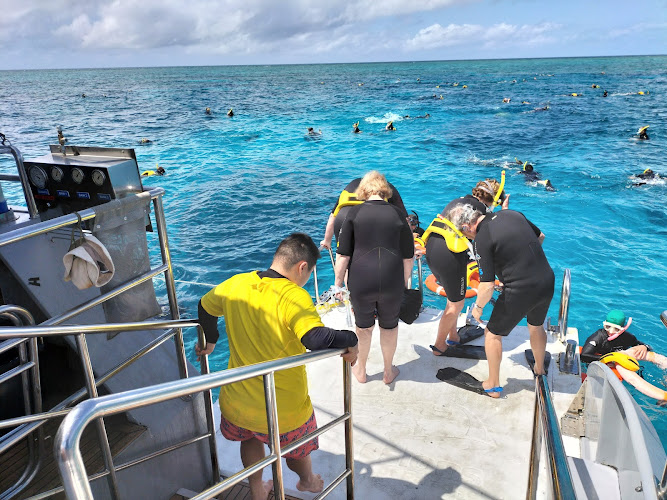
Most visitors join a scheduled scenic flight or helicopter excursion departing Hamilton Island, Airlie Beach/Whitsunday Coast Airport or, on some itineraries, the reef pontoon at Hardy Reef. The heart itself is protected and aircraft do not land on it. Longer reef trips may combine the flyover with time at Hardy Reef’s pontoon for snorkelling, diving, semi-submersible viewing or a helicopter transfer to a nearby platform. The most memorable photographs usually come from a window seat on the side announced by the pilot before the pass.
- Heart-shaped coral formation: A compact natural outline in shallow water, best understood from the air rather than at sea level.
- Hardy Reef: The outer-reef setting surrounds the landmark with coral bommies, sand patches and intensely blue Coral Sea water.
- Scenic flight circuit: Fixed-wing aircraft offer broad reef views; helicopter flights can provide lower, slower viewing where operating conditions permit.
- Reef-pontoon extensions: Selected day trips add snorkelling, diving or underwater viewing at Hardy Reef, not at Heart Reef itself.
- Whitsunday aerial panorama: Flights often reveal the wider reef matrix, island passages and the shifting colours of the Whitsunday waters.
Heart Reef at a Glance
| Detail | Information |
|---|---|
| Address | Heart Reef, Hardy Reef, Coral Sea, Whitsundays, Queensland 4802, Australia; there is no street address. |
| Neighborhood / Area | Outer Great Barrier Reef, within the Whitsundays region of Queensland. |
| Operating Hours | No public gate hours; viewing is available only on booked daylight flights and reef tours, subject to weather and operator schedules. |
| Admission / Price Range | Paid guided scenic-flight experience; $$$, with fares varying by departure point, aircraft and inclusions. |
| Recommended Visit Duration | 1 to 2 hours for a dedicated flight; allow a full day for a flight-and-reef-pontoon itinerary. |
| Nearest Transit / Parking | Departures are commonly from Hamilton Island Airport or Whitsunday Coast Airport near Proserpine; parking is arranged at the chosen operator’s departure point. |
| Official Website & Phone | Great Barrier Reef Marine Park Authority; 13 000 GBRMP (13 000 42767) in Australia. |
Visiting Tips, Getting There & Nearby Pairings
Book a morning flight where possible: earlier departures often bring gentler light and leave room to reschedule if weather intervenes. Reserve in advance during school holidays and the Australian winter dry season, when Whitsunday accommodation and flight seats fill quickly. Bring a camera or phone with room for images, but avoid pressing it against the aircraft window; reflections can spoil the shot. Ask at check-in which side is likely to face Heart Reef, although the final circuit always depends on wind and air-traffic conditions.
Fly to Hamilton Island Airport from major Australian cities, or use Whitsunday Coast Airport near Proserpine and continue by booked transfer or car to Airlie Beach. On Hamilton Island, the marina precinct, Catseye Beach and Passage Peak are all close to resort transport; from Airlie Beach, the Coral Sea Marina, Airlie Beach Lagoon and the coastal Bicentennial Walkway make easy same-day pairings. Heart Reef has no visitor infrastructure, toilets or step-free pathway. Boarding small aircraft or helicopters involves steps and tight cabin access, so travelers using wheelchairs or requiring transfer assistance should discuss aircraft access, weight limits and companion arrangements directly with their selected operator before booking.
Frequently Asked Questions
When is the best time to see Heart Reef?
Heart Reef is viewed during daytime scenic flights rather than through an attraction with fixed opening hours. Morning flights are a smart choice for softer conditions and flexibility, while clear skies and calm weather provide the strongest colour contrast.
Do I need to buy a ticket to visit Heart Reef?
Yes. There is no independent public access or ticket booth at the reef; travelers book a paid scenic flight or an operator’s combined reef itinerary. Prices vary substantially by departure point, flight length and whether snorkelling or pontoon time is included.
How long should I allow for Heart Reef?
Allow 1 to 2 hours for a dedicated aerial sightseeing trip, including check-in and safety briefing. A Hardy Reef pontoon excursion with an aerial component is usually a full-day commitment from the Whitsunday mainland or Hamilton Island.
Can families and travelers with limited mobility experience Heart Reef?
Families can enjoy the flight if children meet the operator’s age and seating requirements. The reef cannot be accessed on foot, and small-aircraft steps, narrow aisles and helicopter transfers can limit independent wheelchair access; confirm practical assistance and seating arrangements before purchase.
Continue browsing more top-rated reef extent in Great Barrier Reef to build out your trip.