Maqueta de La Habana is an architectural scale-model exhibition at Calle 28 No. 113, between Avenida 1ra and Avenida 3ra, in Havana’s Miramar neighborhood. Created as an urban-planning tool and inaugurated in 1989, it presents the Cuban capital in miniature rather than through conventional museum galleries. Travelers come to trace Havana’s coastline, compare its street patterns, and understand how the colonial center, Vedado, and western residential districts fit together.
What to Expect at Maqueta de La Habana
The centerpiece is a vast 1:1,000-scale model, approximately 144 square meters in area: one meter represents one kilometer on the ground. Individual buildings, avenues, waterfront edges, and open spaces turn an otherwise abstract city map into a three-dimensional landscape. This is an indoor exhibition, not an open-air miniature park. Its appeal lies in the cumulative detail of Havana’s urban fabric, with the model itself taking precedence over separate collections or decorative museum interiors.
Start by finding Havana Bay and the tight street grid of Old Havana, then follow the waterfront west toward Centro Habana, Vedado, and Miramar. Look for the contrast between densely packed historic blocks and the broader avenues and detached houses farther west. Color coding distinguishes building periods, making the display useful for understanding successive phases of urban development. Ask staff to explain the legend and orient you before circling the model; an explanation adds considerably more than a quick photographic stop.
- Citywide scale: The 1:1,000 model makes distances between Havana’s principal districts immediately legible.
- Havana Bay: The harbor’s shape explains the location and growth of the original colonial settlement.
- Old Havana’s blocks: Closely grouped buildings reveal a street pattern quite different from later planned neighborhoods.
- Vedado’s grid: Broad, regular blocks illustrate the capital’s nineteenth- and twentieth-century expansion.
- Historical color coding: Differently colored structures help visitors distinguish construction periods across the city.
Maqueta de La Habana at a Glance
| Detail | Information |
|---|---|
| Address | Calle 28 No. 113, between Avenida 1ra and Avenida 3ra, Miramar, Havana, Cuba |
| Neighborhood / Area | Miramar, Playa municipality; west of the Almendares River |
| Operating Hours | Monday–Friday, 9:30 a.m.–3 p.m.; Saturday–Sunday closed. Check before making a special journey. |
| Admission / Price Range | Paid admission; budget tier ($). Ask the cashier for current prices and accepted currency. |
| Recommended Visit Duration | 45–60 minutes |
| Nearest Transit / Parking | Avenida 3ra at Calle 28 is a useful local transport reference; taxi drop-off on Calle 28. Street parking is subject to local restrictions. |
| Official Website & Phone | No dedicated visitor website or public telephone listed; consult the Havana municipal portal for city information. |
Visiting Tips, Getting There & Nearby Pairings
Aim for a weekday arrival around 9:30–10 a.m., leaving time for explanations before the early afternoon closing. From Old Havana or central Vedado, a taxi is the simplest approach; give the driver the street address, since the separate Maqueta de La Habana Vieja is a different exhibition. Havana has no metro, and local bus services require route checking. Carry cash rather than relying on card payment. Ask before photographing, using flash, or bringing bulky bags beside the display; do not touch the miniature buildings.
Wheelchair users and families with strollers should establish entrance-step arrangements, viewing height, seating, and toilet access before travelling; a large horizontal model can be difficult to see from a seated position. Allow space to circulate rather than expecting a conventional gallery route. Afterward, walk roughly 5–10 minutes toward Quinta Avenida to examine Miramar’s landscaped boulevard and residential architecture. The Church of Santa Rita de Casia, near Quinta Avenida and Calle 26, offers another nearby architectural stop; enter respectfully and avoid interrupting services.
Frequently Asked Questions
What are the opening hours and best visiting time?
The listed schedule is Monday through Friday, 9:30 a.m.–3 p.m., with weekends closed. Arrive near opening and check the day’s arrangements before crossing the city specifically for the exhibition.
How much are tickets, and should I reserve?
This is a budget-priced, paid attraction rather than a major timed-entry museum. Ask for the current admission charge and payment currency at the entrance; organized groups should arrange their visit beforehand.
How long should I spend at the model?
Allow 45–60 minutes to circle the display, identify familiar landmarks, and discuss its historical layers. Architecture enthusiasts can spend longer comparing districts, especially after exploring Havana on foot.
Is it suitable for children and wheelchair users?
Children interested in buildings and miniature cities will find plenty to examine, but the display is not a hands-on play area. Wheelchair users should check entrance access and sightlines in advance, because viewing height matters as much as circulation space.
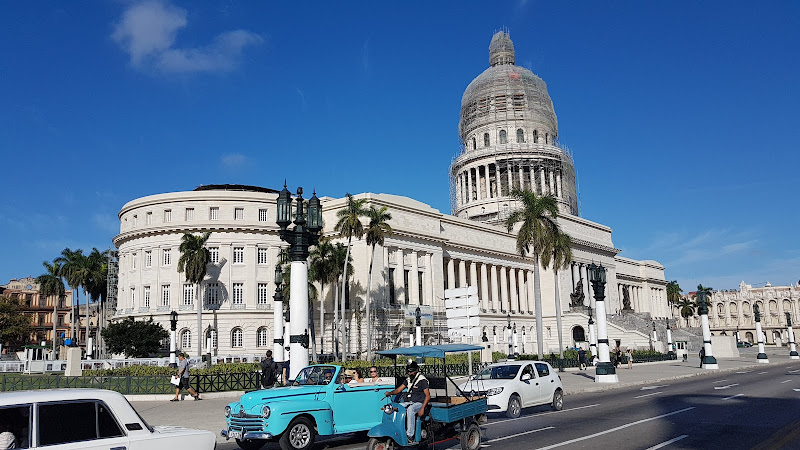
When planning your Havana travel guide or comparing verified attractions and museums in Havana, pair this stop with standout local spots including Museum of the Orishas, National Capitol of Cuba, Grand Theater of Havana, and Otramanera (1.2 km away).