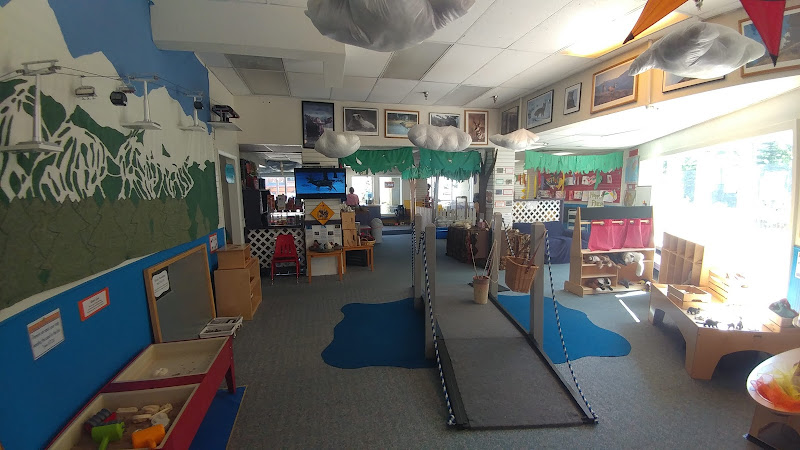
Breckenridge History Museum is a starting point for exploring Breckenridge’s mining-town heritage at 203 S Main St #2, Breckenridge, CO 80424, in the downtown Historic District. The name refers to Breckenridge History, the nonprofit established in 2006 as the Breckenridge Heritage Alliance, rather than one museum containing all its collections. Begin with the Breckenridge Welcome Center Museum at the same street address, then explore the organization’s separate historic houses, mining exhibits, and walking tours. Together, they explain how an 1859 gold-rush settlement became a Colorado ski town.
What to Expect at Breckenridge History Museum
The Breckenridge Welcome Center Museum provides the broad introduction: local history, mining, community life, and the development of recreation in the surrounding mountains. Its location on Main Street makes it a practical first stop before examining the district’s surviving commercial storefronts and Victorian houses. Follow the historical sequence from the gold rush toward the ski era; Breckenridge Ski Area opened in 1961. This is a compact orientation experience, not a large institution with multiple permanent wings.
For deeper stories, continue to separate Breckenridge History properties. The Barney Ford Museum occupies Ford’s 1882 Victorian home and explores the life of the formerly enslaved entrepreneur and civil-rights advocate. The Edwin Carter Museum, housed in his 1875 log cabin, introduces the naturalist whose preserved animal specimens helped establish the Denver Museum of Nature & Science’s collections. Guided experiences include Walk Through History and seasonal gold panning in Lomax Gulch. The organization also offers digital interpretation through Bloomberg Connects and local-history titles through its book shop.
- Welcome Center Museum: Start with town-wide historical context before choosing specialized sites.
- Barney Ford’s home: Explore Black entrepreneurship and the struggle for equal rights in nineteenth-century Colorado.
- Edwin Carter’s cabin: Connect an early naturalist’s collecting work with Rocky Mountain wildlife history.
- Washington Mine and Milling Exhibit: A separate site explains hard-rock mining and ore-processing equipment.
- High Line Railroad Park: See narrow-gauge locomotive No. 9 and learn how rail connections supported the mining economy.
Breckenridge History Museum at a Glance
| Detail | Information |
|---|---|
| Address | 203 S Main St #2, Breckenridge, CO 80424, United States |
| Neighborhood / Area | Downtown Breckenridge Historic District |
| Operating Hours | Organization office: Tuesday–Saturday, 9:30 a.m.–4 p.m.; Monday and Sunday closed. Individual museum and tour schedules differ. |
| Admission / Price Range | $; museum admission is free, with donations welcome. Guided tours and activities may carry separate fees. |
| Recommended Visit Duration | 30–45 minutes for the Welcome Center Museum; 2–3 hours with additional downtown sites. |
| Nearest Transit / Parking | Free Ride buses and Main Street Trolley; Breckenridge Station is north of downtown. Riverwalk Center parking nearby; posted charges and limits apply. |
| Official Website & Phone | Breckenridge History; +1 970-453-9767 |
Visiting Tips, Getting There & Nearby Pairings
Start in the morning, leaving time for a second museum after lunch. Check the official calendar for each property rather than applying office hours to every attraction, and reserve guided walks or gold-panning sessions ahead of busy holiday weekends. Keep bags compact for historic-house rooms; ask staff about storage and photography before entering. For a sensible downtown circuit, pair the Welcome Center with the Breckenridge Arts District, roughly five minutes away, and Edwin Carter Museum, approximately five to ten minutes north.
The free Main Street Trolley is useful for downtown travel; regional Summit Stage buses connect at Breckenridge Station, about a ten- to fifteen-minute walk north. Drivers can use signed town parking near the Riverwalk Center rather than relying on limited Main Street spaces. The Blue River’s paved Riverwalk paths are about five minutes away. Downtown sidewalks have curb ramps, but winter snow, ice, and plowed snowbanks can complicate wheelchair or stroller movement. Historic cabins and outdoor mining sites have different surfaces and thresholds; call about the exact property’s entrance and restroom access before setting a route.
Frequently Asked Questions
What are the hours and best time to visit?
The organization’s office hours are Tuesday through Saturday, 9:30 a.m.–4 p.m. Museum schedules vary by location and season, so check your chosen site before arriving; morning leaves the most flexibility for combining stops.
Are tickets or reservations required?
Breckenridge History’s museums offer free admission, with donations supporting preservation and interpretation. Book scheduled guided tours and activities separately through the official website, where individual prices and availability are listed.
How much time should I allow?
Allow 30–45 minutes for an introductory Welcome Center Museum visit. Budget two to three hours for a relaxed downtown history circuit, including walking between properties and time with interpreters.
Is it suitable for families and visitors with limited mobility?
Short museum stops work well for families, while railroad equipment and seasonal gold panning offer different ways to engage children. Accessibility varies across the historic buildings and outdoor sites; request property-specific guidance, and wear supportive shoes for walking at Breckenridge’s roughly 9,600-foot elevation.
When planning your Keystone travel guide or comparing verified attractions and non-profit organization in Keystone, pair this stop with standout local spots including Mountain Top Explorium, Cozens Ranch Museum, Headwaters River Journey, and Breckenridge History: Barney Ford Museum (nearby).