
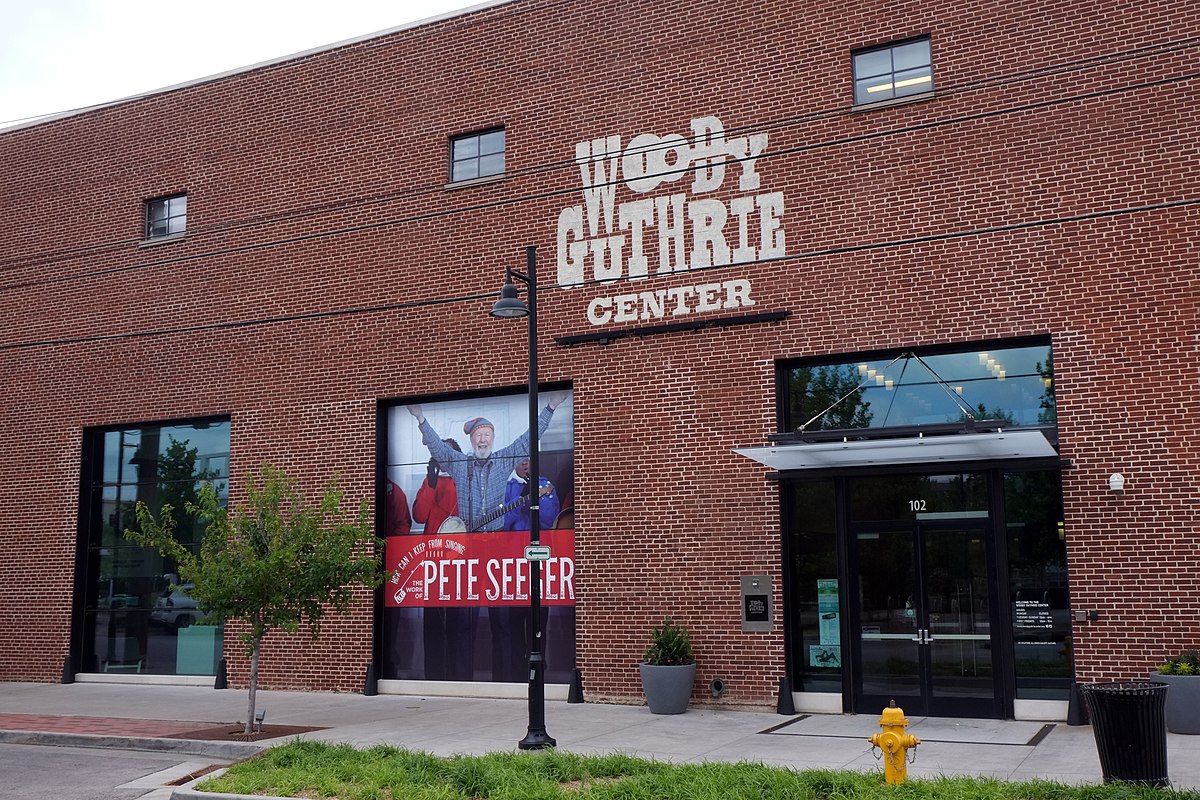
Woody Guthrie Center is a music and history museum at 102 Reconciliation Way in Tulsa’s Arts District, exploring the Oklahoma-born songwriter behind “This Land Is Your Land.” Opened in April 2013 with support from the George Kaiser Family Foundation, it brings together handwritten lyrics, instruments, artwork, recordings, and Dust Bowl history. Travelers come for Guthrie’s music, but leave with a fuller understanding of the migration, labor struggles, and demands for equality that shaped his writing.
What to Expect at Woody Guthrie Center
The permanent exhibition follows Guthrie from his childhood in Okemah, Oklahoma, through his travels and development as a songwriter. The handwritten lyrics to “This Land Is Your Land” are a central attraction, placing a familiar song beside its sharper social commentary. Instruments, notebooks, drawings, and personal objects reveal a prolific visual artist as well as a musician. Begin with the introductory film, then follow the biographical displays before settling into the listening stations; hearing the songs makes the surrounding documents more meaningful.
The Dust Bowl virtual-reality experience conveys the scale and disorientation of the storms that displaced Plains families during the 1930s. Changing exhibitions widen the conversation beyond folk music: the exhibition program includes “A Dozen Loops: The Radical Voice of Woody Guthrie,” organized around 12 songs, and Glen E. Friedman’s “Burning Flags,” featuring more than 50 photographs and audio essays. The center occupies a brick commercial building rather than a grand museum complex, with contemporary exhibition spaces inside. Its research archive requires a separate application; ordinary admission is for the public galleries.
- Handwritten song lyrics: Examine the words and revisions behind Guthrie’s best-known musical statement.
- Dust Bowl experience: Connect environmental disaster with the migration stories running through his songs.
- Listening stations: Hear Guthrie’s recordings while tracing his influence on later songwriters.
- Personal artwork and instruments: Discover the drawings, working materials, and musical tools behind his public persona.
- Museum shop: Browse books, recordings, and music-related gifts that extend the visit beyond the galleries.
Woody Guthrie Center at a Glance
| Detail | Information |
|---|---|
| Address | 102 Reconciliation Way, Tulsa, OK 74103 |
| Neighborhood / Area | Tulsa Arts District, north of downtown |
| Operating Hours | Wednesday, Friday, Saturday: 10 a.m.–6 p.m.; Monday, Tuesday, Thursday, Sunday: closed. Check the official visit page before traveling. |
| Admission / Price Range | Paid admission; $ museum outing. Members receive free admission; current ticket categories are available online. |
| Recommended Visit Duration | 1.5 to 2 hours |
| Nearest Transit / Parking | Downtown buses at Denver Avenue Station; approximately 15 minutes on foot. Street parking and paid Arts District lots nearby. |
| Official Website & Phone | Official visitor information and tickets; +1 918-574-2710 |
Visiting Tips, Getting There & Nearby Pairings
Reserve through the official website if your Tulsa itinerary leaves little flexibility; members can also reserve online. Arriving at opening gives you time for the film and listening stations without compressing the visit. Allow extra time on exhibition-opening or event days. Before entering, ask staff about bag storage and the photography rules for changing displays, which can differ from permanent-gallery permissions. Listening stations provide musical interpretation, while staff can explain available tour options.
Drivers can use surrounding street spaces or paid lots; read each sign rather than assuming museum admission includes parking. Bus travelers can walk northeast from Denver Avenue Station. The center has wheelchair-accessible public galleries, with level circulation between the main exhibits; the headset-based Dust Bowl installation merits a separate conversation with staff about individual needs. Across Reconciliation Way, Guthrie Green provides an immediate outdoor break. Continue roughly five minutes to the Bob Dylan Center, or about ten minutes east to John Hope Franklin Reconciliation Park for a thoughtful extension of the museum’s social-history themes.
Frequently Asked Questions
What are the opening hours and best arrival time?
Visiting hours are listed as 10 a.m.–6 p.m. Wednesday, Friday, and Saturday. Recheck the official calendar for schedule changes, and arrive near opening for an unhurried start.
Is admission free, and should I reserve?
General admission is paid, while members receive free entry. Advance online reservations are available to all guests, including members; use the official ticket page for current prices and eligibility categories.
How long should I spend at the museum?
Budget 90 minutes to two hours for the permanent galleries, introductory film, and selected recordings. Music enthusiasts exploring changing exhibitions should leave additional time.
Is it accessible and suitable for children?
The public galleries accommodate wheelchair users, and the compact layout makes a family visit manageable. Older children may connect particularly well with the songs and migration stories; ask staff about headset suitability before younger visitors attempt the Dust Bowl experience.
When planning your Tulsa travel guide or browsing verified museums in Tulsa, pair this stop with standout local spots including Tulsa Club Hotel, Curio Collection by Hilton, Tulsa Historical Society & Museum, Vintage Sewing Machine Museum, and Amelia's Wood Fired Cuisine (nearby).


