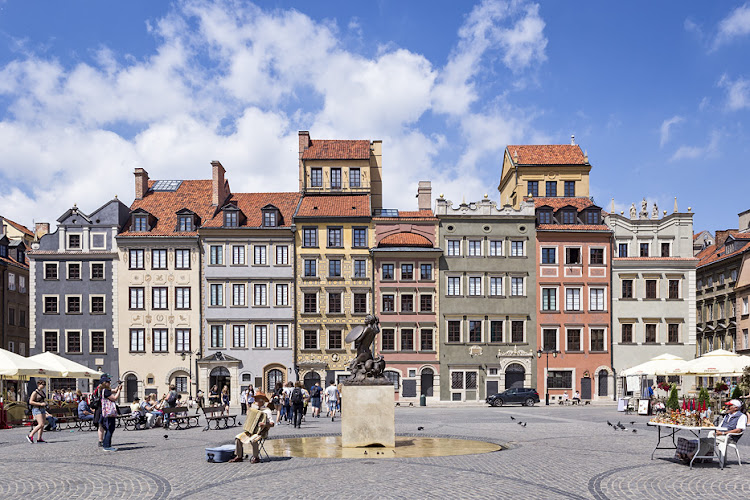
The Museum of Warsaw is the city’s principal local-history museum, threaded through eleven reconstructed townhouses on the northern side of the Old Town Market Square. Its subject is not simply monarchs or battles: it is Warsaw as seen through the possessions, images, work and memories of the people who made the capital.
In a district rebuilt after the 1944 destruction, the setting is central to the experience. Narrow stairways, painted interiors, cellar spaces and changing room scales make the building route feel like an exploration of Old Town itself. The museum rewards visitors who want context for Warsaw’s resilient, often startlingly layered cityscape.
Standout Highlights & What Not to Miss
The permanent exhibition, Things of Warsaw, is deliberately object-led rather than a simple march through dates. Thousands of items are arranged in themed cabinets and rooms, letting portraits, shop signs, photographs, clocks, silver and souvenirs open up larger stories. Allow time to read labels selectively and follow the subjects that catch your attention; this is a museum best absorbed with curiosity rather than rushed as a checklist.
- The original 1855 Mermaid: Konstanty Hegel’s Syrenka, the emblem of Warsaw, is a major draw. Seeing the original indoors gives useful context to the figure represented in the square outside.
- Things of Warsaw cabinets: Look beyond the most decorative pieces. Ordinary possessions and personal keepsakes are often the most revealing route into the city’s social history.
- Views of a changing capital: Paintings, prints and photographs help visitors compare prewar Warsaw, wartime loss and postwar reconstruction with the streets beyond the windows.
- The historic townhouse sequence: Notice the architecture between displays. The connected houses, rebuilt after devastation, turn the route itself into evidence of the Old Town’s recovery.
- Gothic cellars and rooftop perspective: These contrasting spaces add a sense of vertical depth to the visit, from older brick vaults below to views across Old Town roofs above.
Visitor Strategy & Planning Snapshot
| Planning Factor | What to Expect | Practical Strategy |
|---|---|---|
| Ideal Arrival Window | The Old Town Market Square becomes busiest when sightseeing groups and promenade traffic build. | Start earlier in the day or make the museum your first substantial indoor stop after a square walk. |
| Typical Time Needed | A considered visit generally takes 1.5 to 2.5 hours, especially if you read the object stories. | Reserve closer to two hours for the permanent exhibition and add breathing room for temporary displays. |
| Booking / Queue Reality | Demand can vary with weekends, school holidays, weather and group visits. | Check current admission arrangements before setting out; do not rely on a tightly timed Old Town schedule. |
| Terrain & Accessibility | Historic interiors include stairs and level changes; lift access covers only parts of the route. Cobbles surround the museum. | Wear supportive footwear, allow extra time, and confirm current access needs in advance if mobility is limited. |
| Weather / Seasonal Fit | This is a strong all-weather cultural stop, while the terrace is most rewarding in clear conditions. | Use it as a rain or cold-weather anchor, then return to the square, walls and river-facing lanes when conditions improve. |
Honest Trade-Offs: Best For vs. Who Might Skip
This is an excellent choice for history-minded first-time visitors, culture seekers, families with engaged older children, and anyone who wants to understand why reconstructed Warsaw looks the way it does. It is especially valuable before visiting sites tied to the wartime destruction or postwar rebuilding, because it gives everyday scale to an enormous historical narrative. The trade-off is that the presentation can feel less direct than a chronological city-history survey. Visitors seeking a fast, headline-only account of Warsaw’s past may find the dense object displays and multi-level route slower going. Very young children, people uncomfortable with stairs, or travelers with only a brief Old Town pass-through may prefer to admire the square and choose a more focused stop.
Approach it as a place for connections rather than a museum to complete room by room. Pick a few threads—domestic life, visual images of the city, civic symbols or reconstruction—and the scale becomes manageable. The original Mermaid is the essential landmark, but the quieter material is what makes the museum distinctive: a collection of fragments that gradually becomes a portrait of Warsaw.
Neighborhood Context & How to Pair Your Visit
Build the museum into a walk through Warsaw’s Old Town rather than treating it as an isolated attraction. Begin by observing the facades and Mermaid monument in the Market Square, then use the galleries to deepen what you have seen. Afterwards, continue through the nearby lanes toward the Barbican and defensive walls, or head south toward the Castle Square area for a broader sense of the historic core. A slower circuit works particularly well: pause in the square, visit the museum, then walk toward the Vistula-facing edge of Old Town to connect the rooftop outlook with the city’s wider geography. The surrounding cafés and benches also make this an easy place to break up a museum-and-walking day without leaving the neighborhood.
When planning your Warsaw travel guide or comparing verified attractions and museums in Warsaw, pair this stop with standout local spots including Museum of Polish Military Technology, MUZEUM DOMKÓW LALEK, GIER I ZABAWEK, OAK & ALLEY, and Old water pump (nearby).