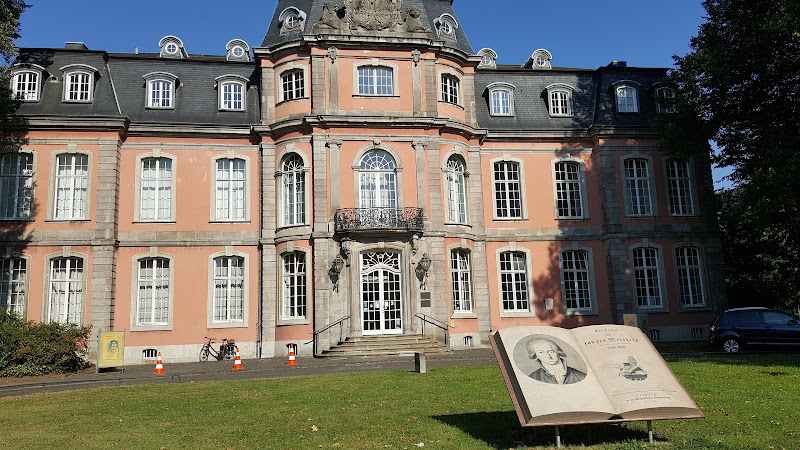
Goethe-Museum Düsseldorf is a museum of Johann Wolfgang von Goethe’s life, writing and cultural world at Jacobistraße 2, 40211 Düsseldorf, in the Pempelfort district on the northern edge of the Hofgarten. Housed in Schloss Jägerhof, an 18th-century electoral hunting lodge, it has presented the Anton-und-Katharina-Kippenberg-Stiftung’s Goethe collections here since 1956. Travelers come for unusually personal manuscripts and objects, for a concentrated introduction to Germany’s defining writer, and for the chance to explore a refined Rococo-era residence rather than a conventional white-cube museum.
What to Expect at Goethe-Museum Düsseldorf
Schloss Jägerhof is part of the experience. Built from 1752 to 1763 to designs by court architect Johann Joseph Couven, the former hunting lodge gives the museum a period setting of formal rooms, high windows and elegant stairways. Its location facing the Hofgarten also recalls the courtly Düsseldorf that preceded the city’s modern shopping streets and galleries. Allow time to look at the building as well as the displays.
The permanent presentation follows Goethe from childhood and education through his work as poet, dramatist, scientist, administrator and traveler, while also showing his later influence. It is especially strong on material that closes the distance between visitor and author: early Latin writing exercises, letters and work manuscripts, portraits, editions, prints, and even a lock of Goethe’s brown hair. The foundation’s wider holdings are substantial: roughly 30,000 manuscripts, including documents by Goethe, his circle, contemporaries and associates; the public reference library holds about 25,000 volumes on Goethe and his period. Rotating displays and educational programs add changing reasons to return.
- Goethe’s personal traces: See intimate archival material ranging from school exercises to the poet’s hair lock.
- Manuscript holdings: The collection encompasses around 30,000 letters, literary manuscripts and historical documents.
- Research library: A public, on-site reference collection of about 25,000 specialist volumes supports deeper study.
- Schloss Jägerhof: Explore a mid-18th-century Rococo hunting lodge designed by Johann Joseph Couven.
- Goethe in context: Displays connect the writer’s books and ideas with friends, contemporaries, music, art and reception history.
Goethe-Museum Düsseldorf at a Glance
| Detail | Information |
|---|---|
| Address | Jacobistraße 2, 40211 Düsseldorf, Germany |
| Neighborhood / Area | Pempelfort, directly beside the Hofgarten and north of the city center |
| Operating Hours | Tue–Fri 11am–5pm; Sat 1pm–5pm; Sun 11am–5pm; closed Monday |
| Admission & Ticket Prices | Paid admission; check the official Goethe-Museum website for current rates and event tickets. |
| Recommended Visit Duration | 1 to 1.5 hours; add time for the research library or a temporary exhibition |
| Nearest Transit / Parking | Schloss Jägerhof bus stop is nearby; Nordstraße U-Bahn and Sternstraße tram stops are about a 10-minute walk. Use central garages around Schadowplatz or Kö-Bogen rather than relying on limited street spaces. |
| Official Website / Phone | goethe-museum.de / +49 211 8996262 |
Visiting Tips, Getting There & Nearby Pairings
Arrive close to the 11am opening on Tuesday through Friday for the quietest galleries and the best opportunity to read labels and examine manuscripts without crowding. Saturday opens later, at 1pm, so it is less useful for a morning itinerary. Confirm admission and any special-exhibition or guided-tour arrangements through the museum’s official website before setting out; the museum is compact, but programs can change the visitor flow. From the city center, walk north through the Hofgarten, take a bus to Schloss Jägerhof, or use Nordstraße U-Bahn or Sternstraße tram stops and continue on foot.
Schloss Jägerhof is a listed historic building with changes in level, so wheelchair users and visitors with strollers should contact the museum before arrival to arrange the barrier-free entrance and lift access. The Hofgarten paths outside are largely level, though park surfaces vary. Pair a visit with a walk through the Hofgarten, then continue about 10 minutes to Malkastenpark and the Künstlerverein Malkasten. Schadowplatz, its cafés and the Kö-Bogen shopping district are also within roughly 10 to 15 minutes on foot; Museum Kunstpalast is a longer but pleasant walk through the park.
Frequently Asked Questions
When is Goethe-Museum Düsseldorf open, and when should I go?
The museum is open Tuesday through Friday from 11am to 5pm, Saturday from 1pm to 5pm, and Sunday from 11am to 5pm; it is closed Monday. Weekday opening time is the calmest period for a focused visit.
How much are tickets, and do I need a reservation?
Admission is paid, with current prices published by the museum. Check goethe-museum.de before visiting, particularly for special exhibitions, tours, school groups and events that may require advance arrangements.
How much time should I budget for the museum?
Budget one to 1.5 hours for the permanent galleries and Schloss Jägerhof itself. Readers interested in Goethe manuscripts, literary history or the specialist reference library should allow closer to two hours.
Is Goethe-Museum Düsseldorf suitable for families and wheelchair users?
Older children and teenagers studying German literature or European history will get the most from the object-rich displays. The historic building has level changes; barrier-free entrance and lift arrangements are available on request, so call +49 211 8996262 ahead for wheelchair or stroller visits.
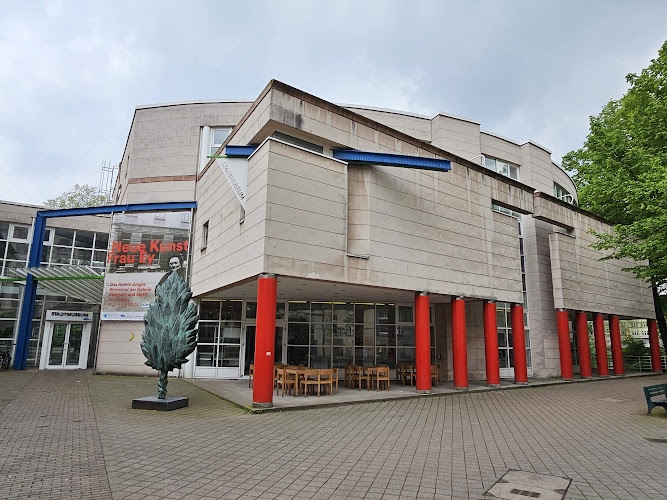
When planning your Dusseldorf travel guide or comparing verified attractions and museums in Dusseldorf, pair this stop with standout local spots including Stadtmuseum Düsseldorf, 1876 Daniel Dal-Ben, Rheinpromenade, and Schloss Jägerhof (nearby).