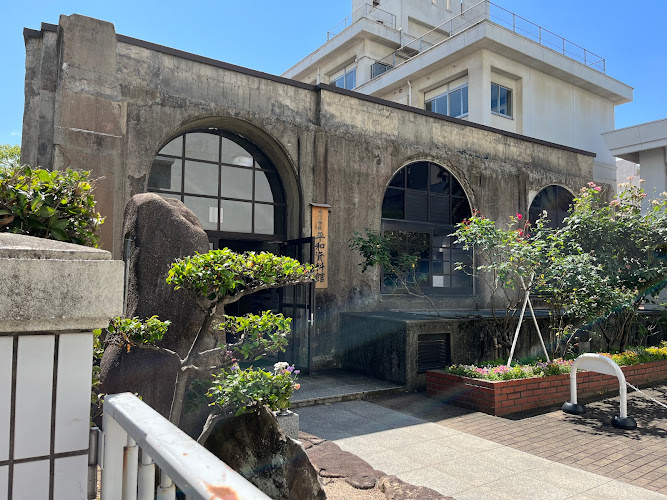
Hiroshima National Peace Memorial Hall for the Atomic Bomb Victims (国立広島原爆死没者追悼平和祈念館) is a government-run memorial at 1-6 Nakajimacho, Naka Ward, in the heart of Peace Memorial Park on Hiroshima’s central river delta. Established by the Japanese state to honor those killed by the atomic bombing of 6 August 1945, it combines a circular space for silent remembrance with a research and testimony archive of survivors’ written accounts. Admission is free, and it is the quietest, most contemplative stop in the park.
What to Expect at Hiroshima National Peace Memorial Hall
Most of the building sits underground, so visitors descend from the park’s open plaza into a hushed environment. The centerpiece is the Hall of Remembrance, a circular chamber whose walls are lined with a panoramic recreation of the Hiroshima skyline as it looked immediately after the blast, composed of 140,000 tiles, the approximate number of people estimated to have died by the end of 1945. A fountain with a clock stopped at 8:15 a.m., the moment of detonation, anchors the room. Photography is discouraged in the memorial spaces, and visitors are expected to keep voices low.
Beyond the hall, the museum’s mission is documentary rather than object-heavy. The facility registers the names and portraits of victims submitted by families, collects survivors’ memoirs and condolence writings, and produces testimony videos. Rotating special exhibitions run throughout the year, and in early August the hall holds public readings of survivor accounts. The official site offers English, Chinese and Korean language options in addition to Japanese.
- Hall of Remembrance: A circular chamber with a panoramic wall depicting post-blast Hiroshima, built from 140,000 tiles, and a central fountain beneath a clock fixed at 8:15.
- Victims’ names and portraits: Digital displays present the names and photographs of atomic bomb victims, registered by bereaved families and preserved permanently.
- Survivor memoirs and testimony: Written accounts and recorded video testimonies from hibakusha can be read and viewed on site, with a searchable book collection.
- Special exhibitions: Thematic displays on the atomic bombing and its legacy rotate through the year; check the official exhibition page for current programming.
- Peace learning programs: Hibakusha testimony sessions can be booked online in advance, and a children’s workbook supports school visits.
Hiroshima National Peace Memorial Hall at a Glance
| Detail | Information |
|---|---|
| Address | 1-6 Nakajimacho, Naka Ward, Hiroshima 730-0811, Japan |
| Neighborhood / Area | Peace Memorial Park, Nakajima, central Hiroshima |
| Operating Hours | Daily 8:30 a.m.-6 p.m. (Mar-Jul, Sep-Nov); 8:30 a.m.-7 p.m. in August (to 8 p.m. on 5 Aug; 9 a.m.-8 p.m. on 6 Aug); 8:30 a.m.-5 p.m. Dec-Feb. Closed 30-31 December |
| Admission / Price Range | Free ($) |
| Recommended Visit Duration | 45 to 90 minutes |
| Nearest Transit / Parking | Hiroden tram “Honkawa-cho” or “Genbaku Dome-mae” stops; about 5 minutes on foot. Limited parking; public transit recommended |
| Official Website & Phone | hiro-tsuitokinenkan.go.jp | +81 82-543-6271 |
Visiting Tips, Getting There & Nearby Pairings
From JR Hiroshima Station‘s south exit, take Hiroden tram line 1 toward Hiroshima Port (Ujina) and get off at Honkawa-cho, or take lines 2 and 6 to Genbaku Dome-mae; the walk from either stop is roughly five minutes and the journey takes about 20 minutes. Buses on the Hiroshima Bus line 24 and the Meipuru-pu loop line also serve the area via the Hondori stop. Because the memorial hall is a quieter counterpart to the busy Peace Memorial Museum nearby, visiting at opening time or in the late afternoon gives the most reflective experience. Expect crowds and extended hours around 5-6 August, when the park hosts the annual Peace Memorial Ceremony.
The hall’s underground design uses elevators and gentle circulation, making it generally manageable for wheelchairs and strollers; staff can assist with specific needs. Pair the visit with the Hiroshima Peace Memorial Museum, the Atomic Bomb Dome (Genbaku Dome), the Cenotaph for the A-Bomb Victims and the Children’s Peace Monument, all within a 5-10 minute walk across the park. For a meal afterward, the Hondori shopping arcade and Okonomi-mura, famed for Hiroshima-style okonomiyaki, are about a 10-15 minute walk east.
Frequently Asked Questions
What are the opening hours and best time to visit?
The hall opens at 8:30 a.m. daily, closing at 6 p.m. for most of the year, 7 p.m. in August and 5 p.m. from December to February. It is closed only on 30 and 31 December. Arrive at opening or in the last hour for the quietest atmosphere.
How much does it cost, and do I need a reservation?
Admission is free and no ticket is needed for general entry. Hibakusha testimony sessions require advance booking through the Peace Learning web reservation system on the official website.
How long should I plan to spend here?
Allow 45 to 90 minutes. Add extra time if you want to read memoirs, watch testimony videos or attend a special exhibition.
Is it accessible and suitable for children?
The facility is designed with elevator access and step-free circulation. The subject matter is somber, but the hall offers a workbook for elementary school students, and quiet behavior is expected throughout.
When planning your Hiroshima travel guide or comparing verified attractions and history museum in Hiroshima, pair this stop with standout local spots including HIROSHIMA STATION, Okonomiyaki Ron (3rd Floor Of Okonomimura) / お好み焼き お好み村 ロン, Numaji Transportation Museum, and Hiroshima Victims Memorial Cenotaph (nearby).