
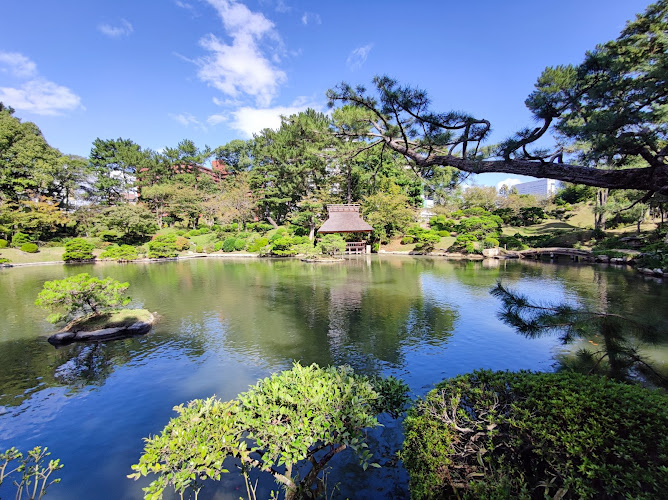
Shukkeien Garden (縮景園) is a Japanese stroll garden at 2-11 Kaminoboricho in Hiroshima‘s Naka Ward, laid out from 1620 as the villa garden of Asano Nagaakira, lord of the Hiroshima domain, and designed by his chief retainer and tea master Ueda Sōko. Its name means “shrunken-scenery garden,” because it recreates mountains, valleys, and lakes in miniature around a central pond. Travelers come for the seasonal plantings, the arched bridges, a restored tea house, and a quiet green pocket a short walk from downtown. In 2020 the garden marked 400 years since its founding.
What to Expect at Shukkeien Garden
Shukkeien is built around a large pond dotted with islets, crossed by stone and timber bridges, and ringed by a gravel path that unfolds scene by scene, the way a stroll garden is meant to be read. The layout borrows from the scenery of West Lake in Hangzhou, China, compressed to walking scale. Koi glide beneath the bridges, while pines, maples, and flowering trees frame views that change with every few steps. The garden sits on the grounds beside the Hiroshima Prefectural Art Museum, and the two are often paired in a single visit.
The garden was devastated by the atomic bombing in August 1945, when it served as a refuge for survivors and many trees burned. It was replanted and restored in the following decades and now stands as one of the city’s quietest places. Inside the entrance gate, on the left, the Sensuitei rest house sells souvenirs and light meals and operates as a place to sit and recover between loops of the path.
- Central Pond and Islets: The koi-filled pond is the garden’s core, with miniature islands and lookout points arranged to mimic a full landscape of lakes and hills.
- Bridges: Arched stone and wooden bridges, including the Kokoen-style crossings over the water, give the best photo angles of the pond and surrounding trees.
- Sensuitei Rest House: Order a matcha set with a seasonal sweet, sencha, zenzai (sweet red bean soup), amazake, or hearty bowls of niku-udon and chikara-udon (with rice cake), plus rice-ball sets and coffee; the menu shifts by season.
- Seasonal Plantings: Plum blossoms in late winter, cherry blossoms and azaleas in spring, irises and hydrangeas into early summer, and maple foliage in late autumn each bring a distinct palette.
- Tea Events and Special Evenings: The garden hosts tea gatherings during the year and periodic evening illuminations, including a “Garden of Light” programme in August dates announced on the official site.
Shukkeien Garden at a Glance
| Detail | Information |
|---|---|
| Address | 2-11 Kaminoboricho, Naka Ward, Hiroshima 730-0014, Japan |
| Neighborhood / Area | Naka Ward, near the Hiroshima Prefectural Art Museum, central Hiroshima |
| Operating Hours | Daily, 9:00 AM to 5:00 PM (Sensuitei rest house also 9:00 AM to 5:00 PM) |
| Admission / Price Range | Paid entry, $ tier (inexpensive); current fees and web tickets listed on the official site |
| Recommended Visit Duration | 45 to 90 minutes |
| Nearest Transit / Parking | Hakushima-line tram to Shukkeien-mae; bus to Kenritsu Bijutsukan-mae; very limited coin parking nearby |
| Official Website & Phone | shukkeien.jp · +81 82-221-3620 |
Visiting Tips, Getting There & Nearby Pairings
Arrive at 9:00 AM on a weekday for the softest light and the fewest visitors, or come in the late afternoon when the pond reflects warmer tones, keeping in mind the 5:00 PM closing. The garden asks visitors to use public transport because on-site and nearby coin parking is scarce. From JR Hiroshima Station‘s Shinkansen exit, take a bus to the Kenritsu Bijutsukan-mae (Shukkeien-mae) stop. Alternatively, board a streetcar from the station’s south exit, transfer at Hatchobori to the Hakushima line, and get off at Shukkeien-mae, a stop just steps from the gate. The official site also lists a water taxi option along the city’s rivers.
The path is gravel and includes arched bridges and stepped sections, so wheelchair and stroller users should expect some uneven stretches and plan a modified route along flatter paths. Pair the visit with the neighboring Hiroshima Prefectural Art Museum, and consider an easy streetcar ride to Hiroshima Castle or the Peace Memorial Park to build a full day around the city’s history and green spaces. Check the official calendar for tea events, seasonal bloom guides, and illumination dates before you go.
Frequently Asked Questions
What are the opening hours and best time to visit Shukkeien Garden?
The garden is open daily from 9:00 AM to 5:00 PM. Weekday mornings are calmest, and the best seasons are late March to early April for cherry blossoms and mid to late November for maple colors. Special evening openings are announced on the official website.
How much does it cost, and do I need a ticket in advance?
Admission is paid but modest, in the inexpensive tier, and the garden offers web tickets through its official site. Entry is occasionally made free on special dates, such as Greenery Day on May 4. Confirm current fees on shukkeien.jp before you go.
How much time should I allow?
Allow 45 to 90 minutes for a full loop of the pond with photo stops. Add 30 to 45 minutes if you stop at Sensuitei for matcha and sweets, or longer if you combine the visit with the neighboring art museum.
Is the garden accessible and suitable for families?
The gravel paths and arched bridges are manageable for most families and strollers, though stepped sections may require a detour for wheelchair users. Children enjoy the koi pond, and the rest house offers a comfortable place to sit. There is no dress code; comfortable walking shoes are recommended.
When planning your Hiroshima travel guide or comparing verified attractions and parks in Hiroshima, pair this stop with standout local spots including Japan Maritime Self-Defense Force (JMSDF) Kure Museum, ANA Crowne Plaza Hiroshima, an IHG Hotel, Hilton Hiroshima, and Hiroshima Prefectural Art Museum (nearby).


