
Miguel Hidalgo is a western Mexico City borough whose civic headquarters are at Parque Lira 94, Colonia Observatorio, 11860 Miguel Hidalgo, CDMX. Officially created in 1970 and named for independence leader Miguel Hidalgo y Costilla, it brings together Chapultepec’s museum-and-park complex, the grand residential avenues of Lomas de Chapultepec, historic Tacuba and Tacubaya, and Polanco’s dining and design scene. Travelers come for landmark museums, the Bosque de Chapultepec, architecture, and an unusually broad cross-section of the capital.
What to Expect at Miguel Hidalgo
This is a large alcaldía rather than a single ticketed attraction, so plan it as a series of walkable districts linked by Metro and Metrobús. Begin around Chapultepec’s First Section, where the Museo Nacional de Antropología, completed in 1964 to designs by Pedro Ramírez Vázquez, organizes Mexico’s archaeological and ethnographic heritage across 23 galleries. Its central courtyard is defined by the enormous umbrella-like fountain canopy; inside, the Mexica Room holds the Aztec Sun Stone, while the Maya, Oaxaca and Gulf Coast galleries reward a slower visit.
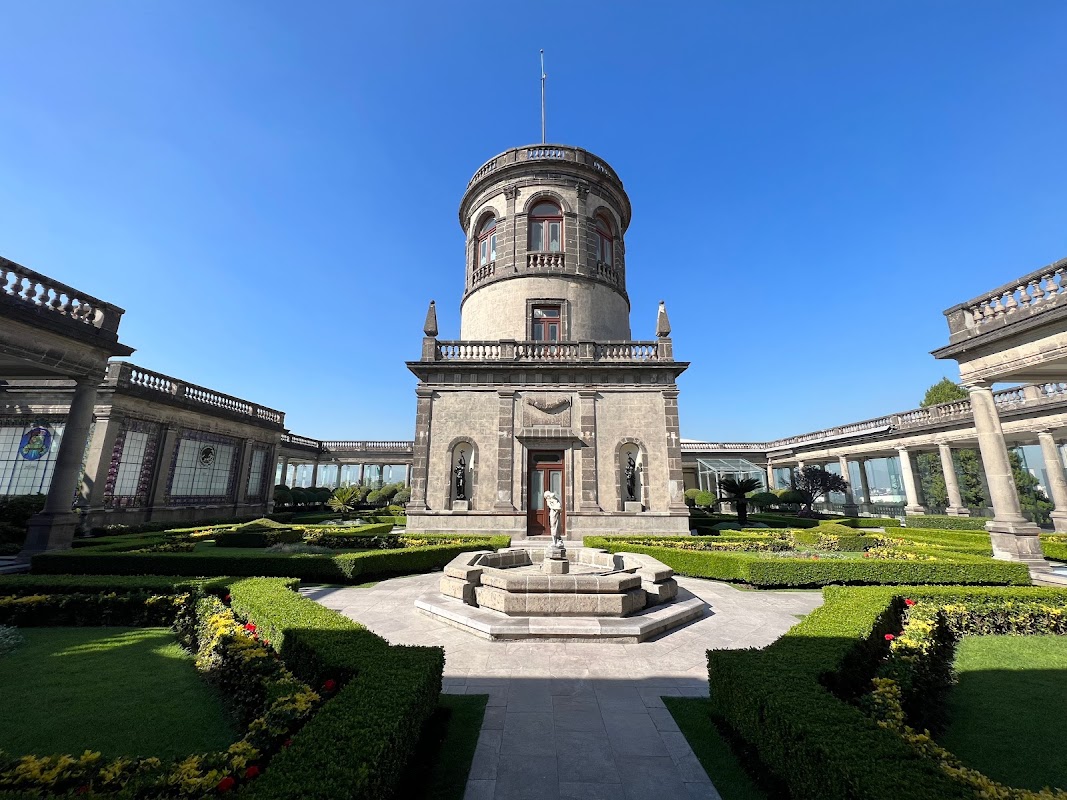
Across the park, Chapultepec Castle occupies the hilltop palace that became the residence of Emperor Maximilian and Empress Carlota in the 1860s; it now contains the Museo Nacional de Historia. North along Paseo de la Reforma, the monumental entrance gates and leafy paths lead toward Polanco, where Avenida Presidente Masaryk concentrates international labels, galleries, restaurants and polished terraces. Tacuba offers an older urban texture around the former convent and church of San Gabriel Arcángel, while Tacubaya’s transport hub and Parque Lira reveal a more everyday side of the borough.
- Bosque de Chapultepec: Mexico City’s great urban park spans multiple sections with lakes, walking paths, the zoológico, gardens and hilltop castle.
- Museo Nacional de Antropología: Seek out the Aztec Sun Stone, the replica of Pakal’s tomb chamber and the dramatic central umbrella fountain.
- Chapultepec Castle: Tour imperial-era rooms, murals and terraces with long views down Paseo de la Reforma.
- Polanco and Masaryk: Explore a dense corridor of contemporary Mexican cooking, luxury retail and architecture between Lincoln Park and Campo Marte.
- Tacuba and Tacubaya: Follow two historic settlements whose churches, markets and Metro connections predate the modern borough.
Miguel Hidalgo at a Glance
| Detail | Information |
|---|---|
| Address | Parque Lira 94, Colonia Observatorio, 11860 Miguel Hidalgo, CDMX, Mexico (alcaldía headquarters) |
| Neighborhood / Area | Western Mexico City; includes Chapultepec, Polanco, Tacuba, Tacubaya, Anzures and Lomas de Chapultepec |
| Operating Hours | Public streets are accessible daily; park gates, museums, shops and restaurants keep individual schedules. Major museums commonly close on Mondays. |
| Admission / Price Range | Free to explore the borough and public streets; museums, castle entry, dining and special activities are priced separately. Overall spending range: $$. |
| Recommended Visit Duration | One full day for Chapultepec and Polanco; two days for museums plus Tacuba or Tacubaya. |
| Nearest Transit / Parking | Metro Auditorio and Polanco on Line 7; Chapultepec on Line 1; Tacuba on Lines 2 and 7. Metrobús Line 7 stops at Auditorio and Campo Marte. Paid garages are concentrated in Polanco; parking near Chapultepec is limited. |
| Official Website & Phone | Alcaldía Miguel Hidalgo official website; +52 55 5276 7700 |
Visiting Tips, Getting There & Nearby Pairings
Arrive at the Museo Nacional de Antropología near opening time, ideally Tuesday through Friday, before school groups and weekend crowds fill the courtyard. Reserve a substantial part of the day for its galleries rather than combining it with every Chapultepec sight in one rush. Sunday museum crowds can be particularly heavy because Mexican citizens and residents receive free entry to many federal museums. For Polanco restaurants, reserve ahead for Friday and Saturday dinner; lunch is easier around the less formal side streets off Masaryk.
For the simplest cultural route, use Metro Auditorio or Chapultepec, then walk through the park toward the Anthropology Museum and continue to Polanco. The museum has ramps, elevators and wheelchair availability, while Chapultepec’s slopes, cobbled sections and long distances can be tiring for wheelchair users and strollers; choose paved main paths and allow extra time. Nearby pairings within a 5- to 15-minute walk include the Monumento a los Niños Héroes at the park entrance, the leafy paths of Parque Lincoln, Campo Marte and the Reforma cultural corridor toward Museo Tamayo.
Frequently Asked Questions
What are the best hours to visit Miguel Hidalgo?
The borough itself has no single opening time, but mornings are best for Chapultepec and its museums. Confirm each institution’s schedule before travel, as many major museums close on Monday; Polanco is most active from late afternoon into dinner.
Is there an admission fee or do I need reservations?
Walking through Miguel Hidalgo, Chapultepec’s public paths and Polanco is free. Museums and the castle charge their own admission, and advance restaurant reservations are advisable for popular Polanco dining rooms, especially on weekends.
How much time should I budget?
Allow 1.5 to 2.5 hours for the Anthropology Museum alone, then add time for lunch and the park. A full day comfortably covers Chapultepec and Polanco; choose a second day for the castle, Tacuba or Tacubaya.
Is Miguel Hidalgo suitable for families and wheelchair users?
Families have strong options in Chapultepec, including open lawns, the zoo area and museum galleries. Metro stations and older sidewalks vary in accessibility, but the Anthropology Museum is the most dependable cultural stop for step-free circulation; use taxis or ride-hailing for longer cross-borough transfers.
When planning your Mexico City travel guide or browsing verified attractions in Mexico City, pair this stop with standout local spots including Roma Nte., Basilica of Our Lady of Guadalupe, Papalote Museo del Niño, and Carmela y Sal (0.8 km away).


